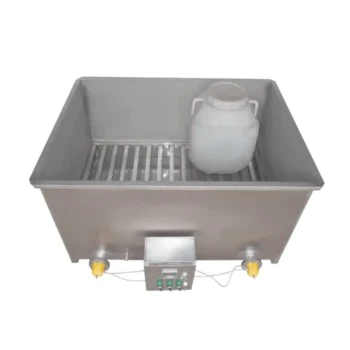
The introduction of downstream processing equipment transforms stingless bee honey from a volatile raw commodity into a high-margin, standardized industrial asset. By utilizing specialized machinery—such as saponification units, high-precision mixing machines, and automated fillers—producers can convert raw honey into diverse, high-value derivatives like medicinal soaps, cosmetics, and refined food products. This shift significantly boosts economic returns by capturing higher market premiums and insulating the supply chain from the price fluctuations inherent in bulk raw material trading.
Downstream processing equipment is the catalyst for industrial maturity, allowing wholesalers and distributors to move beyond low-margin bulk trading into a diverse portfolio of branded, high-value derivatives. This transition maximizes profit potential through product diversification and ensures the technical consistency required for global retail and pharmaceutical distribution.
Capturing Premium Margins through Product Diversification
From Bulk Commodity to High-Value Derivatives
Downstream equipment, such as mixing machines and saponification reaction units, enables the conversion of primary raw honey into refined, high-value-added products. This allows producers to utilize lower-grade honey with variable quality while still capturing high profit margins through branded items like honey-based soaps or medicinal syrups.
Mitigating Market Volatility
By extending the industrial chain, businesses can effectively hedge against price fluctuations in the raw honey market. Diversified product lines, such as honey-infused coffee or bioactive cosmetics, create stable revenue streams that are less dependent on the seasonal harvest cycles of raw stingless bee honey.
Utilizing Full-Spectrum Bioactives
Stingless bee honey contains unique bioactive compounds and a higher moisture content than traditional honey, requiring specialized processing for stability. Professional equipment ensures the stable integration of these ingredients into daily-use products without degrading their medicinal properties, directly increasing the market value of the final goods.
Industrial Standardization and Market Access
Precision Filling and Shelf-Life Extension
Industrial-grade filling and sealing machinery ensures precise dosing and hygienic packaging for formats like honey sticks or eye-dropper bottles. This high-precision automation is critical for maintaining product consistency and extending shelf life, which are non-negotiable requirements for entering pharmacy and institutional supply chains.
Meeting Global Safety Standards
Standardized production workshops equipped with stainless steel filtration and quality monitoring instruments ensure products remain free from secondary contamination. This infrastructure is the fundamental prerequisite for obtaining food safety certifications required to access high-end supermarkets and international markets.
Reducing Operational Waste
Efficient harvesting and bottling equipment minimize the loss of high-value honey during the extraction process. By reducing per-unit labor costs and variable expenses, these tools ensure that the maximum amount of product is captured for commercial sale, improving the overall competitiveness of the supply chain.
Understanding the Trade-offs and Pitfalls
High Initial Capital Expenditure
The primary barrier to implementing downstream processing is the significant upfront investment required for industrial-grade machinery and standardized facilities. For smaller operations, the cost of specialized temperature-controlled homogenization units may outweigh immediate gains if sales volume is not yet established.
Technical Expertise and Maintenance
Downstream equipment requires a higher level of technical proficiency to operate and maintain. Improper use of mixing or filtration systems can lead to "over-processing," which may accidentally strip the honey of its unique bioactive properties and reduce its medicinal value.
Regulatory and Compliance Complexity
As products move from raw honey to "derivatives" like cosmetics or supplements, they fall under stricter regulatory frameworks. Distributors must navigate complex labeling and safety testing requirements for each new product category, which can increase the time-to-market and administrative overhead.
How to Apply This to Your Portfolio
Strategic Recommendations for Growth
If you are looking to scale your stingless bee honey business, your equipment and sourcing strategy should align with your specific commercial objectives.
- If your primary focus is maximizing profit margins: Prioritize sourcing suppliers who utilize saponification and cosmetic mixing units to provide high-margin derivative products like soaps and skin creams.
- If your primary focus is volume distribution to retail chains: Invest in or partner with facilities that feature high-speed, automated filling and sealing lines to ensure the consistency and shelf-life required by supermarkets.
- If your primary focus is the pharmaceutical or health market: Ensure your supply chain utilizes professional-grade filtration and quality monitoring instruments to meet the stringent safety standards of medicinal buyers.
By transitioning from raw honey to processed derivatives, you secure a more stable, profitable, and professionally standardized position in the global specialty honey market.
Summary Table:
| Equipment Type | Derivative Products | Economic Impact |
|---|---|---|
| Saponification Units | Medicinal soaps, beauty bars | Converts low-grade honey into high-margin branded goods. |
| Precision Mixers | Syrups, cosmetics, infused coffee | Insulates revenue from raw honey price volatility. |
| Automated Fillers | Honey sticks, pharmaceutical drops | Enables retail scalability and meets global safety standards. |
| Filtration Systems | Refined pharmaceutical-grade honey | Unlocks access to high-end medical and institutional markets. |
Scale Your Honey Business with HONESTBEE
Transition from raw commodity trading to high-margin industrial excellence. HONESTBEE provides a comprehensive one-stop sourcing solution for commercial apiaries, wholesalers, and B2B resellers. From high-precision honey-filling machines and hive-making hardware to essential industry consumables and cultural merchandise, our portfolio is designed to maximize your profit margins.
Why Partner with HONESTBEE?
- Deep Industry Expertise: Specialized equipment tailored for stingless bee honey stability.
- OEM/ODM Support: Custom solutions to help distributors build their own derivative brands.
- Rapid Fulfillment: Ultra-fast delivery to ensure your supply chain remains reliable.
- Exceptional Service: Dedicated support to help you navigate technical and regulatory complexities.
Ready to enhance your portfolio with professional-grade machinery and premium trading services?
Contact Our Wholesale Experts Today
References
- Y. Oktavia, A. Arbain. Stingless Bee Honey Farming and Farmer Empowerment in Sawahlunto City, West Sumatra, Indonesia. DOI: 10.1051/bioconf/202515907001/pdf
This article is also based on technical information from HonestBee Knowledge Base .
Related Products
- Professional Stainless Steel Honey Filtering Machine with Water Bath Heating for Beekeeping
- Heavy Duty Stainless Steel Honey Processing Machine Decrystallizing Tank
- Electric Double Wall Honey Filtering Machine Purifier Equipment for Honey Processing Plant
- High Quality Honey Dehumidifier Dryer Thickening Machine for Beekeeping
- Stainless Steel Manual Honey Press with Guard for Pressing Honey and Wax
People Also Ask
- Why do people filter honey? For Clarity, Stability, and Consumer Appeal
- Why is filtering honey an important step in honey processing? Ensure Purity, Clarity & Marketability
- What is the best way to filter honey? A Guide to Quality, Clarity, and Raw Preservation
- Is it necessary to filter honey after extraction? A Guide to Straining vs. Raw Honey
- What are the benefits of using honey filters? Achieve Purity, Efficiency, and Market Appeal