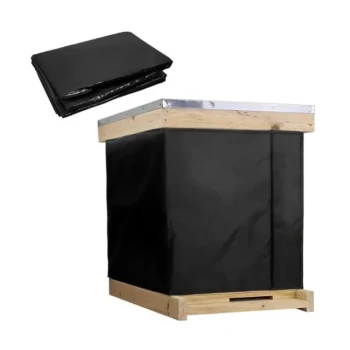
The primary function of applying fibre insulation to beehives is to significantly reduce the rate of heat dissipation. By acting as a physical thermal barrier, these materials allow honeybees to maintain the cluster's core temperature with far less effort. This conservation of metabolic energy is the deciding factor in preventing freezing losses and ensuring colony survival during long, cold winters.
By stabilizing the internal environment, insulation shifts the colony’s focus from emergency heat generation to steady energy conservation, drastically lowering mortality rates before spring.
The Mechanics of Thermal Conservation
Slowing Heat Transfer
The core principle of fibre insulation is the reduction of thermal conductivity. In uninsulated hives, heat generated by the bee cluster escapes rapidly through the hive walls.
Creating a Stable Internal Environment
Fibre materials or double-walled structures act as temperature regulators. They buffer the hive interior against the extreme fluctuations of the external environment.
This stability minimizes the "thermal spikes" that force bees to break the cluster or consume excessive resources to compensate for sudden drops in temperature.
Energy Management and Colony Survival
Reducing Metabolic Cost
Honeybees generate heat by vibrating their flight muscles, a process that consumes stored honey. Insulation directly lowers this energy cost.
When the hive retains heat more efficiently, bees burn fewer calories to stay warm. This preservation of energy reserves is critical for surviving the duration of winter without starving.
protecting Vulnerable Colonies
For less robust colonies with smaller populations, the margin for error is slim. These colonies lack the "thermal mass" of larger groups.
Insulation provides the necessary assistance to keep these smaller clusters above the lethal threshold, preventing losses due to freezing.
Protection Against Elements
The Windbreak Effect
Beyond thermal retention, winter wraps serve as a windproof barrier. Cold winds strip heat away from a hive much faster than still air.
Waterproofing the Structure
Insulation wraps often function as a shield against precipitation. Keeping the hive dry is essential, as wet insulation or damp wood loses its thermal properties and can freeze.
Understanding the Trade-offs
The Risk of Moisture Buildup
While trapping heat is beneficial, trapping moisture is dangerous. As the colony generates heat, it also produces water vapor through respiration.
Monitoring is Essential
If the insulation is too aggressive or lacks ventilation, condensation can form inside the hive. Excessive moisture buildup can drip back onto the cluster, killing the bees faster than the cold itself.
Frequent monitoring is required to ensure the setup balances heat retention with adequate moisture release.
Making the Right Choice for Your Goal
To maximize the effectiveness of hive insulation, align your strategy with your colony's specific condition:
- If your primary focus is preventing starvation: Apply insulation to minimize the colony's caloric burn rate, preserving honey stores for late winter.
- If your primary focus is protecting weak colonies: Utilize full winter wraps to provide a windproof and thermal shield that compensates for the small cluster size.
- If your primary focus is moisture control: Ensure your insulation strategy includes top ventilation or moisture-absorbing materials to prevent lethal condensation.
Properly insulating a hive is not just about adding warmth; it is about managing the colony's limited energy budget to ensure they see the first blooms of spring.
Summary Table:
| Key Function | Primary Benefit | Operational Impact |
|---|---|---|
| Thermal Barrier | Reduces heat dissipation rate | Minimizes metabolic energy & honey consumption |
| Climate Buffering | Stabilizes internal temperatures | Prevents thermal spikes that force cluster breakage |
| Wind & Water Shield | Blocks cold drafts & precipitation | Keeps hive dry to maintain thermal properties |
| Colony Support | Protects less robust clusters | Keeps smaller populations above lethal cold thresholds |
| Moisture Control | Managed with proper ventilation | Prevents lethal condensation from dripping on bees |
Scale Your Apiary Success with HONESTBEE
Ensure your commercial operations are equipped for every season. HONESTBEE caters specifically to commercial apiaries and distributors with a comprehensive wholesale offering designed for durability and efficiency.
From high-performance insulation consumables to specialized hive-making and honey-filling machinery, we supply the full spectrum of professional beekeeping tools and hardware. Partner with us to provide your customers and colonies with the best industry-standard equipment.
Ready to upgrade your inventory? Contact us today to explore our wholesale solutions!
References
- Stephen Palmer. Beekeeping in the Falkland Islands. DOI: 10.1080/00218839.2008.11101481
This article is also based on technical information from HonestBee Knowledge Base .
Related Products
- Professional Insulated Plastic Bee Hives
- Professional Insulated Winter Hive Wrap for Beekeeping
- Inner Beehive Cover for Beekeeping Bee Hive Inner Cover
- Styrofoam Mini Mating Nuc Box with Frames Feeder Styrofoam Bee Hives 3 Frame Nuc Box
- Solid Bottom Board Australian Pine Wood Langstroth Bottom Board for Wholesale
People Also Ask
- What are the advantages of plastic bee hives? Boost Efficiency & Durability for Your Apiary
- Are plastic bee hives any good? Unlock Durability & Efficiency for Your Apiary
- How do plastic bee hives compare to wooden hives in handling? Reduce Strain & Boost Efficiency
- Are plastic bee hives good? Durable, Low-Maintenance Hives for Modern Apiaries
- What are the disadvantages of plastic beehives? Key Operational and Environmental Risks Exposed