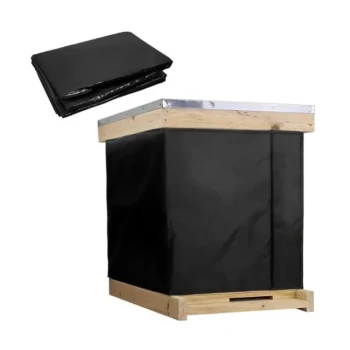
Climate-controlled indoor wintering facilities serve as a physiological preservation system for honey bee colonies in northern temperate regions. By maintaining a constant temperature (typically between 2°C and 5°C) and total darkness, these facilities force the colony into a static cluster, significantly reducing metabolic activity and halting the physiological aging associated with flight and foraging.
The primary value of these facilities lies in decoupling the colony’s survival from unpredictable weather patterns. By enforcing a consistent dormant state, beekeepers can prevent premature brood rearing and minimize resource consumption, leading to higher survival rates and reduced population loss.
The Physiology of Induced Dormancy
Stabilizing the Overwintering Cluster
In an outdoor environment, fluctuating temperatures cause the bee cluster to expand and contract repeatedly. Indoor facilities utilize a constant low ambient temperature (approximately 4°C) to lock the colony into a relatively static overwintering cluster.
This specific temperature range is critical because it is cold enough to induce clustering but warm enough to prevent freezing injury. By removing environmental variables, the colony effectively enters a state of suspended animation.
Reducing Metabolic Costs
When a colony is forced into this static state, the individual bees' metabolic rates drop significantly. This reduction in metabolic activity directly correlates to lowered consumption of winter stores.
Because the bees are not generating excess heat to combat extreme cold spikes, they burn through their honey reserves at a much slower, more predictable rate.
Preserving Colony Structure and Demographics
Halting Physiological Aging
A critical function of indoor wintering is the prevention of flight activity. Supplementary data indicates that preventing autumn and winter flights halts the physiological aging process of adult worker bees.
Outdoor bees that engage in foraging or cleansing flights during warm spells age rapidly. By keeping the bees in darkness and cool temperatures, the facility preserves the age structure of the colony, ensuring that bees remain biologically "young" enough to restart the colony in spring.
Preventing Premature Brood Rearing
One of the greatest risks in northern temperate regions is a "false spring," where outdoor warming triggers the queen to lay eggs too early. Indoor facilities utilize total darkness and temperature control to suppress this biological trigger.
Premature brood rearing consumes vast amounts of energy and resources. By preventing this until the beekeeper deems it appropriate, the colony avoids the stress of raising brood during periods when they cannot forage to support it.
Understanding the Trade-offs
The Necessity of Strict Environmental Control
The success of indoor wintering relies entirely on the facility's ability to maintain precise conditions. Any deviation in temperature or light can break the dormancy.
If the temperature rises above the 4°C - 5°C threshold, or if light leaks into the facility, the bees may break the cluster and attempt to fly. In a confined space, this increased activity counters the metabolic savings and can lead to rapid stress and death. The system is effective only as long as the environment remains perfectly stable.
Making the Right Choice for Your Management Strategy
Implementing indoor wintering changes the fundamental biology of how your hives survive the cold season.
- If your primary focus is maximizing colony survival rates: Utilizing indoor storage eliminates the variables of wind chill and temperature spikes, protecting your population numbers from environmental stress.
- If your primary focus is resource efficiency: The metabolic suppression provided by the 4°C environment is the most effective method for minimizing the consumption of winter honey stores.
By controlling the climate, you effectively pause the biological clock of the hive, ensuring the workforce that enters winter is the same strong workforce that emerges in spring.
Summary Table:
| Key Function | Description | Primary Benefit |
|---|---|---|
| Temperature Stability | Constant 2°C to 5°C environment | Minimizes metabolic activity & honey consumption |
| Light Control | Total darkness suppression | Prevents premature brood rearing & flight activity |
| Cluster Preservation | Induces a static overwintering cluster | Prevents physiological aging of worker bees |
| Weather Decoupling | Isolates hives from external fluctuations | Increases survival rates against unpredictable winters |
Maximize Your Colony Success with HONESTBEE
Protecting your honey bee populations in northern temperate regions requires more than just high-quality hives; it demands specialized infrastructure and equipment. At HONESTBEE, we empower commercial apiaries and distributors with the professional-grade tools, hive-making machinery, and essential consumables needed to build and maintain world-class indoor wintering systems.
Whether you are scaling your operation or sourcing wholesale beekeeping hardware, our team provides the comprehensive industrial solutions you need to preserve your colony demographics and ensure a strong spring emergence.
Secure your apiary's future today. Contact HONESTBEE for a professional consultation and wholesale catalog.
References
- Suresh D. Desai, R. William Currie. Effects of Wintering Environment and Parasite–Pathogen Interactions on Honey Bee Colony Loss in North Temperate Regions. DOI: 10.1371/journal.pone.0159615
This article is also based on technical information from HonestBee Knowledge Base .
Related Products
People Also Ask
- What are the steps to properly wrap a beehive for winter? Ensure Your Colony Survives the Cold
- When is the best time to wrap a beehive for winter? A Guide to Perfect Winterization Timing
- How do professional insulation wraps provide protection for bee colonies? Optimize Winter Survival & Energy Efficiency
- What are the technical benefits of using winter wraps for beehive insulation? Boost Colony Survival & Hive Health
- What are the benefits of using insulated covers for hives? Ensure Colony Survival and Health