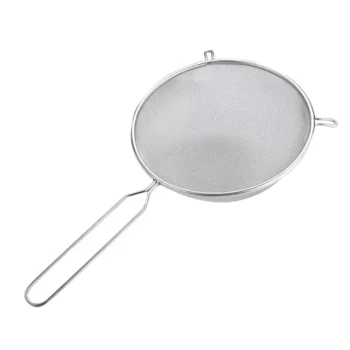
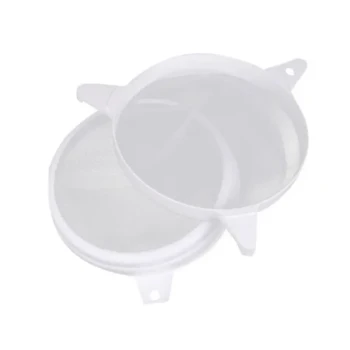
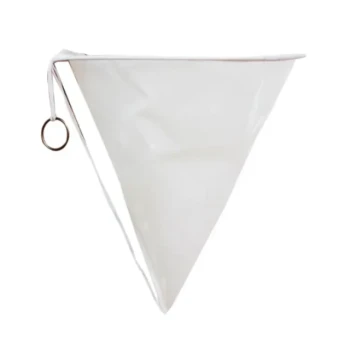
The primary function of fine-mesh filtration materials, such as gauze, is to serve as a mechanical barrier during the initial processing of honey samples. This physical filtration step effectively removes macroscopic impurities—specifically wax debris, dead bees, and hive fragments—from the raw material. By eliminating these solids early, you ensure the analytical sample achieves the necessary purity and clarity for accurate testing.
By removing physical contaminants, filtration prevents external debris from interfering with biochemical measurements. This step isolates the honey matrix, ensuring that subsequent data reflects the actual composition of the honey rather than the impurities suspended within it.
The Mechanics of Purification
Removal of Macroscopic Debris
The most immediate role of materials like gauze or fine-mesh metal sieves is the separation of large particulate matter. Raw honey often contains unwanted solids derived from the harvesting process, including beeswax particles, bee body fragments, and plant tissues.
Ensuring Sample Homogeneity
Filtration creates a uniform substrate for analysis. When solid impurities are left in the sample, they can create inconsistencies that lead to fluctuating results in physicochemical property detection.
Preventing Biochemical Interference
Solid impurities are not chemically inert; they can alter the sample's profile. For example, protein-rich debris (such as larvae or eggs) can decompose, skewing biochemical measurements and potentially introducing off-flavors or rancidity.
Impact on Downstream Analysis
Improving Microscopy Efficiency
For researchers utilizing microscopy, filtration is vital for reducing background noise. By removing non-pollen organic debris, the filter provides a cleaner slide background, which significantly improves the efficiency and accuracy of pollen classification and counting.
Facilitating Microplastic and Residue Detection
In specialized workflows, specific pore sizes (such as 30 micrometers) are used to capture target residues. This allows for the concentration of substances like microplastics or specific pollen grains while separating them from the liquefied honey matrix.
Enhancing Stability and Shelf Life
High-efficiency filtration contributes to the chemical stability of the final product. By removing organic contaminants that could degrade or ferment, the process prevents spoilage and preserves the honey’s commercial standards for taste and clarity.
Understanding the Trade-offs
The Critical Importance of Pore Size
Selecting the correct mesh size is a balancing act between purity and retention. A mesh that is too coarse will fail to remove microscopic wax particles, compromising clarity.
Conversely, a mesh that is too fine may unintentionally strip the honey of valuable components. For general analysis, the goal is to remove debris while allowing microscopic pollen grains to pass through, preserving the honey's botanical fingerprint.
Making the Right Choice for Your Goal
To ensure your filtration process aligns with your specific analytical or production objectives, consider the following:
- If your primary focus is physicochemical analysis: Prioritize the removal of all solid organic matter (wax, larvae) to prevent chemical interference and ensure sample homogeneity.
- If your primary focus is pollen analysis (Melissopalynology): Use a sieve size that removes large debris but is coarse enough to allow pollen grains to pass through for sedimentation and counting.
- If your primary focus is residue detection (e.g., microplastics): distinct specific pore sizes (such as 30 micrometers) should be utilized to trap and concentrate the target particulates for examination.
Effective filtration is not just about cleaning the sample; it is the foundational step that secures the integrity of every subsequent test result.
Summary Table:
| Function | Primary Benefit | Key Contaminants Removed |
|---|---|---|
| Mechanical Barrier | Removes macroscopic debris | Wax particles, dead bees, hive fragments |
| Sample Homogeneity | Ensures uniform substrate for testing | Large particulates and solid organic matter |
| Biochemical Protection | Prevents interference/decomposition | Larvae, eggs, and protein-rich debris |
| Microscopy Prep | Reduces background noise | Non-pollen organic debris |
| Quality Preservation | Enhances stability and shelf life | Organic contaminants that cause fermentation |
Elevate Your Honey Processing with HONESTBEE
Precision filtration is the cornerstone of high-quality honey production and accurate analysis. At HONESTBEE, we empower commercial apiaries and honey distributors with a comprehensive suite of professional-grade tools. From high-efficiency fine-mesh filtration systems and specialized hive-making machinery to automated honey-filling lines, our wholesale offerings are designed to maximize your operational efficiency.
Whether you are scaling your commercial apiary or looking for a reliable supply of industry consumables and honey-themed cultural merchandise, our team provides the expertise and equipment you need to maintain the highest industry standards.
Ready to optimize your production? Contact us today to discover how HONESTBEE can support your business growth!
References
- Aliyu Shugaba. Analysis of Biochemical Composition of Honey Samples from North-East Nigeria. DOI: 10.4172/2161-1009.1000139
This article is also based on technical information from HonestBee Knowledge Base .
Related Products
- Professional Stainless Steel Honey Filter with Support Handle
- Nylon Honey Strainer Square Filter Cloth for Honey Filters
- Conical Nylon Honey Strainer Filter Bag for Beekeeping and Honey Filtration
- Stainless Steel Triangle Support Honey Strainer and Filters
- Stainless Steel Double Layer Honey Strainer Sieve Filters
People Also Ask
- Why are stainless steel filters essential during the initial purification phase of honey processing? Ensure Purity
- What are the benefits of using a high-quality honey filter? Elevate Purity and Preserve Natural Flavor
- What is the primary purpose of honey filters? Achieve Professional Clarity & Pure Honey Quality
- What micron filter should I use for honey? Choose the Right Filter for Sales or Competitions
- Why do people filter honey? For Clarity, Stability, and Consumer Appeal