High-precision temperature and humidity sensors act as the central nervous system for smart honey production ecosystems. Their primary function is to provide real-time, continuous monitoring of the internal microclimate within synthetic beehives. By capturing minute fluctuations in the environment, these sensors ensure that conditions remain within the specific ranges required for both optimal bee health and the stable storage of honey prior to extraction.
Core Takeaway Bees are highly sensitive biological organisms that require precise environmental conditions to thrive. These sensors convert the complex, fluctuating biological state of a colony into stable digital data, enabling beekeepers to maximize production yields and minimize bee loss through proactive, data-driven management.
Optimizing the Production Environment
To understand the value of these sensors, one must recognize that honey production is not merely a mechanical process, but a biological one dependent on a fragile microclimate.
Monitoring Biological Sensitivity
Bees are remarkably sensitive to their living environment. Their ability to produce honey is directly correlated with the temperature and humidity levels inside the hive.
High-precision sensors detect deviations from the ideal "comfort zone" of the colony. This allows managers to intervene before environmental stress impacts the bees' productivity or survival rates.
Ensuring Honey Storage Quality
The function of these sensors extends beyond the bees to the product itself. Honey storage conditions are critical to preventing fermentation or spoilage.
By monitoring humidity levels in real-time, the equipment ensures that the honey remains at the correct moisture content within the hive, which is essential for high-quality extraction later.
From Biology to Digital Data
The modern "smart" hive replaces manual guesswork with automated precision.
Real-Time IoT Connectivity
The sensors do not simply record data; they transmit it. Through IoT (Internet of Things) modules, data is uploaded instantly to remote terminals or management software.
This connectivity creates a feedback loop, allowing beekeepers to monitor hives across vast distances without physical intrusion, which can disturb the colony.
Digitizing Colony Health
Supplementary data indicates that these sensors help convert complex biological states into digital data.
Rather than relying on visual inspections, managers can track "colony health dynamics" numerically. This scientific basis reduces the reliance on intuition and provides concrete evidence for operational decisions.
Understanding the Trade-offs
While smart sensors offer significant advantages, relying on them introduces specific challenges that technical professionals must navigate.
Dependency on Connectivity
The effectiveness of these sensors is entirely dependent on the reliability of the IoT transmission. In remote agricultural areas with poor signal coverage, data gaps can occur, potentially masking critical environmental spikes.
The "Data vs. Context" Gap
Sensors provide raw metrics, not context. A high-temperature reading might indicate a healthy, active hive, or it could indicate an external heat wave stressing the colony.
Data interpretation requires expertise. Operators must still possess traditional beekeeping knowledge to correctly analyze why the sensors are reporting specific values.
Making the Right Choice for Your Goal
When integrating high-precision sensors into your honey production infrastructure, align the technology with your primary operational objectives.
- If your primary focus is Colony Survival: Prioritize sensors with high sensitivity to minute temperature changes, as these are the earliest indicators of colony distress or disease.
- If your primary focus is Production Quality: Focus on humidity accuracy, as managing moisture content is the single most important factor in preventing honey spoilage before extraction.
Smart sensors bridge the gap between biological needs and industrial efficiency, turning the hive into a predictable, manageable asset.
Summary Table:
| Feature | Function in Smart Beekeeping | Key Benefit |
|---|---|---|
| Temperature Sensing | Monitors colony microclimate & biological stress | Enhances bee survival and brood health |
| Humidity Monitoring | Controls moisture content within the hive | Prevents honey fermentation and spoilage |
| IoT Connectivity | Transmits real-time data to remote terminals | Enables non-intrusive, remote hive management |
| Data Digitization | Converts biological states into numerical trends | Supports scientific, data-driven decision making |
Elevate Your Beekeeping Operations with HONESTBEE
At HONESTBEE, we empower commercial apiaries and distributors with the precision tools needed for modern honey production. Our comprehensive wholesale catalog ranges from smart hive components to specialized honey-filling machines and industrial-grade extraction hardware.
Whether you are scaling a commercial apiary or supplying the next generation of beekeepers, our equipment ensures maximum yield and product quality. Contact our expert team today to discover how our end-to-end machinery solutions and industry consumables can optimize your production cycle.
References
- Ari Devianto, Muhammad Nasar. Internet of Things-Based Automated Honey Harvesting: A Smartphone-Integrated Solution for Efficient Beekeeping. DOI: 10.59934/jaiea.v4i3.1135
This article is also based on technical information from HonestBee Knowledge Base .
Related Products
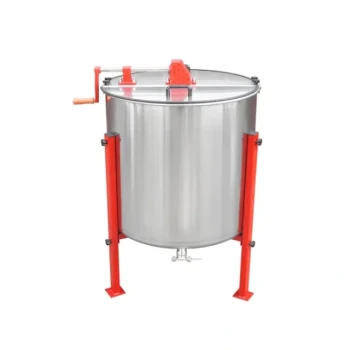
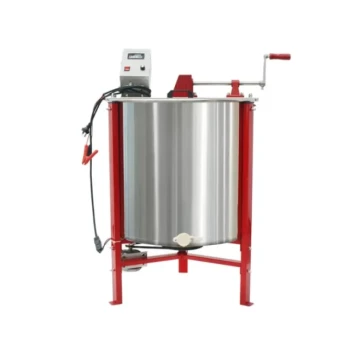
- Electric 8 Frame Honey Spinner Extractor Equipment for Beekeeping
- 6 Frame Manual Stainless Steel Honey Extractor Beekeeping Equipment
- HONESTBEE 2 Frame Manual Acrylic Honey Extractor Beekeeping Equipment
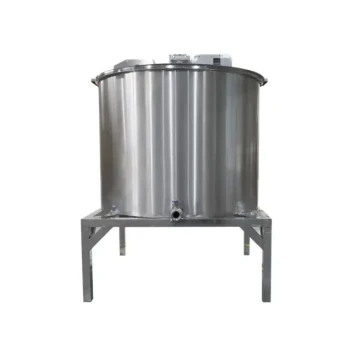
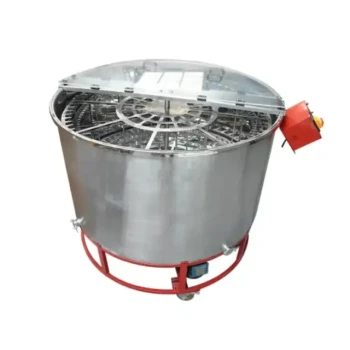
- 32 Frame Commercial Electric Honey Extractor for Beekeeping and Honey Production
- HONESTBEE 72 Frame Industrial Electric Honey Extractor for Beekeeping
People Also Ask
- What are the advantages of an electric honey extractor? Boost Efficiency and Scale Your Honey Production
- What are the characteristics of electric honey extractors? Boost Your Apiary Efficiency with Automated Technology
- What are the disadvantages of using an electric honey extractor? Weighing Cost, Power, and Comb Safety
- What are the features of an electric honey extractor? Boost Your Apiary's Productivity with Motorized Efficiency
- What are the technical advantages of electric honey extractors? Maximize Yield and Protect Your Bee Colony