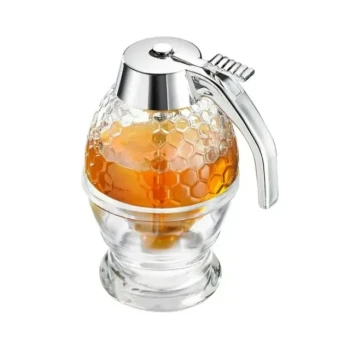
The primary function of a honey pump is to mechanically transfer honey from the extraction and filtration stages into storage vessels or bottling tanks. Unlike standard water pumps, these devices are specifically engineered to handle the high viscosity of honey. They ensure the product moves efficiently through the workflow without relying on slow gravity-fed systems or manual labor.
Honey pumps bridge the gap between extraction and final packaging by moving viscous honey smoothly to preserve its quality. Their adjustable flow rates allow producers to automate the transfer process while protecting the delicate structure of the liquid.
Optimizing the Workflow Post-Extraction
Bridging the Gap Between Stages
After honey is removed from the comb via a centrifugal extractor and passed through filters, it must be moved to holding tanks.
Honey pumps serve as the automated link between these distinct processing phases.
They eliminate the physical strain of manual lifting and the time constraints of gravity-dependent setups.
Preserving Product Integrity
Honey is a delicate product that can lose quality if handled improperly.
Specialized honey pumps are designed to move the liquid smoothly.
This design prevents aggressive agitation, which protects the honey from structural damage during the transfer.
Operational Control and Flexibility
Managing Viscosity
Moving a thick, viscous liquid requires significant force that must be applied carefully.
Honey pumps provide the necessary power to move heavy fluids that would stall general-purpose pumps.
They achieve this while maintaining a consistent internal pressure to prevent cavitation or stalling.
Controlling Flow Rates
Many modern honey pumps feature adjustable speed settings.
This allows the operator to match the pump's output to the specific speed of the filtration or bottling line.
Synchronizing these speeds prevents bottlenecks, overflows, or dry running in the processing line.
Understanding the Trade-offs
The Risk of Equipment Mismatch
While pumps increase efficiency, using equipment not specifically designed for honey allows for significant quality degradation.
Standard pumps often operate at speeds or pressures that can shear the liquid or introduce air bubbles.
Honey pumps are engineered explicitly to avoid this damage, making them a necessary investment for quality control despite the added cost compared to gravity systems.
Making the Right Choice for Your Goal
Selecting the right transfer equipment depends on the scale of your operation and your specific quality standards.
- If your primary focus is preserving quality: Prioritize a pump designed specifically for smooth, low-agitation transfer to prevent damaging the viscous liquid.
- If your primary focus is workflow efficiency: Look for models with adjustable flow rates to perfectly synchronize extraction speed with bottling capacity.
By automating the transfer of honey with the correct equipment, you protect the integrity of your harvest while significantly increasing production throughput.
Summary Table:
| Feature | Function in Workflow | Key Benefit |
|---|---|---|
| Viscosity Handling | Moves thick honey through pipes | Prevents system stalling & manual labor |
| Flow Rate Control | Syncs extraction with bottling lines | Eliminates bottlenecks & production overflows |
| Low-Agitation Design | Smooth mechanical transfer | Prevents air bubbles & preserves honey integrity |
| Automated Link | Connects filtration to storage tanks | Increases throughput & reduces physical strain |
Scale Your Honey Production with HONESTBEE
Maximize your apiary's throughput and protect every drop of your harvest. At HONESTBEE, we specialize in empowering commercial apiaries and distributors with professional-grade beekeeping machinery. Whether you need high-performance honey-filling machines, specialized honey pumps, or comprehensive hive-making equipment, our wholesale solutions are designed for industrial efficiency.
From essential consumables to advanced honey-themed cultural merchandise, we provide the full spectrum of tools to grow your business. Contact us today to optimize your workflow and see how our expertise can drive your success.
Related Products
- Honey Convey Pump Screw Honey Pump for Viscous Liquid
- Honey Convey Pump Economy Gear Pump for Viscous Liquid
- Economy Small Honey Filling Machine Honey Bottle Filler Packaging Machine
- Manual Honey Filling Machine Bottling Machine for Honey
- Automatic Honey Filling and Filtering Machine for Beekeeping Bottle Filling
People Also Ask
- How do modern technologies and machinery benefit honey extraction? Elevate Efficiency & Product Quality
- What are the different types of honey pumps available? Manual vs. Electric Pumps for Beekeeping Efficiency
- What is the role of honey pumps in honey processing? Preserve Quality and Boost Efficiency
- Why are honey pumps considered essential in the honey transfer process? Streamline High-Viscosity Liquid Handling
- What types of pumps are used in honey processing systems? Optimize Your Production with the Right Technology