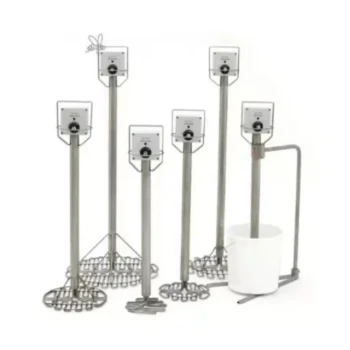
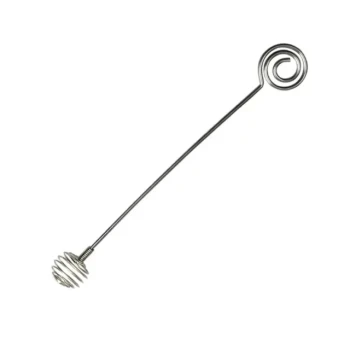
Honey sample homogenization is the fundamental preparatory step used to create a unified test substance from multiple distinct sources. It functions by thoroughly mixing diverse samples collected from different colonies or apiaries to eliminate the natural variations found in single-point sampling. This ensures the initial material possesses a uniform physicochemical baseline, establishing a reliable standard for accurate quality analysis and experimentation.
Homogenization transforms naturally variable raw honey into a standardized control, removing composition bias to ensure that subsequent analytical results reflect true quality factors rather than pre-existing inconsistencies between hives.
The Mechanics of Sample Preparation
Integrating Diverse Sources
In a raw state, honey quality varies significantly between individual colonies and apiaries.
Homogenization physically combines these discrete samples into a single batch.
This process ensures that the material being analyzed is representative of the entire collection rather than a specific, potentially anomalous hive.
Eliminating Composition Bias
Relying on a single-point sample can introduce significant statistical error.
One colony may produce honey with unique chemical properties due to specific foraging behavior or hive health.
By blending these samples, homogenization removes the "noise" of individual variation, preventing skew in the final quality assessment.
Establishing a Scientific Baseline
Creating Physicochemical Uniformity
For laboratory equipment to provide valid reports on authenticity or adulteration, the input material must be consistent.
Homogenization ensures that the physicochemical properties (such as moisture content, sugar ratios, and enzyme levels) are uniform throughout the test batch.
This uniformity creates a stable baseline, allowing researchers to trust that their measurements are accurate and reproducible.
The Role of the Reliable Control
In experiments designed to see how bees modify specific feeds, a control group is essential.
Homogenized honey serves as this control because its properties are known and constant.
This allows scientists to attribute changes in the honey strictly to the experimental variables (such as the bee's processing of feed) rather than random variance in the starting sugar source.
Understanding the Trade-offs
Specificity vs. Generalizability
While homogenization is vital for creating a general baseline, it sacrifices the unique data of individual hives.
If the goal is to identify a specific diseased colony or a single premium batch from a unique floral source, homogenization will dilute these unique markers.
Therefore, this process is best used for broad quality assurance and controlled experiments, rather than pinpointing individual hive performance.
Making the Right Choice for Your Goal
To determine if homogenization is the correct step for your analysis, consider the scope of your project:
- If your primary focus is broad quality assurance: Use homogenization to create a representative average of an entire apiary, ensuring the final product meets organic and traceability standards.
- If your primary focus is experimental research: Use homogenization to establish a strict physicochemical control, ensuring that any data deviations are caused by your experimental factors, not sample inconsistency.
Homogenization is the bridge between raw biological variability and precise scientific measurement.
Summary Table:
| Feature | Purpose in Homogenization | Impact on Analysis |
|---|---|---|
| Source Integration | Combines samples from diverse colonies | Ensures the sample represents the entire apiary collection |
| Bias Elimination | Removes individual hive variations | Prevents statistical errors and skew in quality assessments |
| Physicochemical Baseline | Standardizes moisture, sugar, and enzymes | Provides a stable control for reproducible measurements |
| Analytical Consistency | Creates a uniform test substance | Allows for accurate detection of authenticity and adulteration |
Elevate Your Honey Quality Standards with HONESTBEE
At HONESTBEE, we understand that precision in quality analysis starts with the right equipment. Whether you are a commercial apiary or a global distributor, our comprehensive wholesale offering provides everything you need to manage your supply chain with excellence. From advanced honey-filling and processing machinery that ensures product uniformity to high-quality beekeeping tools and consumables, we empower your business to deliver consistent, premium honey to the market.
Our value to you:
- Scalable Solutions: Specialized hardware and industrial machinery tailored for growth.
- Comprehensive Inventory: A full spectrum of beekeeping tools and essential consumables.
- Market Appeal: Unique honey-themed cultural merchandise to differentiate your brand.
Ready to optimize your production and ensure the highest quality standards? Contact HONESTBEE today to explore our wholesale equipment and partnership opportunities.
References
- Wedson de Lima Tôrres, Edna María Mendes Aroucha. Quality of Apis mellifera honey after being used in the feeding of jandaira stingless bees (Melipona subnitida). DOI: 10.4025/actascianimsci.v43i1.50383
This article is also based on technical information from HonestBee Knowledge Base .
Related Products
- Double Wall Honey Heating Stirring Homogenizer Mixing Machine with Various Capacity
- Economy Honey Homogenizer Mixer and Melting Machine for Beekeeping
- Honey Concentrating and Filtering Dehumidifier Machine 2T Capacity for Honey
- 0.5T Capacity Honey Dehumidifier Dryer with Vacuum Heating and Thickening Filtering Machine
- Honey Concentrating Vacuum Heating Thickening Machine Dehumidifier for Honey
People Also Ask
- What impact do homogenizers or oscillating equipment have on honey microbial detection? Ensure Testing Accuracy
- Why is thorough mechanical stirring and homogenization emphasized in honey processing? Ensure Sample Accuracy
- How do heating equipment and homogenizers liquefy crystallized honey? Expert Guide to Professional Honey Processing
- How does the honey mixer handle different types of honey? Master Viscosity for Perfect Blends
- What are the main components of the honey mixer? Engineered for Gentle, Efficient Honey Processing