The primary function of a honey super is to provide a dedicated space for bees to store surplus honey during the nectar flow. Structurally, these are boxes containing frames that are stacked on top of the hive's main brood chamber, often separated by a queen excluder.
Because the queen is restricted from entering this upper section, the honey stored here is kept separate from eggs and developing larvae. This ensures the honey remains pure for harvest and allows the colony to expand its storage capacity without compromising the organization of the brood nest.
Core Takeaway: Honey supers are the "extra" capacity added to a hive strictly for harvestable production. They enable the separation of the colony’s nursery (brood) from its pantry (honey), facilitating clean extraction and efficient hive management.
The Mechanics of Honey Supers
Designed for Surplus
The term "super" is derived from "superstructure," meaning it is extra to the hive's essential living quarters. While the lower boxes (the brood nest) house the queen, eggs, and winter reserves, the supers are added specifically to catch the abundance of the nectar flow.
Purity Through Separation
A critical function of the super is hygiene and quality control. By placing a queen excluder below the super, beekeepers prevent the queen from laying eggs in the honey frames.
This physical separation ensures that the honey harvested from supers is free from "brood taint" or impurities found in the larval development areas.
Ergonomics and Weight Management
Honey is incredibly dense. A standard deep box full of honey is often too heavy for a single person to lift safely.
Consequently, honey supers are typically shallower than the brood boxes below them. This design choice limits the weight of a full 10-frame super to roughly 30–40 lbs, making them significantly easier to handle during inspection and harvest.
Strategic Management and Timing
Catching the Nectar Flow
Supers are not permanent fixtures; they are usually added in mid-April or whenever the local "honey flow" begins. Adding them at the right time provides space for the incoming nectar and the booming bee population.
Stimulating Foraging
Providing this vertical space does more than just store honey; it signals the colony that there is room to grow. This stimulates foraging behavior and helps prevent the colony from feeling overcrowded, which is a primary trigger for late-season swarming.
The 85% Rule
Efficiency depends on incremental expansion. A new super should only be added when the previous one is approximately 85% full of capped and uncapped honey. This ensures the bees remain focused and efficient.
Understanding the Trade-offs
The Risk of "Over-Supering"
While space is necessary, adding too many empty supers at once is a common mistake. A small colony cannot patrol a massive, empty superstructure effectively.
Vulnerability to Pests
Leaving too much empty space makes the hive vulnerable to pests like small hive beetles and wax moths. If the bee population is not dense enough to guard the entire stack, these pests can infiltrate the unguarded combs and destroy the resource.
Making the Right Choice for Your Goal
Proper management of honey supers requires balancing the bees' need for space with their ability to defend it.
- If your primary focus is Maximizing Harvest: Monitor your hives closely during the nectar flow and add a new super immediately once the current frames are 85% drawn out and filled.
- If your primary focus is Colony Health: Avoid adding supers too early in the spring; wait until the colony is bursting with bees to ensure they can defend the new space against pests.
The honey super is the tool that transforms a survivalist insect colony into a productive agricultural asset.
Summary Table:
| Feature | Primary Function | Key Benefit |
|---|---|---|
| Storage Space | Houses surplus nectar during flow | Increases harvestable honey yield |
| Queen Exclusion | Keeps the queen out of honey frames | Ensures purity; no brood in honey |
| Shallower Design | Reduced frame depth | Lighter weight for easier lifting |
| Vertical Expansion | Signals room for colony growth | Reduces swarming and overcrowding |
| Pest Control | Incremental supering (85% rule) | Protects hive from moths and beetles |
Scale Your Apiary Operations with HONESTBEE
Are you looking to maximize production for your commercial apiary or expand your distribution network? At HONESTBEE, we specialize in empowering large-scale beekeeping operations with professional-grade solutions.
From shallow honey supers and frames to advanced honey-filling machines and hive-making equipment, we provide the full spectrum of hardware and consumables needed for efficient, high-volume production. Our wholesale offerings are designed to lower your overhead while increasing purity and output.
Ready to optimize your harvest? Contact us today to discuss how our specialized machinery and wholesale beekeeping tools can drive your business forward.
Related Products
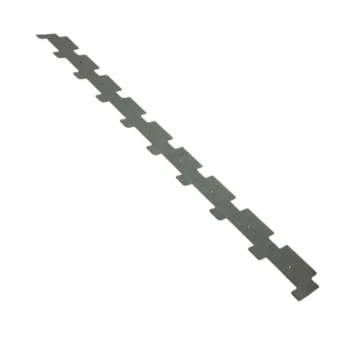
- Heavy Duty Castellated Iron Frame Spacer for Honey Supers
- Durable 16 Way Circular Bee Escape for Efficient Honey Harvesting
- Digital Honey Refractometer for Precision Measurement of Optimal Honey Quality
- Precision Honey Refractometer Instrument for Quality Assessment
- Professional Plastic Honey Dipper for Easy Honey Drizzling
People Also Ask
- What are honey super frames and what foundation options are available? Choose the Best Support for Your Bees
- What are the reasons and drawbacks of using nine frames in a ten-frame honey super? Boost Extraction Speed Today
- What are honey super frames and how many are needed per box? A Beekeeper's Essential Guide
- What are honey super frames and their foundation options? Choose the Best Support for Your Hive's Honey Production
- Why might a beekeeper use fewer than the standard number of frames in a honey super? Boost Extraction Efficiency