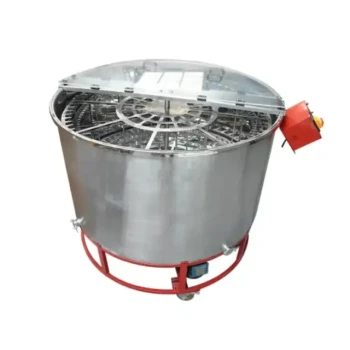
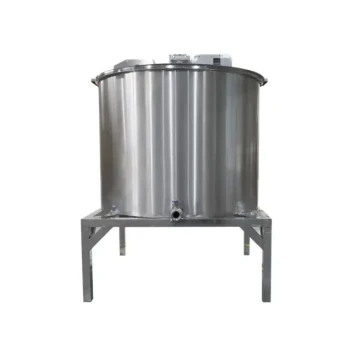
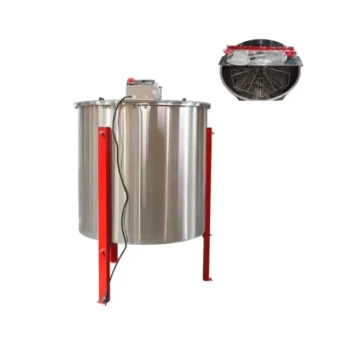
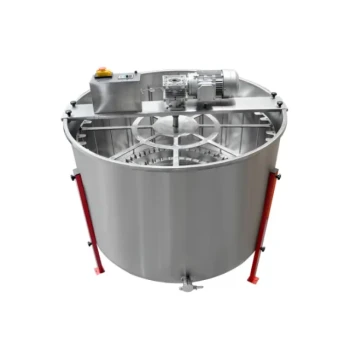
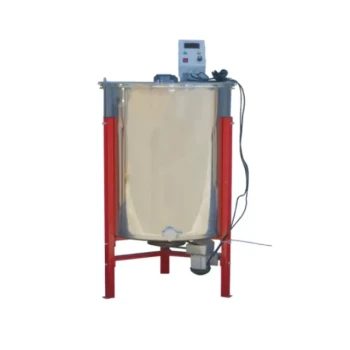
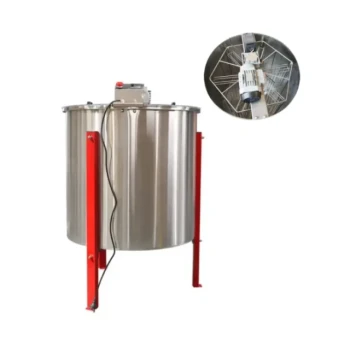
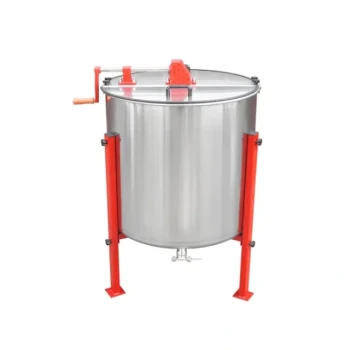
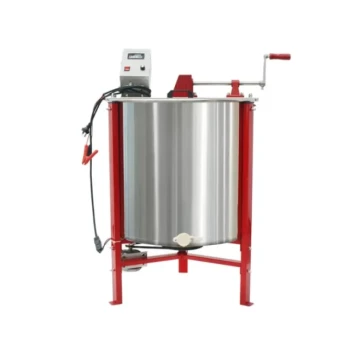
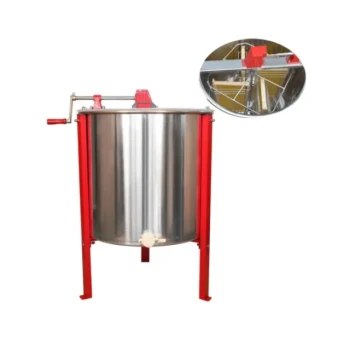
Industrial honey extractors function by utilizing centrifugal force to efficiently separate liquid honey from the wax honeycomb. This mechanical process spins honey frames at high speeds to extract the product while ensuring high throughput and strict hygiene standards are met.
The critical value of an industrial extractor lies in its ability to harvest honey without destroying the honeycomb structure, allowing for immediate reuse within the hive. This drastically reduces the biological energy bees must spend on rebuilding wax, directly converting that energy into higher honey yields.
The Mechanics of Extraction
Centrifugal Separation
The core mechanism involves placing uncapped honey frames into a drum that spins at high velocity.
Centrifugal force pulls the honey out of the wax cells and throws it against the inner walls of the extractor, where it drains to the bottom for collection.
Preservation of Comb Structure
Unlike traditional methods that crush or press the comb, industrial extractors leave the wax structure intact.
This non-destructive process is the defining feature of modern industrial processing, ensuring the physical asset of the apiary—the drawn comb—remains viable for future seasons.
Strategic Advantages for Production
Energy Conservation for the Colony
Bees consume a significant amount of honey to produce the wax needed to build combs.
By returning intact combs to the hive after extraction, you eliminate the need for bees to rebuild their nest. This allows the colony to focus entirely on nectar collection, significantly shortening the production cycle.
Hygiene and Purity Standards
Industrial extractors are often integrated with high-precision filtration systems.
As the honey is spun out, these systems effectively remove wax debris and impurities, improving the clarity of the final product and ensuring it meets food safety standards for premium markets.
Understanding the Trade-offs
Mechanical Stress Risks
While the goal is preservation, the high speeds involved can be a double-edged sword.
If the centrifugal force is not calibrated correctly, particularly with new or fragile wax, the pressure can cause "blowouts" where the comb structure collapses. Operators must carefully balance extraction speed with comb integrity.
Equipment Complexity and Maintenance
Moving from manual or crushing methods to industrial centrifugation introduces mechanical complexity.
These systems require rigorous cleaning protocols to maintain the hygiene standards they promise, as well as regular maintenance of motors and bearings to ensure consistent high-speed rotation.
Making the Right Choice for Your Operation
For commercial apiaries, the extractor is the heart of the processing line. Here is how to prioritize your needs:
- If your primary focus is Maximum Yield: Prioritize extractors with precise speed controls to protect combs, as reusing drawn comb is the single biggest factor in increasing annual harvest weight.
- If your primary focus is Premium Quality: Ensure your extractor is paired with integrated filtration components to automate the removal of impurities during the spin cycle.
Investing in the right extraction technology transforms honey harvesting from a destructive end-process into a sustainable cycle of renewal.
Summary Table:
| Feature | Function & Impact | Primary Benefit |
|---|---|---|
| Centrifugal Force | Spins frames at high speeds to pull honey from cells. | Efficient, high-throughput extraction. |
| Comb Preservation | Keeps the wax structure intact for immediate reuse. | Higher yields; bees focus on nectar, not rebuilding. |
| Integrated Filtration | Removes wax debris and impurities during the spin. | Superior honey clarity and food safety compliance. |
| Speed Control | Adjustable RPM settings for various comb types. | Prevents frame "blowouts" and mechanical damage. |
Scale Your Honey Production with HONESTBEE
Are you looking to optimize your commercial apiary or expand your distribution lineup? HONESTBEE specializes in empowering beekeeping businesses with professional-grade machinery designed for high-capacity performance. From precision industrial honey extractors and honey-filling machines to durable hive-making equipment, we provide the tools you need to maximize efficiency and honey purity.
Why Partner with Us?
- Comprehensive Wholesale: Access a full spectrum of beekeeping tools and essential industry consumables.
- Tailored Solutions: Whether you need specialized hardware or honey-themed cultural merchandise, we cater to the unique needs of distributors and commercial operations.
- Sustainable Growth: Our equipment is engineered to preserve your apiary assets, reducing colony energy expenditure and increasing your annual harvest.
Ready to upgrade your processing line? Contact our expert team today to discuss how our wholesale offerings can drive your success.
References
- Vladimir Saranchin, Bogdan Krivosheya. IMPROVING THE ECONOMIC AND PHYSICO-BIOLOGICAL EFFICIENCY OF BEE PRODUCTION. DOI: 10.55186/2413046x_2024_9_7_313
This article is also based on technical information from HonestBee Knowledge Base .
Related Products
- HONESTBEE 72 Frame Industrial Electric Honey Extractor for Beekeeping
- Commercial Electric 12 Frame Honey Extractor Spinner Motorized Honey Extractor
- 32 Frame Commercial Electric Honey Extractor for Beekeeping and Honey Production
- Commercial 48-Frame Stainless Steel Honey Extractor
- 8-Frame Electric Self-Reversing Honey Extractor Spinner for Commercial Honey Extraction Equipment
People Also Ask
- What is the importance of balancing honeycomb frames within a honey extractor? Ensure Stability and Protect Machinery
- How is honey separated from the frames after they are uncapped? Efficient Extraction Methods for High Yields
- What are the main benefits of using a honey extractor? Maximize Yields and Protect Your Honeycomb
- What are the recommended methods for removing honey from the honeycomb? Top Extraction Techniques for Maximum Efficiency
- How do manual honey extractors compare to electric honey extractors? Choosing the Right Tool for Your Apiary Growth