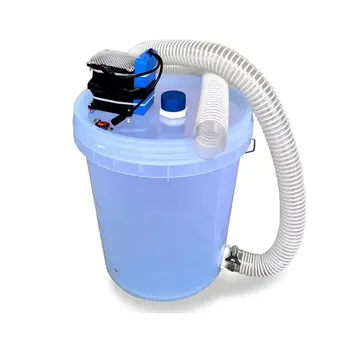
The moisture condenser and water tank serve as the critical defensive barrier between the drying chamber and the vacuum pump. These components function primarily to intercept water vapor extracted from the bee pollen, converting it from a gaseous state into a liquid state for containment. By centralizing this collection, the system prevents moisture from contaminating the vacuum pump, which is the engine driving the entire drying process.
The core value of the moisture condensation system lies in equipment preservation; by liquefying vapor before it travels further, it prevents pump oil emulsification and corrosion, ensuring stable vacuum pressure and reducing maintenance overhead.
The Mechanism of Moisture Management
Vapor Capture and Phase Change
The primary function of the condenser is to capture the water vapor that has been extracted from the drying chamber.
As the vacuum environment lowers the boiling point of water within the bee pollen, significant amounts of vapor are released. The condenser actively cools this vapor, forcing a phase change that converts the gaseous moisture into liquid water.
Centralized Liquid Collection
Once the vapor is condensed into liquid, it is directed into the water tank.
This tank acts as a holding reservoir, allowing for the centralized collection of the extracted moisture. This separation is essential to ensure that the waste product (water) is physically isolated from the airflow heading toward the vacuum machinery.
Protecting the Vacuum Infrastructure
Preventing Oil Emulsification
The most critical role of the condenser is preventing water vapor from entering the vacuum pump.
Vacuum pumps often rely on oil for lubrication and sealing. If water vapor enters the pump, it mixes with the oil, causing emulsification. This degrades the oil's properties, leading to poor lubrication and potential pump failure.
Mitigating Corrosion Risks
Beyond oil issues, moisture entry can lead to physical damage to the pump hardware.
By capturing the water beforehand, the condenser prevents moisture from coming into contact with the pump body. This directly mitigates the risk of corrosion within the pump's internal components, extending the lifespan of the equipment.
Reducing Extraction Load
The condensation system also aids the overall efficiency of the vacuum components.
By removing the volume of water vapor from the gas stream, the system reduces the extraction load on the vacuum pump. This allows the pump to maintain a stable vacuum degree more easily without being overworked by processing heavy moisture loads.
Understanding the Trade-offs
The Risk of Inefficiency
If the condensation system is undersized or malfunctions, the consequences are immediate and severe.
Incomplete condensation allows "breakthrough" vapor to reach the pump. This forces the operator to perform much more frequent oil changes and maintenance to counteract the contamination.
Dependency on Thermal Transfer
The system's effectiveness is entirely dependent on its ability to transfer heat away from the vapor.
If the cooling mechanism within the condenser is compromised, the phase change will not occur efficiently. This turns the condenser from a protective barrier into a simple pass-through pipe, negating its protective benefits entirely.
Ensuring System Longevity and Efficiency
To maximize the lifespan of your bee pollen drying equipment, consider the following operational priorities:
- If your primary focus is Equipment Longevity: Prioritize regular inspection of the condenser's cooling efficiency to ensure zero vapor reaches the pump oil.
- If your primary focus is Process Stability: Monitor the water tank levels frequently to ensure the centralized collection system never overflows or impedes the vacuum flow.
Effectively managing the moisture condenser ensures that your vacuum pump remains a tool for drying, rather than a victim of water damage.
Summary Table:
| Component | Primary Function | Key Benefit |
|---|---|---|
| Moisture Condenser | Converts vapor into liquid via phase change | Prevents moisture from entering the vacuum pump |
| Water Tank | Centralized reservoir for collected liquid | Isolates waste water from the airflow path |
| Vacuum Pump | Creates the negative pressure environment | Drives the extraction of moisture from pollen |
| Phase Change | Cooling gaseous vapor into liquid water | Protects pump oil from emulsification and corrosion |
Elevate Your Beekeeping Operations with HONESTBEE
At HONESTBEE, we specialize in empowering commercial apiaries and distributors with high-performance beekeeping machinery and tools. Our bee pollen vacuum drying systems are engineered for durability, featuring advanced moisture management to ensure your vacuum pumps remain free from corrosion and damage.
From industrial-grade hive-making and honey-filling machines to essential consumables and honey-themed cultural merchandise, we provide the full spectrum of equipment needed to scale your business.
Ready to upgrade your production? Contact us today to discover how our wholesale solutions can enhance your efficiency and long-term equipment stability.
References
- Bui Quoc Khoa, Patricia Tam. Optimization of The Vacuum Drying process for Bee Pollen Using the R method. DOI: 10.54660/ijmcr.2024.3.6.51-56
This article is also based on technical information from HonestBee Knowledge Base .
Related Products
- High Quality Honey Dehumidifier Dryer Thickening Machine for Beekeeping
- Adjustable Formic and Acetic Acid Dispenser for Bee Mite Treatment
- Portable Electric Bee Vacuum with Lithium Battery and 20L Collection Bucket
- 0.5T Capacity Honey Dehumidifier Dryer with Vacuum Heating and Thickening Filtering Machine
- Plastic Bee Pollen Trap Strips Comb Catcher Collector
People Also Ask
- Can you dehumidify honey? A Beekeeper's Guide to Preventing Fermentation
- How to dry up honey? The Safe Guide to Stabilizing Honey and Preventing Fermentation
- How can the moisture content of honey be reduced? A Guide to Safe, Effective Drying Methods
- How to remove humidity from honey? Protect Your Harvest from Fermentation
- What is the process for using a dehumidifier to lower honey's moisture content? Expert Drying Techniques