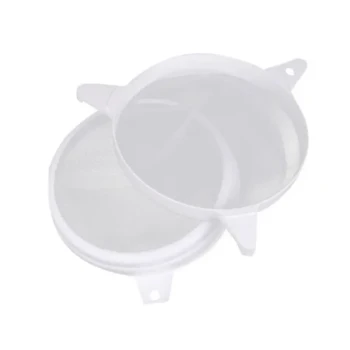
The absence of proper honey straining equipment directly compromises the physical purity, shelf life, and commercial viability of the final product. Without these tools, harvested honey retains significant impurities—specifically wax fragments, bee parts, and larvae—which degrade visual clarity and accelerate spoilage mechanisms like crystallization and fermentation.
Core Takeaway Skipping the straining process is not merely a cosmetic oversight; it fundamentally destabilizes the honey's chemistry. Impurities act as nucleation sites that speed up crystallization and introduce organic residues that can trigger fermentation, rendering the product unsuitable for high-value markets or long-term storage.
The Impact on Physical Purity and Aesthetics
Compromised Visual Clarity
The most immediate impact of lacking straining equipment is a cloudy, unappealing product. Primary processing references confirm that without filtration, honey remains saturated with wax fragments and bee debris.
These suspended particles prevent the honey from achieving the transparency and brightness consumers associate with high-quality products. This lack of clarity makes the honey appear "dirty" or unprocessed, failing to meet standard sensory expectations.
Inability to Meet Grading Standards
Commercial grading relies heavily on the absence of defects and foreign matter. Processing equipment is specifically designed to intercept these solids to ensure the honey meets food safety and purity standards.
Without this mechanical intervention, the honey will consistently grade lower. This directly reduces the market value and final selling price, restricting the product from entering high-end commercial markets or international trade channels.
The Impact on Chemical Stability and Shelf Life
Accelerated Crystallization
Honey is a supersaturated sugar solution that naturally wants to crystallize. The primary reference highlights that impurities left behind due to a lack of straining act as nucleation sites.
These microscopic particles provide a surface for sugar crystals to form. Consequently, unstrained honey solidifies much faster than strained honey, shortening its liquid shelf life and potentially frustrating consumers who prefer a liquid product.
Increased Risk of Fermentation
Beyond crystallization, biological stability is at risk. Supplementary data indicates that organic residues—such as larval fragments—left in the honey can catalyze fermentation.
Proper filtration systems are designed to remove these organic contaminants. Without them, the presence of moisture-rich debris creates an environment conducive to yeast growth, which can spoil the honey and create off-flavors.
The Operational Trade-offs
Manual vs. Mechanical Risks
If you lack specialized equipment, you are likely relying on manual extraction or gravity settling. While traditional, manual squeezing or insufficient settling often introduces higher levels of impurities and bacterial risks compared to mechanical extraction.
Maintenance and Contamination
It is important to note that owning equipment introduces a maintenance requirement. Straining tools must be cleaned meticulously; otherwise, they become a vector for cross-contamination. However, the risk of bacterial contamination is statistically higher in operations that lack the closed, sanitary systems provided by professional processing equipment.
Making the Right Choice for Your Goal
To determine the level of filtration your operation requires, consider your end-market objectives.
- If your primary focus is High-End Retail: Invest in multi-stage filtration and moisture control devices to ensure crystal-clear transparency and maximum shelf stability for retail shelves.
- If your primary focus is Bulk Commercial Sales: Prioritize high-throughput centrifugal extractors and stainless steel strainers to meet strict international physicochemical standards regarding purity and foreign matter.
- If your primary focus is Small-Scale Production: Utilize at least a basic multi-layer stainless steel strainer to remove visible wax and bee parts, ensuring basic hygiene without the cost of industrial clarifying systems.
Ultimately, straining is the critical step that transforms raw hive output into a stable, marketable, and safe food product.
Summary Table:
| Impact Factor | Without Straining Equipment | With Professional Straining |
|---|---|---|
| Visual Clarity | Cloudy with wax, debris, and bee parts | Transparent, bright, and appealing |
| Shelf Life | Rapid crystallization and fermentation risk | Stable liquid state and long-term storage |
| Market Value | Lower grading; restricted to local sales | Premium grading; suitable for export/retail |
| Food Safety | High risk of organic contaminants | Meets strict international purity standards |
| Stability | Micro-particles act as nucleation sites | Minimal nucleation for slower solidification |
Elevate Your Honey Quality with HONESTBEE Professional Equipment
Don't let impurities devalue your harvest. HONESTBEE specializes in empowering commercial apiaries and distributors with high-performance beekeeping machinery and essential tools. From multi-stage stainless steel straining systems to industrial honey-filling machines, we provide the full spectrum of equipment needed to ensure your honey meets the highest global standards.
Our Value to You:
- Maximize Profit: Achieve premium clarity and grading to command higher market prices.
- Industrial Efficiency: High-throughput machinery designed for large-scale commercial operations.
- Full Spectrum Supply: A comprehensive portfolio including hive-making tools, processing machinery, and honey-themed cultural merchandise.
Ready to scale your production and secure your product's purity? Contact our expert team today to discuss your wholesale equipment needs!
References
- Dinku Negash, Bereket Mengeste. ASSESSMENT OF HONEY PRODUCTION SYSTEM, CONSTRAINTS AND OPPORTUNITIES IN SELECTED KEBELES OF HAWASSA CITY ADMINISTRATION, ETHIOPIA. DOI: 10.29121/granthaalayah.v7.i8.2019.641
This article is also based on technical information from HonestBee Knowledge Base .
Related Products
- Stainless Steel Triangle Support Honey Strainer and Filters
- Stainless Steel Double Layer Honey Strainer Sieve Filters
- Nylon Honey Strainer Square Filter Cloth for Honey Filters
- Professional Cone-Shaped Honey Filter with Reinforced Steel Ring
- Modern Stainless Steel Honey Dipper Stirrer
People Also Ask
- Why is stainless steel preferred for honey strainers? Ensure Purity and Durability for Your Honey
- What are the selection criteria for stainless steel filtration equipment used to enhance honey purity? Pro B2B Guide
- What can I use to strain honey? A Beekeeper's Guide to Choosing the Right Filter
- What is the easiest way to strain honey? A Simple Guide for Hobbyist Beekeepers
- What is the primary function of a honey strainer in beekeeping? Achieve Commercial Purity & Visual Clarity