Professional extraction and harvesting tools serve as a fundamental catalyst for apiary profitability. By transitioning from manual to mechanized processing, an apiary can handle large honey yields efficiently while critically preserving the structural integrity of the honeycombs. This shift allows beekeepers to fully capitalize on the high productivity of superior bee stocks rather than being throttled by processing limitations.
The economic impact is driven by a cycle of efficiency: mechanized tools drastically reduce labor costs and cycle times while simultaneously increasing the volume of marketable product. By preventing damage to the honeycomb during extraction, these tools transform a single-use resource into a reusable asset, compounding productivity gains over time.
Maximizing Yield Through Asset Preservation
The Economics of Comb Reuse
The most significant economic advantage of professional extractors is the preservation of the honeycomb structure.
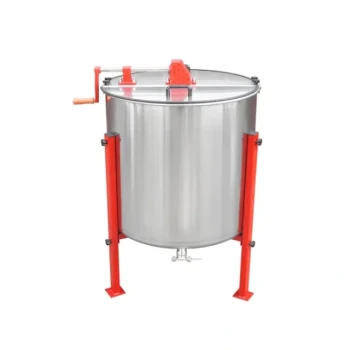
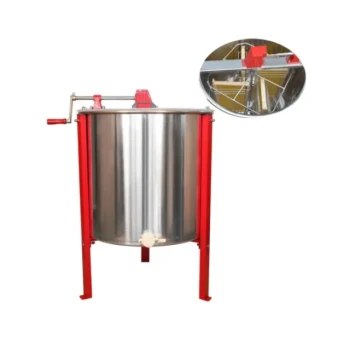
Unlike manual crushing methods, centrifugal extractors spin honey out without destroying the wax comb. This allows the frames to be returned to the hive immediately, sparing bees the energy-intensive task of rebuilding the nest and allowing them to focus solely on honey production.
Increasing Recovery Rates
High-performance extractors are designed to maximize the recovery rate of raw honey.
They ensure that the maximum amount of product is separated from the frame, reducing waste. This is essential for capitalizing on the high output of productive bee subspecies, ensuring that biological success translates directly into financial gain.
Reducing Operational Costs and Risks
Lowering Labor Intensity
Industrial-grade machinery addresses the high labor intensity associated with traditional harvesting.
By automating the extraction and filling processes, apiaries can reduce their dependence on expensive manual labor. This increase in per-capita labor productivity is a primary driver for improving the bottom line of small and medium-sized operations.
Mitigating Harvest Bottlenecks
During peak harvest seasons, the volume of raw honey can overwhelm manual processing capabilities.
Specialized machinery ensures that large volumes are processed quickly, preventing yield loss caused by delays. This speed protects the honey's physical properties from environmental degradation, ensuring the entire harvest is salable.
Enhancing Market Value and Revenue
Ensuring Commercial Consistency
Professional filling and processing machinery enable precise filtration, dehydration, and sterile bottling.
Automated filling equipment guarantees consistent net weights and reduces material waste during packaging. This precision allows apiaries to meet strict commercial food safety standards, opening doors to broader retail markets.
Preserving Product Quality for Premium Pricing
Mechanized processing is superior to manual methods in preserving the active ingredients and natural flavor profiles of the honey.
By avoiding the physical crushing of combs, professional tools minimize impurity levels and bacterial contamination risks. This preservation of quality supports a higher price point, increasing the premium value of each unit sold.
Understanding the Trade-offs
Capital Expenditure vs. Operational Savings
While the long-term economic benefits are clear, professional tooling requires a significant upfront capital investment.
Smaller apiaries must carefully calculate the return on investment (ROI) based on their hive count. For very small hobbyist operations, the cost of high-grade automation may outweigh the labor savings until a critical scale is reached.
Maintenance and Technical Complexity
Introducing mechanized systems increases the technical complexity of the operation.
Operators must account for the costs of maintenance and the potential for downtime if equipment fails. Reliance on machinery requires a shift in skills from pure beekeeping to including basic equipment maintenance to ensure continuous operation.
Making the Right Choice for Your Goal
To maximize profitability, align your equipment choices with your specific business objectives:
- If your primary focus is Volume and Scale: Prioritize high-capacity centrifugal extractors to maximize comb reuse and minimize the time bees spend rebuilding wax.
- If your primary focus is Premium Brand Positioning: Invest in precision filling and filtration systems to ensure shelf consistency and preserve the unique flavor profiles of your honey.
Ultimately, professional tooling transforms beekeeping from a labor-intensive craft into a scalable, economically resilient business model.
Summary Table:
| Economic Driver | Manual Processing | Professional Tooling | Profitability Impact |
|---|---|---|---|
| Comb Management | Crushed/Destroyed | Preserved & Reused | Higher yields; bees save energy on wax |
| Labor Intensity | High/Manual | Low/Mechanized | Significantly reduced operational costs |
| Product Quality | High Impurities | Pure & Consistent | Premium pricing & retail market access |
| Volume Capacity | Limited | High Scalability | Maximizes output during peak seasons |
| Recovery Rate | 80-85% | 95-99% | Minimal waste; maximal marketable product |
Maximize Your Apiary’s Revenue with HONESTBEE
Transitioning from manual labor to industrial efficiency is the key to scaling your honey production. HONESTBEE specializes in empowering commercial apiaries and distributors with the high-performance tools needed to thrive.
Our comprehensive wholesale offering includes:
- Specialized Machinery: From high-capacity centrifugal extractors to precision honey-filling and hive-making machines.
- Beekeeping Equipment: A full spectrum of durable hardware and essential industry consumables.
- Market Expansion: Tools designed to meet strict commercial standards, helping you achieve premium pricing and brand consistency.
Ready to transform your operation into a high-yield business? Contact HONESTBEE today to discover how our tailored equipment solutions can increase your profitability and operational resilience.
References
- Małgorzata Bieńkowska, Robert Maciorowski. The Buzz Changes within Time: Native Apis mellifera mellifera Honeybee Subspecies Less and Less Popular among Polish Beekeepers Since 1980. DOI: 10.3390/agriculture11070652
This article is also based on technical information from HonestBee Knowledge Base .
Related Products
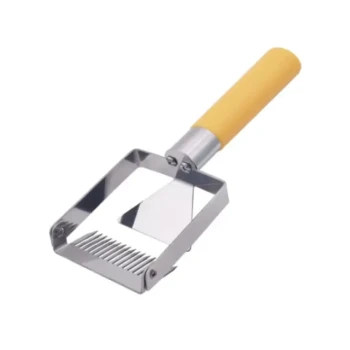
- Stainless Steel Pivoting Honey Uncapping Fork with Plastic Handle
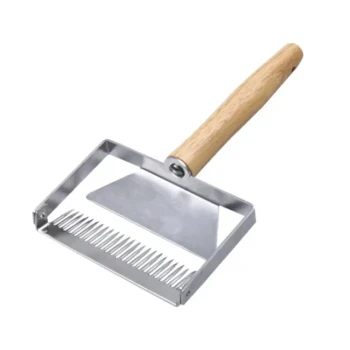
- All-Stainless Steel Pivoting Honey Uncapping Fork for Beekeeping
- Professional Honey Uncapping Roller for Efficient Harvesting
- Professional Stainless Steel Pry-Bar Hive Tool
- 6 Frame Manual Stainless Steel Honey Extractor Beekeeping Equipment
People Also Ask
- What is the design purpose of honey uncapping forks and honey uncapping tanks? Maximize Your Harvest Efficiency
- How does a honey uncapping fork supplement the use of an uncapping knife? Boost Your Honey Yield and Extraction Efficiency
- What are the essential tools for uncapping honey frames? Choose the Right Tool for Your Apiary
- What other tools are available for honey uncapping besides knives? Find the Right Tool for Your Apiary's Scale
- What tools are used for honey uncapping? Choose the Right Knife for Your Harvest