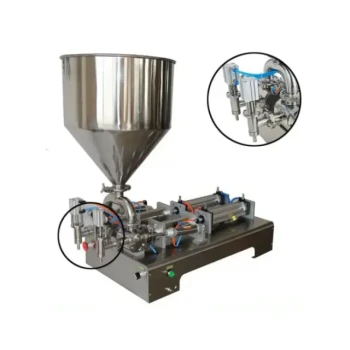
Industrial honey-filling equipment is the decisive hardware link that allows honey producers to transition from local apiary operations to compliant international exporters. It functions as a critical control point, ensuring that products meet rigorous global hygiene standards through high-precision quantitative control and standardized packaging processes.
Core Takeaway: Industrial filling machinery is not merely a tool for speed; it is a compliance engine. Its primary value lies in creating a sterile, closed-loop environment that guarantees the physical stability and regulatory adherence required for honey to survive transoceanic shipping and enter foreign retail markets.
Ensuring Global Regulatory Compliance
Achieving International Hygiene Standards
For honey to cross international borders, it must meet strict sanitary regulations. Industrial filling equipment operates within a closed environment, significantly reducing the risk of contamination associated with manual handling. This sterile process is essential for adhering to global food safety protocols.
Standardization of Product Specifications
Export markets require absolute consistency across thousands of units. Automated machinery ensures that every jar meets identical weight and volume specifications. This standardization is a prerequisite for entering commercial distribution channels and maintaining a professional brand reputation.
Operational Precision and Economic Efficiency
Minimizing Material Loss
Honey is a high-value commodity, and manual filling often leads to overfilling or spillage. High-precision metering control strictly regulates the volume of every pour. This reduces material waste, ensuring that maximum revenue is extracted from every batch of bulk honey.
Handling High Viscosity and Crystallization
Honey presents unique physical challenges due to its thickness and tendency to crystallize. Specialized filling machines are engineered with high-precision fluid control technology to manage this high viscosity. This ensures consistent flow and prevents equipment clogging that often plagues non-specialized hardware.
Protecting Product Integrity During Transport
Stability for Transoceanic Shipping
Exporting honey involves long transit times, often across oceans. Professional sealing and packaging equipment integrated into these lines ensure the physical and chemical stability of the product. This robust packaging protects the honey from environmental stressors during its journey.
Preventing Oxidation and Degradation
Exposure to air can alter the color and flavor of honey, degrading its market value. Industrial machines utilize automated sealing processes to create airtight packaging. This prevents color oxidation and secondary contamination, preserving the honey's nutritional integrity and premium pricing status.
Common Pitfalls to Avoid
The Risks of Manual or Semi-Automatic Processes
Attempting to scale for export without industrial automation is a critical error. Manual handling introduces distinct risks of secondary contamination, which can lead to rejected shipments at customs. Furthermore, the lack of precise volumetric control in manual processes leads to inconsistent product specs that fail to meet retail requirements.
Overlooking Viscosity Management
Not all filling equipment is capable of handling the fluid dynamics of honey. Failing to utilize machinery specifically designed for viscosity control can result in inconsistent fill levels and operational downtime. Standard liquid fillers often fail to maintain the flow rates necessary for high-throughput export production.
Making the Right Choice for Your Goal
To maximize the value of your export operations, align your equipment choice with your specific strategic objectives:
- If your primary focus is Regulatory Compliance: Prioritize equipment with closed-loop sterile environments to negate contamination risks and meet international hygiene standards.
- If your primary focus is Brand Protection: Focus on machines with advanced sealing technologies to prevent oxidation and ensure the honey arrives with its flavor and color intact.
- If your primary focus is Profit Margins: Select machinery with the highest precision metering to minimize material loss and maximize the number of units produced from bulk supplies.
Investing in industrial filling capability is the fundamental step in transforming a beekeeping operation into a competitive, global export business.
Summary Table:
| Key Feature | Benefit for Honey Export | Impact on Operations |
|---|---|---|
| Sterile Closed-Loop | Meets international hygiene & food safety standards | Reduces contamination & shipment rejection |
| Precision Metering | Ensures consistent volume & weight across all units | Minimizes material loss & maximizes profit |
| Viscosity Control | Handles thick or crystallized honey without clogging | Maintains high-throughput production speeds |
| Automated Sealing | Prevents oxidation and secondary contamination | Preserves honey color, flavor, and shelf-life |
Scale Your Apiary to Global Success with HONESTBEE
Transitioning from local production to international export requires more than just high-quality honey—it requires professional-grade infrastructure. HONESTBEE specializes in empowering commercial apiaries and distributors with the robust machinery needed to dominate the global market.
From high-precision honey-filling machines that ensure regulatory compliance to specialized hive-making equipment and essential industry consumables, our comprehensive wholesale portfolio is designed for your growth. We don't just supply tools; we provide the competitive edge necessary to maintain product integrity and maximize your profit margins.
Ready to elevate your beekeeping business? Contact HONESTBEE today for expert equipment solutions
References
- Tamara Tultabayeva, Aruzhan Shoman. An econometric analysis of price elasticity and demand factors in the global honey and honey-based beverage markets. DOI: 10.21003/ea.v202-04
This article is also based on technical information from HonestBee Knowledge Base .
Related Products
- Small Honey Filling Machine Sachet Packing Equipment Single Nozzle
- Double Nozzle Small Honey Filling Machine Honey Sachet Packing Packaging Equipment
- Precision Durable Efficient HONESTBEE Rotary Honey Filling Machine
- Fully Automatic Honey Filling Packaging Machine for Processing Line
- Commercial Rotary Honey Filling Machine for Production
People Also Ask
- Why is high-performance honey filling and packaging equipment essential? Boost Efficiency & Brand Value
- What role does precision filling equipment play in cost control? Maximize Honey Profits & Market Growth
- How does specialized honey filling equipment contribute to honey distribution? Scale Your Wholesale Efficiency Today
- How does high-precision honey filling equipment protect honey's biological activity? Safeguard Purity & Premium Value
- What is honey filling equipment used for? Optimize Your Bottling with Precision Automation