The primary drawback of foundationless beekeeping is the high risk of cross-comb. This occurs when bees ignore the boundaries of the wooden frame and build wax across multiple frames, fusing them together and making hive inspections difficult or impossible. To mitigate this, you must provide strong, clear comb guides within the empty frames to encourage the bees to build straight.
The freedom of foundationless beekeeping requires strict management to prevent chaotic hive structures. By utilizing physical guides and ensuring proper alignment, you can prevent cross-comb and ensure the hive remains inspectable.
The Challenge of Cross-Comb
Why Cross-Comb Occurs
In a standard hive setup, a textured foundation sheet dictates exactly where bees build. Without this blueprint, bees follow their natural instincts.
If left completely unguided, they may build "burr comb" or bridges between frames. This fuses the movable parts of the hive into a solid block, negating the primary advantage of modern Langstroth hives.
The Consequences for the Beekeeper
When cross-comb occurs, you cannot remove individual frames without tearing the hive apart.
This damages the comb, spills honey, and can inadvertently kill bees or the queen. It turns routine management into a messy, destructive process.
Strategies for Mitigation
Installing Comb Guides
The most effective solution is installing a physical guide in the top of the frame. This creates a "suggestion" for the bees to follow.
Common methods include gluing popsicle sticks into the top groove, using starter strips of wax foundation, or utilizing wedge-top frames that form a V-shape. These guides encourage the colony to begin construction in a straight line directly downward.
The Importance of Leveling
Bees build comb in response to gravity; they build straight down.
If your hive is not perfectly level side-to-side, the comb will drift away from the guide as it gets longer. Ensuring the hive stands on a level surface is a critical, often overlooked requirement for straight comb.
Early Monitoring and Correction
Even with guides, supervision is necessary during the initial build.
Check the hive shortly after installation while the wax is fresh, white, and pliable. If bees start to deviate, you can gently push the soft wax back into alignment with a gloved hand to correct their course.
Understanding the Trade-offs
Structural Fragility
Natural comb is significantly more fragile than comb built on a plastic or wire-reinforced foundation.
Even if the bees build straight, the comb may detach or collapse during handling or honey extraction. It lacks the internal skeleton that commercial foundation provides.
The Necessity of Wiring
To counter this fragility, it is highly recommended to wire your frames horizontally.
The bees will build their natural comb over the wires, incorporating them into the structure. This provides essential support, preventing the comb from falling out of the frame when you inspect it or spin it for honey.
Making the Right Choice for Your Goal
Foundationless beekeeping prioritizes hive health and natural wax production, but it demands more skill from the beekeeper.
- If your primary focus is natural comb construction: Prioritize the installation of substantial comb guides and ensure your hive stand is perfectly level before introducing bees.
- If your primary focus is structural durability: Supplement your foundationless frames with horizontal wiring to prevent comb collapse during inspections and extraction.
Success in foundationless beekeeping comes not from letting bees do whatever they want, but from gently guiding their natural instincts.
Summary Table:
| Challenge | Cause | Mitigation Strategy |
|---|---|---|
| Cross-Comb | Bees building across multiple frames | Install comb guides (popsicle sticks/wax strips) |
| Misalignment | Gravity pull on unlevel hives | Ensure hive stands are perfectly level side-to-side |
| Structural Fragility | Absence of internal wax support | Use horizontal wiring for reinforcement |
| Difficulty Inspecting | Burr comb and fused frames | Early monitoring and manual wax correction |
Maximize Your Apiary's Potential with HONESTBEE
Transitioning to foundationless methods requires precision and the right equipment. HONESTBEE supports commercial apiaries and distributors with a comprehensive range of professional-grade beekeeping tools. From specialized hardware and hive-making machinery to essential consumables and honey-themed merchandise, we provide the wholesale solutions you need to scale your operations.
Whether you are a large-scale distributor or managing a commercial apiary, our high-quality supplies ensure your hives remain healthy and productive.
Ready to elevate your beekeeping business? Contact us today to explore our full spectrum of wholesale machinery and equipment!
Related Products
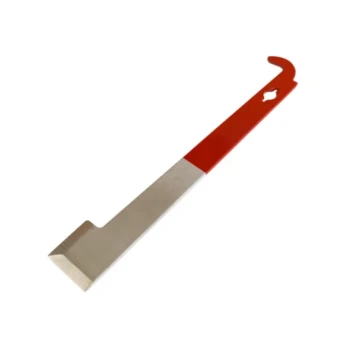
- Stainless Steel J Hook Hive Tool for Beekeeping
- High Performance Cordless Electric Bee Shaker for Beekeeping
- Miniature Stainless Steel Bee Smoker for Beekeeping
- Professional Stainless Steel J-Hook Hive Tool
- Plastic Bee Frame Beekeeping Hive Frames for Wholesale
People Also Ask
- What specific challenges do beekeeping hive tools address during hive maintenance? Essential Solutions for Apiaries
- What is a J-hook hive tool and why is it favored by some beekeepers? Master Gentle Frame Handling
- What are the features of a J-hook hive tool? Effortlessly Lift Frames with Superior Leverage
- What is the purpose of the J-hook hive tool? Effortlessly Lift Frames with Superior Leverage
- How is a J-hook hive tool designed and what is its primary use? Master Effortless Hive Inspections