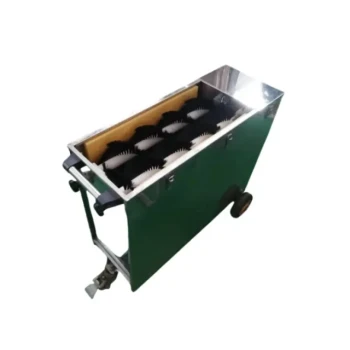
Professional application equipment operates by delivering miticides via precise vapor penetration or direct contact to neutralize Varroa destructor on adult bees and within capped brood. By effectively lowering parasite intensity, this mechanism preserves the honeybee's fat bodies and protein stores, directly countering nutritional stress and viral susceptibility.
The core success of this mechanism lies in the synergy between precision hardware and specialized consumables. It allows for the targeted elimination of mites protected inside brood cells without harming the host, effectively stopping the physiological degradation of the colony.
The Physiological Mechanism of Action
Vapor Penetration and Physical Contact
The primary mode of action involves the delivery of active ingredients through sublimation or titration. This creates a vapor or fine mist capable of penetrating capped brood cells, where mites often reproduce.
By reaching these protected areas, the treatment targets mites that are otherwise inaccessible to topical applications. This ensures a comprehensive reduction in parasite load across the entire colony, not just on adult bees.
Preservation of Bee Physiology
The immediate biological benefit of reducing mite intensity is the preservation of honeybee fat bodies. Varroa mites feed on these tissues, which are crucial for immune function and pesticide detoxification.
By halting this parasitic feeding, individual bees retain higher protein storage levels. This mechanism indirectly alleviates nutritional stress and lowers the viral load within the colony, leading to longer lifespans.
The Role of Application Equipment
Precision Dosing and Uniform Distribution
Specialized tools, such as sublimators and evaporation devices, ensure the uniform distribution of acaricides or organic agents (like oxalic or formic acid). This prevents "hot spots" of high chemical concentration that could harm the bees.
Precise dosage control is critical for maintaining the stability of commercial apiary production. It ensures the treatment remains lethal to the mite while staying safely below the toxicity threshold for the colony.
Controlled Release for Brood Cycles
Certain equipment, specifically polymer-based strips, utilizes a controlled-release mechanism. These consumables slowly emit active ingredients over a period that spans multiple brood cycles.
This sustained release is essential for catching mites as they emerge from capped cells. It ensures continuous exposure, maximizing the elimination rate of the pest population over time.
Thermal Physical Disruption
High-precision hyperthermia equipment offers a non-chemical mechanism of action. It exploits the physiological difference in heat tolerance between mites and bees.
By heating the brood nest to between 40°C and 47°C, the equipment physically disrupts the mite's functions or causes detachment. This occurs without damaging honeybee larvae, providing a residue-free control option.
Understanding the Trade-offs
Risk of Resistance and Residue
While synthetic chemical strips are effective, improper management can lead to pest resistance. If dosage is not controlled precisely, mites may survive and pass on resistant traits.
Furthermore, there is a risk of chemical residues remaining in honey and wax. This makes the precision of the application device vital for minimizing contamination, particularly for organic certification.
Balancing Efficacy with Bee Health
Aggressive treatments effectively suppress parasite populations but can risk harming the bees if not calibrated correctly. Over-treatment can stress the colony or damage the brood.
The goal is to implement standardized treatment processes that act as a physical barrier to colony collapse. This requires careful selection of consumables based on the current climate and infestation levels.
Making the Right Choice for Your Goal
Selecting the correct combination of equipment and consumables depends on your specific apiary objectives and the current state of the infestation.
- If your primary focus is preventing chemical residues: Prioritize high-precision sublimators or hyperthermia equipment that utilize organic acids or heat to treat without leaving persistent synthetic traces.
- If your primary focus is controlling a severe, active outbreak: Utilize controlled-release synthetic strips that provide sustained, uniform dosage across multiple brood cycles to ensure emerging mites are neutralized.
Ultimately, the effectiveness of any Varroa intervention relies not just on the chemical used, but on the precision with which it is delivered to protect the bee’s vital protein reserves.
Summary Table:
| Mechanism Component | Method of Action | Key Benefit to Colony |
|---|---|---|
| Sublimation/Vapor | Deep penetration of capped brood cells | Reaches mites where they reproduce |
| Controlled Release | Sustained chemical exposure via strips | Neutralizes mites across multiple brood cycles |
| Hyperthermia | Targeted heat (40°C - 47°C) | Residue-free disruption of mite physiology |
| Precision Dosing | Calibrated delivery systems | Prevents bee toxicity and chemical 'hot spots' |
| Physiological Protection | Miticide-driven parasite reduction | Preserves fat bodies and immune function |
Secure Your Colony's Future with Professional Beekeeping Solutions
At HONESTBEE, we understand that commercial apiaries and distributors require more than just supplies—they need precision and reliability to maintain colony productivity. Our comprehensive wholesale offering includes everything from high-performance hive-making and honey-filling machinery to specialized Varroa treatment tools and essential industry consumables.
Why partner with HONESTBEE?
- Precision Engineering: Our equipment ensures accurate dosing and uniform distribution to protect your bees' vital fat bodies.
- Full Spectrum Supply: We provide a complete range of beekeeping hardware and honey-themed cultural merchandise to support your business growth.
- Commercial Expertise: We cater specifically to the needs of large-scale operations and global distributors.
Don't let Varroa mites compromise your yields. Contact us today to explore our wholesale equipment and consumables and see how our tailored solutions can enhance your apiary's efficiency.
References
- Arnold Majoroš, Maja Ivana Smodiš Škerl. Prehrambeni stres pčelinjih zajednica (<i>Apis mellifera</i> L.). DOI: 10.46419/vs.53.4.11
This article is also based on technical information from HonestBee Knowledge Base .
Related Products
- Durable 12V Oxalic Acid Vaporizer for Varroa Mite Treatment Beehive Beekeeping Tool
- Heavy Duty 12V Oxalic Acid Evaporator Vaporizer for Bee Varroa Mite Treatment Beekeeping Fumigator Atomizer
- Oxalic Acid Vaporizer 12V for Bee Varroa Mite Treatment
- Varroa Easy Check Mite Tester Kit Counter Alcohol Wash Jar
- Adjustable Formic and Acetic Acid Dispenser for Bee Mite Treatment
People Also Ask
- What are the technical advantages of using professional Sublimators? Maximize Mite Control with Precision Vaporizers
- What is the minimum temperature for oxalic acid vaporization? Optimize Winter Mite Control at 37°F
- What is the recommended procedure for inserting and activating a vaporizer in a beehive? Master Hive Treatment Success
- What factors determine how often to treat for varroa mites with oxalic acid? Time Your Treatment for Maximum Efficacy
- What is the overall goal of using oxalic acid in late fall for beekeepers? Maximize Winter Survival with a Broodless Treatment