Operationally, 9 frames create fewer, wider, deeper honeycombs, while 11 frames create more, narrower combs with greater total frame surface area. Nine-frame supers generally speed uncapping and can simplify extraction, but they require accurate spacing and do not automatically produce more honey. Eleven frames maximize the number of combs in the box and are typically used with narrower or self-spacing frames, but they increase handling and uncapping time.
The practical choice is a trade-off between processing efficiency and comb capacity. Use 9 frames when wide, easy-to-uncap comb is the priority; use 11 frames when standardized frame spacing and maximum comb surface area are more important.
How the Two Configurations Operate Differently
9-frame setup: wider comb and easier uncapping
A 9-frame arrangement leaves additional clearance between adjacent frames. Bees generally use that space to draw the comb outward, producing wider and often deeper honeycombs.
The wider comb is easier to uncap with a knife or automated uncapping equipment because the capped surface projects farther beyond the wooden frame.
11-frame setup: more frames and narrower comb
An 11-frame arrangement places more frames in the same super. This normally requires narrower frames or a frame system specifically designed for 11-frame capacity; eleven standard-width frames may not fit correctly in a conventional 10-frame super.
The resulting combs are typically narrower than those produced in a 9-frame setup, but the box contains more individual frames and potentially more total comb surface.
How Frame Count Affects Honey Processing
Uncapping workload
With 9 frames, the beekeeper handles fewer frames per super. That reduces the number of frame movements and uncapping operations, particularly when processing large commercial batches.
With 11 frames, each super contains more frames to remove, inspect, uncap, and return. The difference is operationally significant when labor and extraction speed are major cost factors.
Extraction performance
Wider, more evenly drawn comb from a 9-frame setup can be well suited to knife uncapping and many automated uncapping systems. Its deeper cells may also provide a favorable honey-to-frame ratio.
However, 9 frames do not guarantee a higher total honey yield than 11 frames. Actual yield depends on comb depth, bee draw, nectar availability, frame dimensions, colony strength, and whether the comb is fully capped.
Frame handling and throughput
Nine frames can reduce handling time per box, but each frame may carry more honey and therefore weigh more. This can affect lifting, staging, and extractor loading.
Eleven frames distribute the comb across more units. That may make individual frames lighter, but it increases the number of units that must be processed.
Effects on Colony Management
Spacing accuracy with 9 frames
A 9-frame setup must be spaced consistently. If frames are not centered and evenly distributed, bees may build irregular comb, burr comb, or excessive bridging between frames.
For commercial or wholesale operations, this makes reliable frame spacers, correct box dimensions, and consistent assembly especially important.
Self-spacing with 11 frames
Eleven-frame systems are generally used with frames designed to maintain their own spacing. This improves consistency during installation and inspection, provided the box and frames are compatible.
The main requirement is equipment standardization. Mixing frame widths, spacers, and box formats can create poor bee space and uneven comb.
Comb quality
Nine-frame spacing often encourages comb to be drawn evenly from top to bottom, especially when the colony is strong and the frames are correctly positioned.
Eleven frames can produce more uniform spacing when self-spacing equipment is used, but the narrower comb may be less convenient for knife uncapping.
Understanding the Trade-offs
More honey per frame is not the same as more honey per box
A wider 9-frame comb can hold more honey individually, but the box contains fewer frames. The increased depth may offset the lower frame count, but the final result is not universal.
The defensible operational conclusion is that 9 frames can improve uncapping efficiency and comb handling, not that they always produce a higher box yield.
Nine frames require disciplined management
The system performs well only when spacing is maintained. Poor spacing can eliminate the intended advantages by creating comb defects that slow inspection, uncapping, and extraction.
This is particularly relevant for resellers and commercial users supplying equipment across different apiary systems. The frames, spacers, and supers should be sold or specified as a compatible package.
Eleven frames increase processing volume
The 11-frame arrangement provides more individual combs, but it also creates more work per super. Labor-intensive operations may experience longer uncapping and loading cycles.
Its advantage is consistency and maximum use of the available box width, not necessarily faster honey processing.
Equipment compatibility matters
Nine-frame spacing is commonly applied in a box designed for 10 frames, using a spacer or manual positioning. Eleven-frame setups require appropriate narrow or self-spacing frames.
Before purchasing or supplying either configuration, confirm the super’s internal dimensions, frame width, spacer type, extractor capacity, and uncapping method.
Choosing the Right Configuration
The best configuration depends less on the nominal frame count than on the complete workflow from colony management through extraction and fulfillment.
- If your primary focus is faster uncapping and streamlined extraction: Use 9 frames with accurate spacing to produce wider comb that is easier to process.
- If your primary focus is standardized equipment and maximum frame surface area: Use 11 compatible narrow or self-spacing frames designed for that super.
- If your primary focus is consistent commercial supply: Stock matched supers, frames, and spacers rather than combining components from different standards.
- If your primary focus is maximum honey yield per box: Test both systems under local conditions, because comb depth and bee draw—not frame count alone—determine the result.
The right choice is the one that matches your frames, labor model, extraction equipment, and desired comb format.
Summary Table:
| Aspect | 9-Frame Setup | 11-Frame Setup |
|---|---|---|
| Comb size | Wider, deeper combs | Narrower combs |
| Total frame surface | Less total surface | More total surface |
| Uncapping ease | Easier due to wider comb | More frames to uncap |
| Handling weight | Heavier per frame | Lighter per frame |
| Spacing requirements | Requires manual spacing | Often self-spacing frames |
| Processing time | Faster per box | More time per box |
| Honey yield potential | Potentially more per frame, but not guaranteed per box | Potentially more total comb area, but not guaranteed per box |
Looking to optimize your honey processing with the right frame configuration? HONESTBEE offers a comprehensive range of beekeeping equipment and expert guidance to help you choose the perfect setup for your apiary. As a leading wholesale supplier, we provide everything from hive-making machinery to self-spacing frames and extractors. Our dedicated team ensures rapid response, ultra-fast delivery, and full OEM/ODM support. Contact us today at our contact form to discuss your needs and boost your operational efficiency!
Related Products
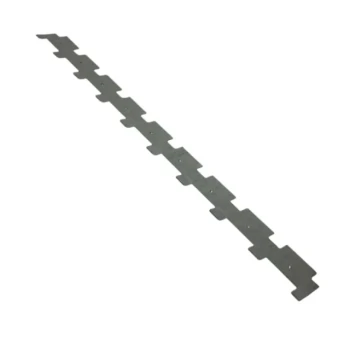
- Heavy Duty Castellated Iron Frame Spacer for Honey Supers
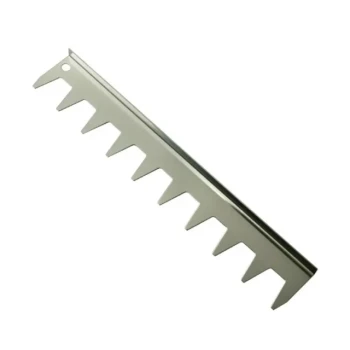
- Stainless Steel 9 Frame Hive Spacer Durable Precise for Commercial Beekeeping
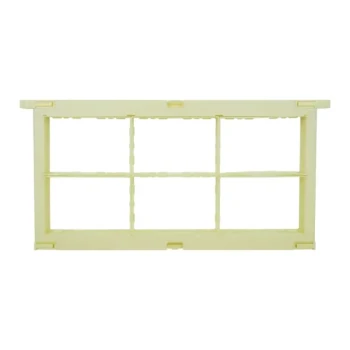
- Plastic Honey Comb Frames Cassette Box for Honey
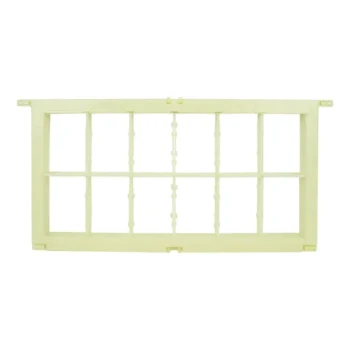
- Automatic Heat Preservation 6 Frame Pro Nuc Box for Honey Bee Queen Mating
- Professional 500g Sectional Comb Honey Frame System for Beekeeping
People Also Ask
- What are honey super frames and what foundation options are available? Choose the Best Support for Your Bees
- What are the reasons and drawbacks of using nine frames in a ten-frame honey super? Boost Extraction Speed Today
- What are honey super frames and how many are needed per box? A Beekeeper's Essential Guide
- What are honey super frames and their foundation options? Choose the Best Support for Your Hive's Honey Production
- Why might a beekeeper use fewer than the standard number of frames in a honey super? Boost Extraction Efficiency