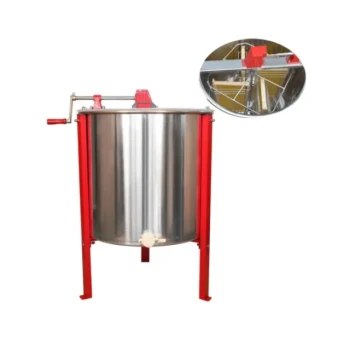
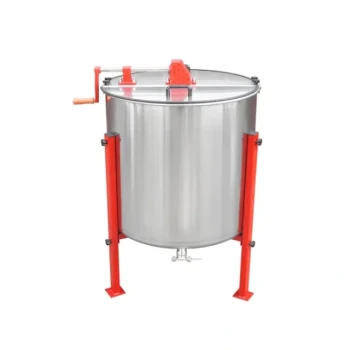
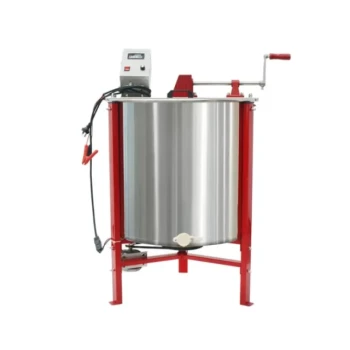
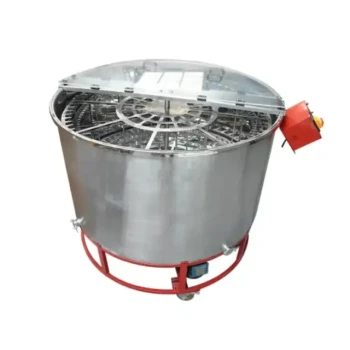
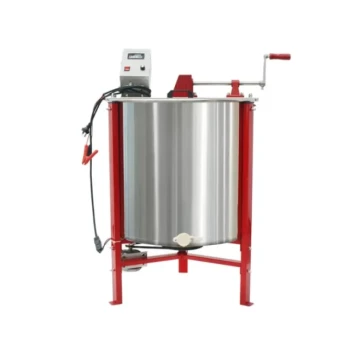
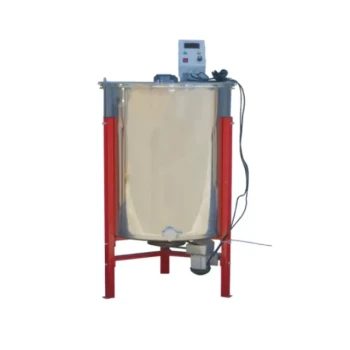
The primary disadvantage of a manual honey extractor is that it is labor-intensive. Because the mechanism relies entirely on a hand crank, the operator must provide continuous physical effort to generate the centrifugal force needed to spin the frames. This process can become physically exhausting, particularly when processing large batches of honey or working through multiple hives.
The Core Takeaway While manual extractors are cost-effective, they trade financial savings for "sweat equity." The physical exertion required makes them significantly slower and more tiring than electric models, limiting their practicality for anything beyond small-scale or hobbyist beekeeping.
The Physical Realities of Manual Extraction
The Mechanics of Fatigue
Unlike electric models that run at the push of a button, a manual extractor requires you to actively turn a crank to spin the basket.
This is not a brief task; effectively extracting honey requires sustained spinning at specific speeds. Doing this repetitively for frame after frame creates muscle fatigue in the arm and shoulder.
Impact on Processing Speed
The manual nature of the device inherently slows down your workflow.
Since you must be physically present and engaged to operate the crank, you cannot multitask (such as uncapping the next set of frames) while the current batch is spinning. This makes the overall harvest time significantly longer compared to motorized setups.
Volume Limitations
Manual extractors are generally designed with smaller capacities, often holding only two to four frames at a time.
If you have a large apiary, the combination of small batch sizes and the physical labor required for each batch creates a bottleneck. This renders manual units inefficient for commercial operations or hobbyists with a rapidly growing number of hives.
Understanding the Trade-offs
Control vs. Effort
Despite the physical toll, manual extraction offers superior tactile feedback.
By feeling the resistance on the crank, you can adjust the speed instantly. This allows for a gentle extraction that prevents delicate or new wax combs from "blowing out" (breaking) inside the basket, a common risk with powerful electric motors.
Cost and Portability vs. Convenience
The manual design eliminates the need for a motor, making these units significantly lighter, cheaper, and easier to transport.
They do not require electricity, which is a massive advantage if you harvest honey in remote locations or off-grid apiaries. However, you must weigh this portability against the physical stamina required to complete the job.
Making the Right Choice for Your Goal
To decide if the physical labor is a dealbreaker for you, consider the scale of your operation.
- If your primary focus is budget and small-scale hobbyist beekeeping: A manual extractor is likely the best choice for fewer than 10 hives, as the cost savings outweigh the labor required for small harvests.
- If your primary focus is efficiency or scaling up production: You should invest in an electric extractor, as the time saved and reduced physical fatigue are essential for managing more than 10 hives.
Choose the tool that respects both your budget and your physical endurance.
Summary Table:
| Feature | Manual Honey Extractor | Electric Honey Extractor |
|---|---|---|
| Primary Driver | Hand-crank (Physical labor) | Electric Motor (Automated) |
| Labor Intensity | High - requires sustained effort | Low - push-button operation |
| Processing Speed | Slow - cannot multitask | Fast - allows for concurrent uncapping |
| Ideal Scale | 1-10 Hives (Hobbyist) | 10+ Hives (Commercial/Serious Hobbyist) |
| Cost & Power | Low cost; No electricity needed | Higher investment; Requires power source |
| Best For | Portability and budget | Productivity and scaling |
Scale Your Honey Production with HONESTBEE
Transitioning from manual labor to professional efficiency? HONESTBEE specializes in supporting commercial apiaries and distributors with high-performance beekeeping machinery. Whether you need automated honey-filling machines to speed up packaging or large-scale electric extractors to save your back, we provide the full spectrum of industrial-grade tools and consumables.
Boost your apiary's ROI today. Contact our wholesale team to discover how our hive-making equipment and professional honey tools can transform your business from a labor-heavy hobby into a streamlined operation.
Related Products
- Stainless Steel 3 Frame Manual Honey Extractor Spinner for Bee Honey Extraction
- HONESTBEE 3-Frame Manual Acrylic Honey Extractor
- HONESTBEE 4 Frame Manual Self Reversing Honey Extractor for Beekeeping
- Stainless Steel Manual 8 Frame Radial Honey Extractor Machine for Beehives
- 2 Frame Stainless Steel Manual Honey Spinner Extractor for Beekeeping
People Also Ask
- Which type of honey extractor is generally more durable? Focus on Material & Build Quality for Longevity
- What are the disadvantages of a manual honey extractor? Overcome Efficiency Bottlenecks in Your Apiary
- What is a manual honey extractor? The Essential Guide to Cost-Effective Beekeeping for Beginners
- Why are manual extractors popular among beginner beekeepers? A Guide to Starting Simple & Saving Money
- What are the primary advantages of utilizing a manual honey extractor? Cost-Effective & Gentle Harvesting