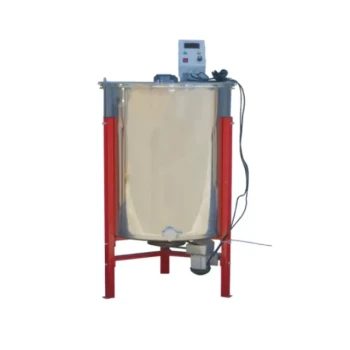
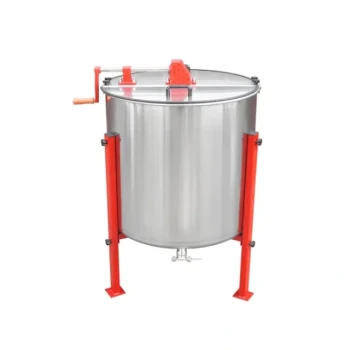
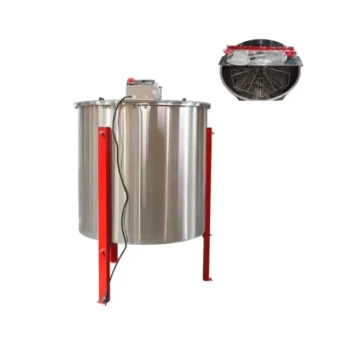
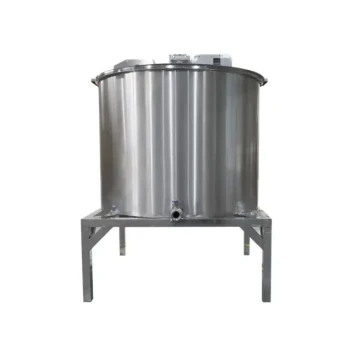
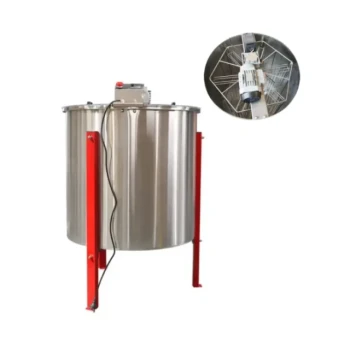
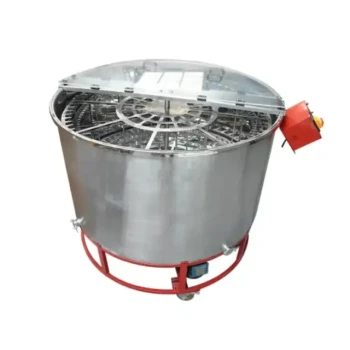
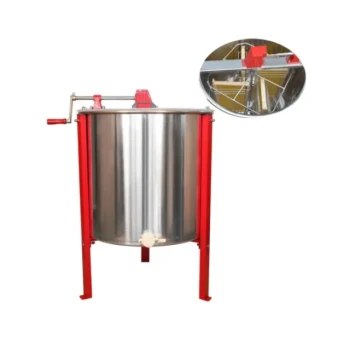
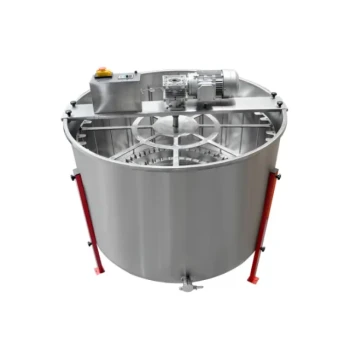
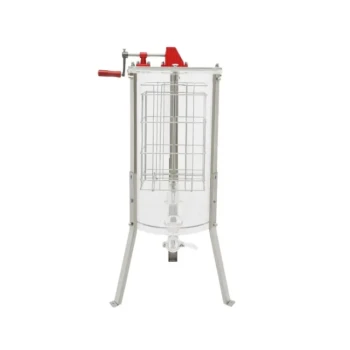
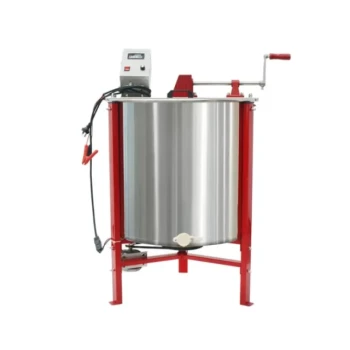
The primary function of a Centrifugal Honey Extractor is to separate liquid honey from the honeycomb using high-speed rotational force. By spinning the frames, the device utilizes centrifugal physics to fling honey out of the cells without crushing or destroying the delicate wax structure. This allows for rapid extraction while keeping the honeycomb intact for future use.
By substituting destructive manual squeezing with non-invasive centrifugal force, this equipment maximizes honey yield while preserving the honeycomb's structural integrity. This dual benefit protects the colony's resources and significantly increases overall production efficiency.
The Mechanics of Extraction
Utilizing Centrifugal Force
The extractor operates by securing honeycomb frames within a drum and rotating them at high speeds. This generates sufficient physical force to pull the viscous honey out of the un-capped cells.
Non-Destructive Separation
Unlike traditional methods that crush the comb, the centrifugal approach achieves liquid-solid separation without damaging the honeycomb structure. This ensures the physical framework of the comb remains viable after the honey is removed.
Why Structural Integrity Matters
Enabling Comb Reusability
The most critical advantage of this method is the preservation of the honeycomb frames. Because the wax structure is not destroyed during extraction, the empty combs can be returned directly to the hive.
Conserving Colony Energy
When combs are reused, bees do not need to expend energy secreting new wax to rebuild the hive infrastructure. This allows the colony to redirect their energy toward nectar collection, directly boosting the efficiency of future honey production.
Hygiene and Quality Implications
Reducing Contamination
Mechanized extraction significantly improves hygiene compared to manual squeezing. By avoiding physical crushing, the process minimizes the introduction of impurities such as wax debris or bee remains into the final product.
Preserving Chemical Composition
The physical separation process does not alter the honey’s original chemical makeup. This is essential for producing high-purity samples suitable for strict analysis or high-quality commercial sale.
Understanding the Trade-offs
Equipment Maintenance and Material
To maintain purity, the equipment must be constructed from food-grade materials like stainless steel to prevent corrosion from the honey's acidity. Lower-quality extractors may degrade over time, risking contamination of the product.
Prerequisite Preparation
Centrifugal extraction is not a "dump and run" process; it requires the wax cappings on the cells to be removed prior to spinning. If cappings remain, the centrifugal force cannot access the honey, rendering the process ineffective.
Making the Right Choice for Your Goal
The type of extractor you choose should align with the scale of your apiary and your specific production targets.
- If your primary focus is maximum yield efficiency: Prioritize automated equipment with precise speed controls to ensure thorough extraction without breaking the combs, allowing bees to focus immediately on nectar collection.
- If your primary focus is product purity: Select a unit constructed from high-grade stainless steel to resist acidity and prevent secondary contamination or corrosion.
- If your primary focus is low-energy operation: Utilize a manual centrifugal model, which provides the benefits of comb preservation and collective harvesting without requiring electrical infrastructure.
The Centrifugal Honey Extractor is the definitive solution for apiarists seeking to balance high-volume production with sustainable colony management.
Summary Table:
| Feature | Benefit |
|---|---|
| Centrifugal Mechanism | Uses high-speed rotation to pull honey from cells without crushing wax. |
| Comb Preservation | Keeps honeycomb intact, allowing bees to reuse frames and save energy. |
| Hygienic Design | Reduces impurities and contamination compared to manual squeezing. |
| Material Quality | Food-grade stainless steel resists honey acidity and ensures purity. |
| Efficiency | Increases production speed and honey yield for commercial operations. |
Scaling Your Apiary Production?
As a professional partner to commercial apiaries and global distributors, HONESTBEE understands that efficiency and purity are the cornerstones of your success. We provide a comprehensive wholesale offering, ranging from high-capacity centrifugal extractors and honey-filling machines to specialized hive-making equipment and essential industry consumables.
Whether you are looking to upgrade your extraction facility or stock premium hardware for your distribution network, our team is ready to supply the professional-grade tools your business demands.
Contact HONESTBEE today to discuss your wholesale needs and see how our machinery can streamline your honey production.
References
- Andrés Rivera-Mondragón, Hermógenes Fernández‐Marín. Assessment of the Quality, Chemometric and Pollen Diversity of Apis mellifera Honey from Different Seasonal Harvests. DOI: 10.3390/foods12193656
This article is also based on technical information from HonestBee Knowledge Base .
Related Products
- electric honey extractor honey centrifuge 3 frame honey extractor stainless steel honey frame extractor
- Manual Hand Crank 4 Frame Honey Extractor Centrifuge for Beekeeping
- Professional 4 Frame Self Reversing Electric Honey Extractor for Beekeeping
- 24 Frame Honey Extractor Commercial Radial Honey Frame Extraction Machine
- Electric 4 Frame Tangential Honey Extractor
People Also Ask
- What are the characteristics of electric honey extractors? Boost Your Apiary Efficiency with Automated Technology
- What are the disadvantages of using an electric honey extractor? Weighing Cost, Power, and Comb Safety
- What are the advantages of an electric honey extractor? Boost Efficiency and Scale Your Honey Production
- What are the technical advantages of electric honey extractors? Maximize Yield and Protect Your Bee Colony
- How does an electric honey extractor affect the quality of honey? Preserve Flavor & Purity with Precision Extraction