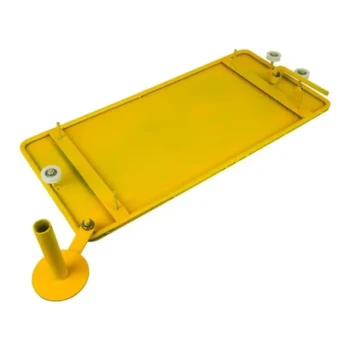
The primary function of a standardized grid frame is to act as a quantitative field measurement tool that converts visual estimates of bee bread into precise data. By overlaying a grid of known dimensions—typically 5x5 cm—onto a honeycomb, technicians can accurately measure the surface area occupied by food stores. This allows for the conversion of abstract storage volumes into specific cell counts, enabling a scientific assessment of the colony's protein nutritional status.
A standardized grid frame transforms subjective observation into objective data. It provides the necessary metrics to accurately calculate nutritional reserves, moving colony management from guesswork to a scientifically grounded practice.
The Mechanics of Measurement
Standardizing the Field of View
To evaluate a colony effectively, you must move beyond general impressions. A standardized grid frame physically segments the complex surface of a honeycomb into manageable, measurable units.
By placing this tool directly against the hive surface, you isolate specific regions of interest. This eliminates the variability inherent in visual estimation, ensuring that every measurement is consistent across different hives and time periods.
Converting Area to Cell Counts
The true power of this tool lies in its ability to translate surface area into population or storage metrics. Beekeepers use specific conversion factors to derive actionable data from the grid's raw area measurements.
For example, a common conversion factor estimates approximately 4 worker cells per square centimeter. Using this metric, you can mathematically translate the measured area of bee bread directly into the number of cells available for consumption or brood rearing.
Why Precision Matters for Bee Bread
Assessing Protein Nutritional Status
Bee bread represents the colony's fermented pollen supply, which is their primary source of protein. A standardized grid allows you to determine exactly how much protein is available to the workforce.
According to standard protocols, this measurement is not just about counting stores; it is a scientific assessment of nutritional health. Knowing the precise volume of bee bread helps predict the colony's ability to rear larvae and sustain itself during dearths.
Evaluating Overall Productivity
While the primary focus may be on bee bread, the grid frame is versatile. It is also used to measure capped brood and honey storage using the same quantitative principles.
By tracking these variables over time, you can chart the colony’s breeding capacity and overall productivity. This data highlights the balance between resource accumulation (honey/pollen) and population growth (brood).
Understanding the Trade-offs
Time vs. Accuracy
Using a standardized grid frame yields superior data, but it requires a significant investment of time. Unlike a quick visual inspection, applying the grid and counting squares slows down the hive assessment process.
Disruption Risks
Because the measurement is a "field tool" used on live colonies, the extended time required to count grid squares increases the duration the hive remains open. This can lead to temperature fluctuations within the brood nest or increase the risk of robbing by other bees.
Making the Right Choice for Your Goal
To determine when to employ a standardized grid frame, consider your specific objectives:
- If your primary focus is scientific research or detailed auditing: Use the grid frame to generate verifiable data sets on protein resources and brood counts.
- If your primary focus is routine maintenance: Rely on visual estimates to minimize hive disruption, reserving the grid for when you suspect nutritional deficiencies.
Precision in measurement allows you to diagnose colony health before visible symptoms of decline appear.
Summary Table:
| Feature | Purpose & Detail |
|---|---|
| Primary Tool Function | Converts visual area into precise quantitative data (cm² to cell count) |
| Standard Dimensions | Typically utilizes a 5x5 cm grid overlay |
| Conversion Metric | Approx. 4 worker cells per square centimeter (cm²) |
| Key Applications | Measuring bee bread (protein), capped brood, and honey reserves |
| Core Advantage | Facilitates scientific assessment of colony nutritional health |
| Operational Trade-off | Higher accuracy vs. increased hive open-time and labor |
Optimize Your Apiary with Professional Precision
At HONESTBEE, we understand that scientific accuracy is the backbone of successful commercial beekeeping. Whether you are a large-scale apiary or a specialized distributor, we provide the industrial-grade tools you need to move from guesswork to data-driven management.
From high-precision measurement tools and specialized hive-making machinery to honey-filling systems and essential industry consumables, our comprehensive wholesale portfolio is designed to enhance your productivity and honey yields.
Ready to scale your operation? Contact us today to explore our full spectrum of beekeeping equipment and see how our hardware can transform your business efficiency.
References
- O. A. MISHCHENKO, K. D. AFARA. PROVIDING THE BEE COLONY WITH PROTEIN FOOD. DOI: 10.46913/beekeepingjournal.2022.9.10
This article is also based on technical information from HonestBee Knowledge Base .
Related Products
- HONESTBEE Durable Frame Wiring Board with Integrated Tensioner
- Assembled Wooden Bee Frames with Beeswax Foundation Ready to Use by HONESTBEE
- Wooden Bee Hive Frames for Beekeeping and Wholesale
- Precision Stainless Steel Frame Cleaner for Hive Grooves and Corners
- Assembled Wooden Bee Frames with Plastic Foundation for Durability and Convenience by HONESTBEE
People Also Ask
- What tools and materials are required for wiring a beehive frame? Essential Equipment for Stronger Honeycomb
- How to wire a bee frame? A Step-by-Step Guide for Strong, Durable Honeycomb
- What is the final step in wiring a frame? Secure Lasting Tension for a Durable Hive
- What is minimalist bee frame wiring? Learn the Risks and Benefits for Beekeeping
- What factors determine the amount of wiring needed in beehive frames? Tailor Your Strategy for Your Climate