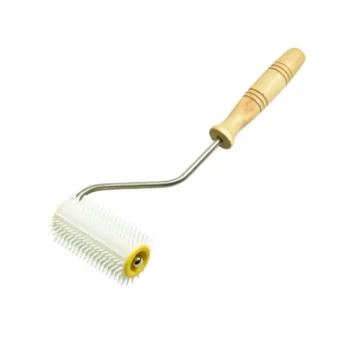
The primary function of high-precision foundation rollers is the simultaneous extrusion and texturing of beeswax. These components physically transform molten wax—whether pure or mixed—into thin, uniform sheets while imprinting them with standardized hexagonal cell patterns. This process creates the essential geometric blueprint that allows honeybees to construct regular, structurally sound combs.
By strictly controlling the extrusion and embossing process, these rollers ensure every sheet has consistent cell dimensions and thickness. This precision is critical for providing bees with a mechanically stable base and establishing a standardized baseline for analyzing wax purity and quality.
The Mechanics of Foundation Production
Extrusion and Texturing
High-precision rollers operate by handling beeswax in a molten state.
Rather than simply stamping a solid sheet, these rollers physically extrude the liquid material.
This creates a continuous sheet with a specific, uniform thickness while simultaneously defining the surface texture.
Geometric Guidance for the Colony
The texture on the roller surface is not merely decorative; it provides necessary geometric guidance.
The precise hexagonal ridges serve as a physical roadmap for the bees.
This ensures they build "regular combs," preventing the chaotic or unstable comb structures that can occur without a standardized base.
Why Precision Matters for Performance
Structural Support
Beyond geometry, the rollers provide physical support for the colony's infrastructure.
By mechanically compressing the wax during the extrusion and embossing process, the rollers enhance the structural integrity of the sheet.
This allows the finished foundation to eventually support the significant weight of honey and brood once installed in the hive.
Standardization for Research
From a technical and scientific perspective, high-precision rollers establish a standardized baseline.
When researching the impact of adulterants (impurities) on comb structure, variables must be minimized.
By guaranteeing that the cell base dimensions are mathematically consistent, researchers can isolate variables, ensuring that any structural deviations are due to the wax composition, not manufacturing defects.
Understanding the Trade-offs
The Cost of Inconsistency
If rollers lack high precision, the cell base dimensions will vary across the sheet.
Bees are sensitive to these irregularities; inconsistent patterns can lead to irregular comb building or structural failure under heat and load.
Material State Dependency
The effectiveness of these rollers is highly dependent on the state of the beeswax.
Because the primary function involves extruding molten wax, the process requires strict temperature control.
If the wax cools too quickly before the rollers impress the texture, the pattern will be faint; if it is too hot, the sheet may not hold its shape.
Making the Right Choice for Your Goal
Whether you are manufacturing for commercial beekeeping or scientific analysis, the precision of your rollers dictates the final utility of the foundation.
- If your primary focus is Commercial Beekeeping: Prioritize rollers that deliver deep, consistent embossing to maximize structural strength and ensure immediate acceptance by the hive.
- If your primary focus is Material Research: Prioritize high-precision rollers that guarantee exact geometric standardization to eliminate physical variables when testing for adulterants.
Precision in manufacturing translates directly to stability in the hive and validity in the lab.
Summary Table:
| Feature | Function | Benefit |
|---|---|---|
| Extrusion & Texturing | Simultaneous wax shaping and pattern embossing | Creates uniform, continuous sheets |
| Geometric Guidance | Imprinting standardized hexagonal cell patterns | Ensures bees build regular, stable combs |
| Structural Support | Mechanical compression of molten beeswax | Supports weight of honey and brood |
| Standardization | Guarantees exact cell base dimensions | Eliminates variables for material research |
Elevate Your Beekeeping Operation with HONESTBEE
At HONESTBEE, we specialize in empowering commercial apiaries and distributors with high-performance beekeeping machinery. Our high-precision foundation rollers and hive-making machines are engineered to provide the structural integrity and geometric consistency your colonies need to thrive.
Whether you are looking for advanced honey-filling equipment, specialized hardware, or essential consumables, we offer a comprehensive wholesale portfolio to scale your business. Contact us today to discuss how our manufacturing expertise can optimize your production and drive your success in the beekeeping industry.
References
- Magdalena Chęć, Mariusz Gagoś. Effect of stearin and paraffin adulteration of beeswax on brood survival. DOI: 10.1007/s13592-020-00833-7
This article is also based on technical information from HonestBee Knowledge Base .
Related Products
- Fully Automatic Beeswax Embossing Machine Foundation Mill
- Electric Flatting and Embossing Machine with Tray for Beekeeping
- Electric Beeswax Foundation Machine With Operating Tray and Wax Foundation Roller
- Economy Manual Beeswax Embossing Mill Wax Foundation Machine Roller
- Beeswax Machine Press Embosser Wax Foundation Mold Printer Bee Hive Equipment Making Sheet
People Also Ask
- What are the advantages of implementing a pulley and belt drive system in beeswax foundation machinery? Master Quality.
- What are the primary technical challenges faced by beeswax foundation production machinery? Tackling Lipophilic Residues
- What is the function of a beeswax foundation machine? Boost Hive Efficiency and Honey Production
- What are the benefits of using a machine to produce beeswax foundation sheets? Achieve Superior Hive Health & Efficiency
- What are the main components of a beeswax foundation sheet machine? A Guide to Efficient Production