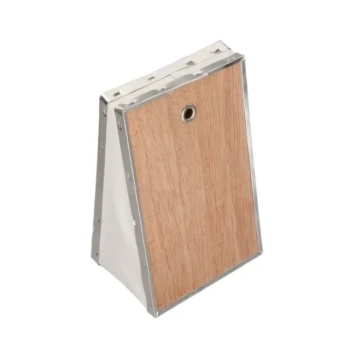
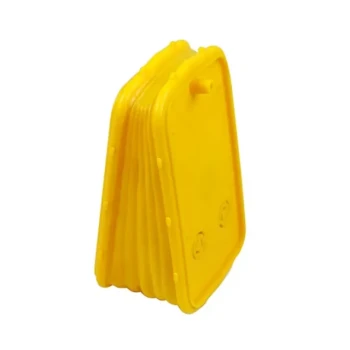
The primary function of the spoiler in a bee pollen heat pump dryer is to actively regulate the direction and organization of the airflow within the drying chamber. By mechanically altering the air's path, it enables the system to switch between different flow patterns, such as horizontal, top-down, or bottom-up modes, to suit the specific needs of the drying batch.
The spoiler acts as the steering mechanism for thermal energy, transforming a static air supply into a dynamic system. By adapting the airflow to the material's real-time state, it maximizes layer penetration and ensures the highest possible energy utilization.
The Mechanics of Air Regulation
Controlling Flow Direction
The spoiler fundamentally changes how air moves through the dryer. It allows the system to deviate from a single fixed path, enabling the switch between horizontal and vertical flow patterns.
Versatile Air Supply Options
Different drying stages may require heat to be applied from different angles. The spoiler facilitates specific configurations, such as top-down or bottom-up air supply, giving operators control over how heat contacts the bee pollen.
Maximizing Process Efficiency
Ensuring Deep Penetration
Bee pollen is often loaded onto trays in layers, which can block simple airflow. The spoiler optimizes the airflow organization, ensuring the drying air penetrates the material layers rather than just skimming the surface.
Real-Time Adaptation
The moisture content of bee pollen changes drastically throughout the drying cycle. The presence of a spoiler allows the drying mode to be adjusted according to the real-time state of the material, maintaining efficiency from start to finish.
Improving Energy Utilization
By directing air exactly where it is needed, the system reduces wasted thermal energy. This targeted approach enhances the overall energy utilization of the heat pump system, reducing operational costs.
Understanding the Trade-offs
Mechanical Dependency
The spoiler introduces a moving mechanical element into the airflow system. While this provides flexibility, it also means the system's efficiency is heavily dependent on the precise control of this component; if the spoiler remains static, the benefits of optimized airflow are lost.
The Risk of Static Airflow
Without the dynamic adjustment provided by the spoiler, dryers often suffer from "dead zones." This results in uneven drying, where some pollen trays may be over-dried while others retain moisture, potentially compromising the quality of the final product.
Making the Right Choice for Your Goal
To get the most out of a heat pump dryer equipped with a spoiler, you must align the airflow strategy with your specific processing needs.
- If your primary focus is Product Quality: Use the spoiler to alternate airflow direction (e.g., top-down then bottom-up), ensuring uniform drying across all tray layers.
- If your primary focus is Energy Efficiency: Adjust the spoiler configuration to target the most saturated layers first, reducing the total time required for the heat pump to run.
The spoiler turns a standard dryer into an intelligent system, giving you the control necessary to treat delicate bee pollen with precision.
Summary Table:
| Feature | Function of the Spoiler | Benefit to Bee Pollen Processing |
|---|---|---|
| Flow Direction | Switches between horizontal, top-down, and bottom-up modes | Ensures uniform drying across all tray layers |
| Material Penetration | Directs air through dense pollen layers rather than skimming | Prevents moisture retention in lower layers |
| Thermal Efficiency | Optimizes air organization based on real-time moisture | Reduces energy waste and lowers operational costs |
| Process Control | Adapts airflow to the specific drying stage | Maintains delicate nutrient profiles and product quality |
Elevate Your Bee Product Processing with HONESTBEE
Are you looking to scale your pollen production while maintaining the highest quality standards? HONESTBEE provides professional-grade beekeeping machinery and tools designed for commercial apiaries and global distributors. From advanced heat pump drying systems with precision airflow control to honey-filling machines and specialized hardware, our comprehensive wholesale offering ensures your operations are efficient and profitable.
Our value to you:
- Commercial Expertise: Tailored solutions for large-scale bee pollen and honey processing.
- Full Spectrum Supply: A one-stop shop for everything from hive-making machinery to industry consumables.
- Quality Assurance: Tools designed to maximize energy utilization and product uniformity.
Ready to upgrade your facility? Contact our expert team today to discuss how our equipment can transform your business.
References
- Nguyen Hay, Vo Tan Phuong. Novel Solution for High Efficiency Bee Pollen Heat Pump Dryer. DOI: 10.31080/asmi.2020.03.0687
This article is also based on technical information from HonestBee Knowledge Base .
Related Products
- High Quality Honey Dehumidifier Dryer Thickening Machine for Beekeeping
- Professional Replacement Bee Smoker Bellows for Beekeeping Equipment
- Professional Stainless Steel Honey Filtering Machine with Water Bath Heating for Beekeeping
- 30 cm Plastic Entrance Hole Bee Pollen Trap and Collector
- 0.5T Capacity Honey Dehumidifier Dryer with Vacuum Heating and Thickening Filtering Machine
People Also Ask
- Can you dehumidify honey? A Beekeeper's Guide to Preventing Fermentation
- How to dry up honey? The Safe Guide to Stabilizing Honey and Preventing Fermentation
- How can the moisture content of honey be reduced? A Guide to Safe, Effective Drying Methods
- How to remove humidity from honey? Protect Your Harvest from Fermentation
- How to decrease moisture in honey? Prevent Fermentation and Ensure Long-Term Quality