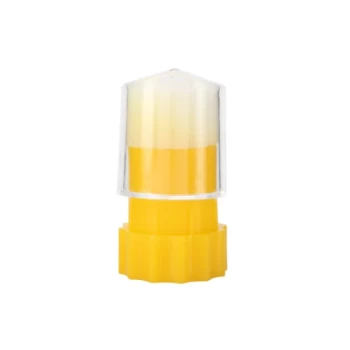
The primary purpose of marking a queen bee is to streamline hive management by making the queen instantly identifiable among thousands of workers. By applying a contrasting dot to her thorax, beekeepers can rapidly confirm her presence, track her age, and detect natural replacement events like swarming or supersedure.
Efficient beekeeping relies on accurate data; marking the queen transforms her from a needle in a haystack into a visible data point, allowing you to monitor the colony's leadership history and the queen's productive lifespan.
The Strategic Value of Marking
Marking is not merely cosmetic; it is a functional tool that aids in the technical maintenance of a healthy apiary.
Accelerating Hive Inspections
Locating a queen in a dense colony is time-consuming and disruptive. A bright mark creates a visual anchor, drastically reducing the time required to find her.
This is particularly vital for beginners or beekeepers with less-than-perfect eyesight. It allows for quick confirmation of the queen's safety without keeping the hive open longer than necessary.
Detecting Unplanned Replacements
A marked queen serves as a "security seal" for the colony. If you open a hive and find a queen without a mark, or a queen with a different mark, you immediately know the original queen is gone.
This signals that the colony has either swarmed or replaced the old queen (supersedure). Without marking, you might mistakenly believe the original queen is still in charge, masking potential issues with colony genetics or temperament.
Monitoring Age and Performance
Queens have a finite productive lifespan. Marking allows you to track exactly how old a queen is, which is essential for predicting when her egg-laying capacity will decline.
By knowing her age, you can manage timely replacements before the colony’s population crashes due to a failing queen.
The International Color Code
To standardize age tracking, the beekeeping community utilizes a specific color rotation. This tells you the queen's birth year at a glance.
The 5-Year Cycle
The system repeats every five years. The colors are applied based on the last digit of the year:
- White: Years ending in 1 or 6
- Yellow: Years ending in 2 or 7
- Red: Years ending in 3 or 8
- Green: Years ending in 4 or 9
- Blue: Years ending in 5 or 0
Mnemonic Device
To recall the order easily, use the phrase provided in standard guides: “What, You Raise Green Bees?” (White, Yellow, Red, Green, Blue).
Common Pitfalls and Trade-offs
While marking is highly beneficial, incorrect application can harm the most critical member of the colony.
Chemical Safety is Paramount
Never use standard household paints or markers, which may contain solvents toxic to insects. You must use water-based acrylic paint markers or specialized queen marking pens.
These are designed to be low-toxicity, highly pigmented, and fast-drying. The goal is a durable mark that lasts the queen's life without compromising her physiological functions.
Precision Application
The paint must be applied strictly to the thoracic dorsal plate.
If paint spreads to her eyes, she is blinded; if it covers her spiracles (breathing holes) or wings, she may be injured or rejected by the colony. The marker tip should be soft and appropriately sized to deliver the dot with a single, gentle touch.
Making the Right Choice for Your Goal
Whether you are a hobbyist or a professional manager, how you approach marking depends on your objectives.
- If your primary focus is speed and ease of inspection: Mark your queens with any bright, high-contrast color (like yellow or white) simply to make her stand out against the comb.
- If your primary focus is rigorous colony management: Adhere strictly to the international color code to maintain an accurate history of queen age and lineage without needing to check written records.
Marking is a small interaction that yields massive dividends in time saved and data gained.
Summary Table:
| Aspect | Key Benefit | Detail |
|---|---|---|
| Identification | Speed & Accuracy | Find the queen instantly among thousands of workers. |
| Tracking | Age Monitoring | Use the 5-year international color code to track lifespan. |
| Colony Health | Detect Replacement | Quickly identify if a colony has swarmed or superseded. |
| Safety | Technical Precision | Use non-toxic acrylic markers only on the thoracic plate. |
Scale Your Apiary Operations with HONESTBEE
Efficient hive management begins with the right tools. At HONESTBEE, we empower commercial apiaries and distributors with high-quality beekeeping machinery and essential consumables. From precision queen marking supplies to advanced honey-filling machines and specialized hardware, our comprehensive wholesale offering is designed to optimize your production and profitability.
Ready to elevate your beekeeping business? Contact us today to explore our full product spectrum and discover how our expertise can support your growth.
Related Products
- One Hand Yellow Queen Marking Catcher Tube Cage Beekeeper Tool Accessory for Queen Bee
- Queen Bee Marking Pen POSCA Queen Marking Pens for Beekeeping Bee Markers
- Queen Bee Marking Tube Cage Bottle Catcher Holder with Clear Plastic Plunger Marker
- Plastic Long Marker Device for Catching and Marking Bees Queen Bee Marking Tube and Cage
- Transparent Plastic Bee Catcher Queen Marker Tube Cage Beekeeping Tool Equipment
People Also Ask
- What tools are available to assist in safely marking a queen bee? Essential Gear for Professional Beekeepers
- What equipment is needed to mark a queen bee? A Simple 3-Tool Guide for Every Beekeeper
- Why are high-quality queen bee marking tools essential for pedigree tracking? Master Honey Bee Genetic Integrity
- What are the specific advantages of using international standard marking tools in queen bee production and management?
- What tools are recommended for marking a Queen bee? Ensure a Safe and Successful Mark