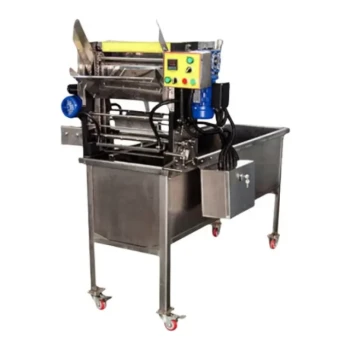
The primary value of automated sterile processing and packaging systems lies in their ability to guarantee the hygienic safety of honey products by preventing secondary contamination during the critical post-collection stage. Beyond safety, these systems are essential for standardizing production, enhancing commercial value, and enabling the industrial division of labor.
Core Takeaway Automated processing is the bridge between raw agricultural output and a viable commercial commodity. It transforms honey from a vulnerable raw material into a shelf-stable, high-value product that meets the rigorous hygiene and consistency standards required for international trade and retail markets.
Ensuring Hygienic Safety and Product Integrity
Preventing Secondary Contamination
The most immediate benefit of these systems is the protection of the product during the post-collection processing stage.
By automating the flow, producers eliminate human contact points where contamination often occurs. This ensures that honey, royal jelly, and pollen retain their purity from the hive to the bottle.
Extending Shelf Life through Sealing
Automated systems utilize specialized packaging materials with superior sealing properties.
This prevents the honey from absorbing atmospheric moisture. By locking out moisture, the system effectively prevents fermentation and spoilage, ensuring the product remains stable over long periods.
Preserving Nutritional Quality
Advanced industrial machinery integrates precise temperature control and filtration.
These systems remove impurities without overheating the honey. This preserves the active nutritional components and sensory quality that are often lost during manual or less sophisticated processing methods.
Enhancing Commercial Value and Market Access
Meeting Export and Retail Standards
Standardized packaging is not merely aesthetic; it is a prerequisite for entering high-end retail and export markets.
Automated systems ensure compliance with international hygiene and packaging standards. This capability allows producers to transition from exporting low-value raw materials to selling high-added-value finished products.
Building Brand Trust via Traceability
Modern automated lines often integrate with professional labeling systems.
This facilitates clear brand identification and the inclusion of traceability information. By providing proof of origin and quality, producers can differentiate their goods from adulterated competitors and justify a premium price point.
Operational Efficiency and Labor Standardization
Precision Measurement
Automated filling machines offer a level of consistency that manual operations cannot match.
They ensure measurement precision for every unit produced. This creates uniform product specifications, which is critical for stocking shelves in supermarkets and maintaining consumer confidence.
Promoting Industrial Labor Division
The adoption of these systems shifts the nature of the workforce.
Rather than relying on general manual labor, these systems support employment in specialized sterilization and packaging roles. This promotes a modern industrial division of labor, streamlining operations and professionalizing the workforce.
Understanding the Operational Shifts
While the benefits are clear, adopting these systems requires a fundamental shift in how honey production is managed.
The Shift from Artisan to Industrial
Moving to automated sterile processing requires adherence to strict industrial protocols. It moves production away from flexible, manual methods toward a rigid, standardized process flow.
Dependency on Technical Competence
Success with these systems relies on the ability to maintain "industrial-grade machinery."
Producers must ensure their workforce is capable of managing complex sterilization and refining processes. The focus shifts from beekeeping expertise to food processing and engineering competence.
Making the Right Choice for Your Goal
To determine how to best leverage these systems, consider your specific market objectives:
- If your primary focus is International Export: Prioritize systems that offer certified sterile processing and precise labeling to meet strict border compliance standards.
- If your primary focus is Brand Protection: Focus on equipment that integrates filtration and tamper-evident sealing to differentiate your honey from adulterated products.
- If your primary focus is Operational Scale: Invest in high-speed automated filling technology to maximize throughput and enforce precise measurement controls.
Automated sterile processing is the definitive step that professionalizes honey production, turning a raw harvest into a globally competitive brand.
Summary Table:
| Key Value Driver | Primary Benefit | Operational Impact |
|---|---|---|
| Hygienic Safety | Eliminates secondary contamination | Ensures honey, royal jelly, and pollen purity |
| Product Integrity | Specialized sealing & temperature control | Prevents fermentation; preserves nutritional value |
| Market Readiness | Compliance with export & retail standards | Enables transition to high-added-value products |
| Production Efficiency | Automated precision measurement | Guarantees consistent filling and specifications |
| Brand Loyalty | Integrated traceability & labeling | Differentiates products from adulterated competitors |
Scale Your Apiary Operations with HONESTBEE
Transitioning from raw agricultural output to a globally competitive honey brand requires the right industrial partner. HONESTBEE specializes in empowering commercial apiaries and distributors with the high-performance tools needed to excel in the modern market.
Our comprehensive wholesale offering includes:
- Industrial Machinery: Specialized honey-filling and hive-making machines for maximum precision.
- Beekeeping Equipment: A full spectrum of professional tools and essential consumables.
- Cultural Merchandise: Unique honey-themed products to enhance your brand's market appeal.
Whether you are looking to optimize your sterilization process or expand your distribution portfolio, we provide the technical expertise and equipment to ensure your success.
Contact HONESTBEE Today to Discuss Your Wholesale Needs
References
- Supitcha Punya, Terd Disayathanoowat. Exploring network governance in sustainable beekeeping management in the Mekong subregion and its challenges. DOI: 10.3389/fsufs.2024.1420836
This article is also based on technical information from HonestBee Knowledge Base .
Related Products
- Fully Automatic Honey Filling Packaging Machine for Processing Line
- Precision Automated Packaging Turntable Honey Spoon Filling Sealing Packing Machine
- Automatic Single-Dose Snap & Squeeze Honey Sachets Packing Machine
- Double Nozzle Small Honey Filling Machine Honey Sachet Packing Packaging Equipment
- Honey Stick Filler Vertical Paste Sachet Packing Machine for Honey Sachets
People Also Ask
- Why are fully automatic honey filling and packaging lines essential? Boost Your Honey's Market Value and Quality
- What is a fully-automatic honey filler? Streamline Your Production with High-Precision Automation
- How do automated honey filling and packaging machines affect profitability? Boost Margins with HONESTBEE Technology
- How do automated honey filling and packaging machines contribute to the market value of honey products? Maximize Your ROI
- How do industrial-grade automated honey filling and packaging machines mitigate the risk of physical contamination?