Melting and rendering beeswax requires gentle, indirect heat to separate the wax from impurities without scorching it. To perform this using a double boiler, wrap your honeycomb chunk in cheesecloth, place it in the top section of the boiler over simmering water, and allow it to melt for approximately 15 minutes until fully extracted.
Core Takeaway The double boiler method effectively caps the melting temperature at the boiling point of water (212°F/100°C), preventing the wax from igniting or discoloring. By acting as a water bath, it ensures a slow, uniform melt while keeping the wax isolated from the direct heat source.
Setting Up the Equipment
The Double Boiler Configuration
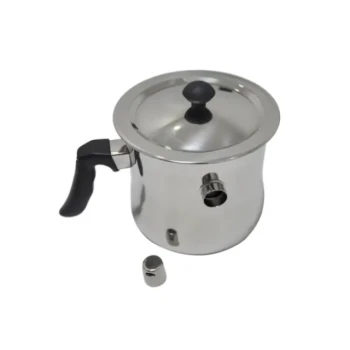
You can use a dedicated electric double boiler or create a makeshift version. For a makeshift setup, place a smaller metal bowl or saucepan inside a larger stockpot filled partially with water.
Critical Material Selection
Do not use glass or plastic for the inner container, as they may shatter or melt. Ensure the inner pot is metal and suspended by its rim so it does not touch the bottom of the stockpot, which is the hottest point.
Dedicating Tools
Beeswax is incredibly sticky and nearly impossible to remove completely. Designate these pots and utensils solely for wax processing. Do not attempt to use your standard food preparation cookware, as the residue will ruin them for future culinary use.
The Rendering Process
Preparing the Honeycomb
According to the primary procedure, you should wrap the chunk of honeycomb in cheesecloth before placing it in the pan. This creates a packet that acts as a filter, trapping impurities like cocoons and propolis while allowing the liquid wax to seep out.
Managing the Heat
Bring the water in the lower pan to a light simmer, not a rolling boil. Violent boiling can splash water into the upper chamber, which must be avoided.
Extraction Timing
Place the pan containing the cheesecloth-wrapped honeycomb into the simmering setup. The melting process typically takes around 15 minutes. Monitor the wax until it has fully liquefied and extracted from the comb material inside the cloth.
Understanding the Trade-offs
Risk of Water Contamination
The most significant risk in this process is water splashing into the wax. As noted in the primary guidelines, you must prevent simmering water from mixing with the wax. Water contamination acts as an emulsifier, negatively impacting the texture and consistency of the finished beeswax.
Processing Volume vs. Speed
While the double boiler is the safest method for preventing fires, it is a batch process limited by the size of your pot. It is excellent for high-quality, small-batch rendering but lacks the capacity and efficiency of steam or solar melters for commercial-scale operations.
Making the Right Choice for Your Goal
To ensure you achieve the best results for your specific needs, consider the following:
- If your primary focus is wax purity: Ensure the honeycomb is tightly wrapped in cheesecloth before melting to trap the maximum amount of particulate matter.
- If your primary focus is safety: Monitor the water level constantly to ensure the bottom pot does not boil dry, which could lead to overheating.
- If your primary focus is texture: Maintain a gentle simmer to prevent water agitation and splashing, ensuring the wax remains anhydrous (water-free).
Mastering the double boiler method turns raw honeycomb into a shelf-stable resource ready for crafting or storage.
Summary Table:
| Step | Action | Purpose |
|---|---|---|
| Preparation | Wrap honeycomb in cheesecloth | Filters impurities and traps debris |
| Setup | Use a metal double boiler | Ensures indirect, uniform heating |
| Heating | Simmer water (not a rolling boil) | Prevents water splashing into the wax |
| Extraction | Melt for approx. 15 minutes | Extracts liquid wax from the comb structure |
| Cooling | Avoid water contamination | Maintains the texture and purity of the wax |
Maximize Your Honeycomb Yield with HONESTBEE
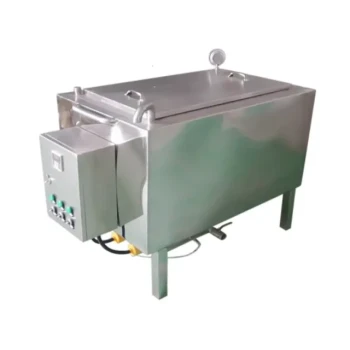
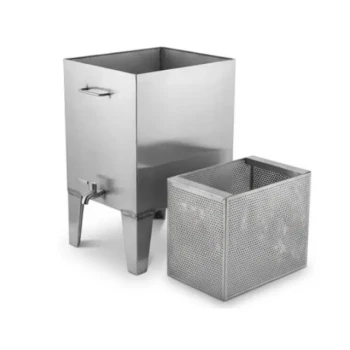
Processing beeswax requires the right tools to ensure purity and efficiency. At HONESTBEE, we specialize in supporting commercial apiaries and distributors with a comprehensive range of professional-grade beekeeping equipment. From high-capacity wax melters and honey-filling machines to essential consumables and specialized hardware, our portfolio is designed to scale your operations.
Ready to upgrade your production? Contact us today to explore our wholesale offerings and discover how our industry-leading tools can enhance your apiary’s productivity.
Related Products
- Beeswax Machine Press Embosser Wax Foundation Mold Printer Bee Hive Equipment Making Sheet
- Fully Automatic Beeswax Embossing Machine Foundation Mill
- Electric Flatting and Embossing Machine with Tray for Beekeeping
- Manual Beeswax Flat Sheet Machine for Beeswax Processing
- Electric Beeswax Flat Sheet Machine with Operating Tray for Wax Processing
People Also Ask
- What equipment is needed to make beeswax foundation? A Guide to DIY Wax Sheet Production
- What miscellaneous equipment is needed for making foundation? A Guide to the Essential Tools
- What miscellaneous equipment is useful when making beeswax foundation? Essential Support Tools for Beekeepers
- What specific equipment is required for making beeswax foundation? Essential Tools for High-Quality Production
- What is the recommended temperature for melting beeswax to make foundation sheets? Master the 70°C-80°C Ideal Range