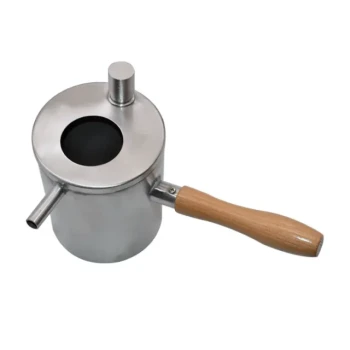
The recommended procedure for melting beeswax is to use a double boiler or low-heat stovetop arrangement to ensure gentle, even heat distribution. To maintain the wax's quality and consistency, you must stir continuously and ensure the temperature never exceeds 200°F (90°C).
Core Takeaway: Beeswax is a delicate material that requires slow, indirect heat to liquefy properly without degrading. While the absolute thermal ceiling is 200°F (90°C), strictly monitoring heat levels is the only way to prevent permanent discoloration and loss of the wax's natural characteristics.
The Mechanics of Melting
To achieve a high-quality candle, you must control the phase change from solid to liquid with precision.
The Double Boiler Method
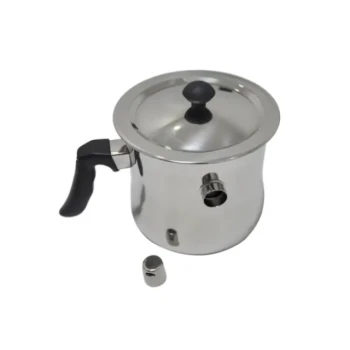
The industry standard for melting beeswax is the double boiler method. This involves placing a heat-resistant vessel (like a glass jar or pouring pitcher) inside a pot of boiling water.
This technique uses the water as a buffer, ensuring the heat is distributed slowly and evenly around the wax. It prevents "hot spots" that occur with direct heat, which can scorch the material.
Critical Temperature Thresholds
Beeswax naturally begins to melt between 143°F and 151°F (61-66°C).
According to primary technical guidelines, your target temperature during the melting process should be kept below a maximum of 200°F (90°C). Exceeding this limit compromises the structural integrity and quality of the raw material.
Continuous Agitation
Melting is not a passive process. You must stir the wax continuously as it heats.
Stirring ensures that the liquefied wax at the bottom does not overheat while the solid blocks at the top are still melting. This promotes a uniform consistency throughout the batch.
Common Pitfalls to Avoid
Working with beeswax involves balancing efficiency with quality preservation. Understanding the specific risks of overheating is essential for professional results.
The Risk of Discoloration
While the technical limit is 200°F, supplementary data suggests that heating beeswax above 170°F (77°C) can trigger quality degradation.
Excessive heat causes the wax to become dull and suffer from permanent discoloration. If maintaining the vibrant, natural yellow hue of the beeswax is a priority, you should aim for the lower end of the temperature spectrum.
Loss of Aroma
Beeswax is prized for its natural, sweet scent. High temperatures effectively "cook" the volatile oils responsible for this aroma.
Once the wax exceeds the 170°F threshold, it begins to lose its characteristic scent. If the wax is overheated, you cannot recover these lost olfactory properties.
Safety and Flashpoints
Never leave melting wax unattended or expose it to an open flame.
If beeswax reaches its flashpoint of 400°F (204°C), it becomes extremely flammable. Using a double boiler acts as a physical safety barrier against reaching these dangerous temperatures.
Making the Right Choice for Your Goal
Select your temperature parameters based on the specific requirements of your end product.
- If your primary focus is Structural Integrity: Adhere strictly to the primary limit of 200°F (90°C) to ensure the wax melts fully without compromising its basic usability.
- If your primary focus is Aesthetic Quality: Keep your melting temperature below 170°F (77°C) to preserve the wax's natural golden color and honey-like aroma.
- If your primary focus is Safety: Utilize a dedicated wax melting pot or double boiler to ensure the wax never approaches the flashpoint of 400°F (204°C).
By controlling your heat source and respecting these thermal limits, you ensure a safe process that yields a superior candle.
Summary Table:
| Metric | Temperature / Method | Importance |
|---|---|---|
| Melting Point | 143°F - 151°F (61-66°C) | Basic phase change threshold |
| Ideal Range | < 170°F (77°C) | Preserves natural color and aroma |
| Maximum Limit | 200°F (90°C) | Prevents structural degradation |
| Flashpoint | 400°F (204°C) | Critical safety fire hazard level |
| Recommended Method | Double Boiler | Ensures even, indirect heat distribution |
Scale Your Production with HONESTBEE Quality
At HONESTBEE, we empower commercial apiaries and distributors with the professional-grade tools needed for excellence. Whether you require precision honey-filling machines, industrial-scale hive-making equipment, or high-quality consumables, our wholesale solutions are designed to optimize your operations.
Why partner with us?
- Comprehensive Inventory: From specialized hardware to honey-themed cultural merchandise.
- Expert Support: We supply the full spectrum of beekeeping machinery to help you maintain the structural and aesthetic integrity of your products.
Contact HONESTBEE today to explore our wholesale offerings and see how we can add value to your beekeeping business!
Related Products
- Beeswax Foundation Sheets Beehive Foundation for Wholesale
- Colorful Silicone Beeswax Foundation Mold Mould for Beekeeping
- Economy Manual Beeswax Embossing Mill Wax Foundation Machine Roller
- Beeswax Melter for Candle Making Honey Bee Wax Melter
- Electric Beeswax Flat Sheet Machine with Operating Tray for Wax Processing
People Also Ask
- What are the technical advantages of beeswax foundations and feeding tools? Optimize Your Bee Breeding Phase
- Why is the regular exchange and replacement of beeswax foundations encouraged? Boost Honey Yield & Hive Biosafety
- What are the negative consequences of using old or contaminated beeswax in foundations? Protect Your Hive Today
- Why is high-purity natural beeswax essential for foundations? Prevent Larval Mortality & Boost Colony Health
- What are the specific advantages of regular comb replacement? Boost Hive Health with New Beeswax Foundations