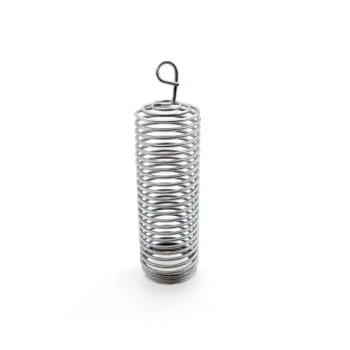
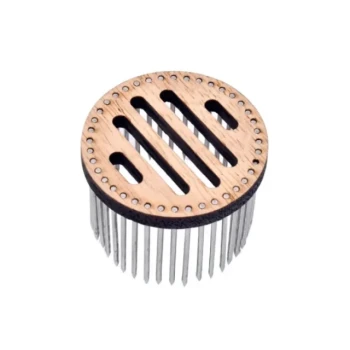
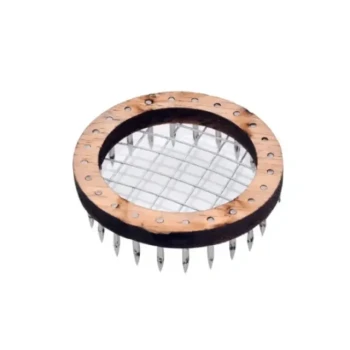
The quantitative weighing cage serves as a precision calibration tool used to standardize bee populations before scientific experiments or comparative studies begin. It allows researchers to establish an identical initial "biomass" for every test group, effectively eliminating the chaos of natural population variance.
In scientific beekeeping, variable starting populations are the primary enemy of reliable data. The quantitative weighing cage solves this by standardizing the biomass of each colony, ensuring that observed differences in egg-laying or foraging are due to the experimental variables, not pre-existing inequalities in colony strength.
The Mechanism of Population Standardization
Establishing a Baseline
The primary function of the weighing cage is to measure the exact initial bee population.
In experimental settings, estimating population by sight is insufficient. This tool allows for the precise weighing of bee clusters to ensure every experimental group starts on a level playing field.
Environmental Control
The cage is designed with a metal mesh bottom.
This construction is not merely structural; it is functional. It ensures breathability, preventing overheating or suffocation during the handling process while keeping the bees contained.
Secure Short-Term Storage
The device provides a closed environment for the bees during the preparation phase.
This containment allows researchers to hold the population securely while other variables are adjusted, ensuring no bees are lost or added before the "start" of the experiment.
Why Standardization Matters for Data Integrity
Removing Biological Noise
Without a standardized population, it is impossible to determine the cause of a colony's performance.
Using this cage eliminates variables caused by initial population differences. If one colony has 10% more bees than another, their output will naturally be higher, invalidating the test results.
Isolating Specific Behaviors
Standardization is critical when measuring specific biological traits.
To accurately assess egg-laying rates, comb-building speed, or foraging efficiency, the workforce size must be identical across all groups. The weighing cage is the instrument that guarantees this uniformity.
Operational Requirements and Limitations
The Necessity of Quantitative Feeding
Weighing bees is only half the equation.
The primary reference notes that the weighing cage must be combined with quantitative feeding. Ensuring bees have equal mass is useless if one group has significantly higher energy reserves; both population and nutrition must be standardized simultaneously.
Differentiation from Production Units
It is crucial to distinguish this preparation tool from the "Standard Hive."
While a Standard Hive is used to estimate the beekeeping carrying capacity of an ecosystem (often at a density of two hives per hectare), the quantitative weighing cage is a preparatory lab instrument. It prepares the bees for the hive; it does not replace the hive as a production unit.
Applying Standardization to Your Research
To ensure your beekeeping data is scientifically valid, select your equipment based on your specific objective:
- If your primary focus is comparative research: Use the quantitative weighing cage to ensure every group has identical biomass, eliminating population size as a variable in behavior studies.
- If your primary focus is ecosystem assessment: Focus on deploying Standard Hives to measure foraging behavior and survival rates per hectare, rather than individual bee mass.
True scientific insight in the apiary begins not with the hive, but with the precise measurement of the colony that populates it.
Summary Table:
| Feature | Function in Standardization | Benefit for Research |
|---|---|---|
| Precise Weighing | Establishes exact initial biomass | Eliminates population variance noise |
| Metal Mesh Bottom | Provides breathability and cooling | Prevents bee loss or stress during prep |
| Closed Environment | Secures bees during phase adjustments | Ensures constant population counts |
| Quantitative Feeding | Synchronizes energy reserves | Isolates specific biological traits |
Elevate Your Research with HONESTBEE Precision Equipment
At HONESTBEE, we understand that commercial success and scientific breakthroughs depend on precision. As a premier partner for commercial apiaries and distributors, we provide more than just tools—we deliver reliability. From specialized hardware like hive-making and honey-filling machines to the essential consumables that keep an apiary running, our wholesale portfolio is designed to meet the demands of large-scale operations.
Ready to standardize your production or stock the industry's best hardware? Contact us today to discover how our comprehensive equipment range can streamline your business and maximize colony efficiency.
References
- Diana Sammataro, Milagra Weiss. Comparison of Productivity of Colonies of Honey Bees,<i>Apis mellifera</i>, Supplemented with Sucrose or High Fructose Corn Syrup. DOI: 10.1673/031.013.1901
This article is also based on technical information from HonestBee Knowledge Base .
Related Products
- Hexagonal Direct Comb Introduction Queen Bee Cage
- Professional Multi-Compartment Queen Cage with Sliding Lid
- Durable Galvanized Steel Spring Queen Bee Cage
- Premium Wood and Steel Push In Queen Cage
- Wood and Mesh Push-In Queen Cage
People Also Ask
- What is the technical purpose of using an introduction cage? Ensure Safe Queen Bee Integration and Colony Acceptance
- How does the introduction cage method differ from standard cage insertion for queen bees? Best Acceptance Strategies
- What is the mechanism of action for using temporary queen bee cages? Master Successful Queen Introduction
- Why are specialized queen bee cages used for the banking of mated queen bees? Maximize Commercial Apiary Storage Efficiency
- What is the importance of specialized queen introduction cages and tools? Secure High-Value Genetics & Scalability.