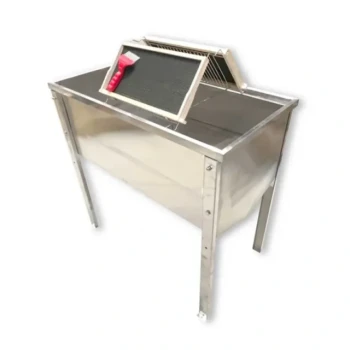
An industrial-grade disinfection immersion tank serves as a centralized sterilization hub designed to automate the cleaning of wooden beekeeping equipment. Its primary function is to provide a standardized environment where hives and frames are completely submerged in disinfectant solutions, ensuring the elimination of pathogens without the inconsistencies and physical strain of manual scrubbing.
For commercial apiaries, surface cleaning is rarely sufficient to stop persistent diseases. An immersion tank facilitates deep sterilization to break the cycle of cross-seasonal infection, offering a scalable solution that drastically reduces labor intensity for the operator.
Enhancing Biosecurity Through Deep Sterilization
Achieving Complete Coverage
The core advantage of an immersion tank is the ability to achieve total submersion. Unlike spraying or wiping, which may miss crevices, submerging equipment ensures that disinfectant solutions penetrate every part of the wooden materials. This deep treatment is essential for eliminating residual pathogens and parasites that hide in the grain or joints of the hive.
Breaking the Disease Cycle
Commercial beekeeping relies on re-using equipment, which creates a risk of carrying diseases from one season to the next. The immersion tank acts as a firewall against this cross-seasonal transmission. By thoroughly sterilizing frames and boxes before storage or re-use, you ensure the biological safety of the next season's colonies.
Managing High-Density Risks
In operations managing between 300 to 500 hives, colony density increases the speed of disease spread. Industrial-grade equipment is a critical hardware component for these setups. It allows for the rapid, consistent treatment of large volumes of equipment, preventing a small outbreak from becoming a large-scale epidemic.
Operational Efficiency and Labor Reduction
Reducing Physical Strain
Manual sterilization of hundreds of hives involves repetitive scrubbing and prolonged exposure to cleaning agents. The immersion tank automates the most physically demanding aspect of this maintenance. This significantly lowers the labor intensity required to maintain the apiary, preserving the operator's energy for hive management.
Minimizing Contact Risks
Handling contaminated equipment carries biological and chemical risks. By mechanizing the soaking and disinfection process, the tank reduces the frequency of direct physical contact with dirty equipment. This creates a safer working environment for the apiary staff.
Standardization of Process
Manual cleaning varies from worker to worker, leading to inconsistent results. An industrial tank provides a standardized environment for epidemic prevention. Every frame and hive box receives the exact same duration and depth of exposure to the sterilizing agents, ensuring a uniform level of hygiene across the entire operation.
Understanding the Trade-offs
Material Limitations
The primary reference specifically highlights the treatment of wooden materials. While immersion is highly effective for wood, operators must verify that other materials (such as certain plastics or metals used in composite hives) are compatible with the specific chemical or physical sterilization methods used in the tank to avoid degradation.
Chemical Management
While the tank reduces physical scrubbing, it utilizes large volumes of disinfectant solutions. This shifts the operational focus from physical labor to chemical management. Operators must ensure they have protocols for monitoring solution concentration and safely disposing of spent chemicals to maintain environmental safety.
Making the Right Choice for Your Goal
To determine if this equipment fits your operation, evaluate your current bottlenecks:
- If your primary focus is Disease Control: This equipment is essential for preventing cross-seasonal transmission by reaching pathogens that surface cleaning misses.
- If your primary focus is Scaling Operations: The tank is a necessary investment for apiaries exceeding 300 hives, as it replaces unsustainable manual labor with a standardized, high-volume process.
Investing in an immersion tank transforms equipment maintenance from a manual chore into a reliable, scalable biosecurity system.
Summary Table:
| Feature | Manual Cleaning | Industrial Immersion Tank |
|---|---|---|
| Disinfection Depth | Surface level; inconsistent | Deep penetration; total submersion |
| Labor Intensity | High (physical scrubbing) | Low (automated soaking) |
| Consistency | Variable per worker | Standardized process |
| Disease Prevention | High risk of missed spots | Reliable firewall against pathogens |
| Suitability | Hobbyist (1-50 hives) | Commercial (300-500+ hives) |
| Safety | High chemical/bio exposure | Minimized direct contact |
Maximize Your Colony Health with HONESTBEE Professional Solutions
Protecting your commercial apiary starts with superior biosecurity. HONESTBEE provides commercial apiaries and distributors with high-performance immersion tanks and a full spectrum of beekeeping machinery designed to eliminate disease cycles and reduce operational costs. From specialized hive-making and honey-filling machines to essential industry consumables, our wholesale offerings empower your business to scale efficiently.
Ready to upgrade your equipment maintenance? Contact HONESTBEE today to discover how our industrial tools can transform your operation's productivity!
References
- Giovanni Maina, A Baracco. How to Assess the Biomechanical Risk Levels in Beekeeping. DOI: 10.1080/1059924x.2016.1141132
This article is also based on technical information from HonestBee Knowledge Base .
Related Products
People Also Ask
- What is an uncapping tank used for in honey harvesting? Maximize Your Honey Yield and Minimize Waste
- What are the functional advantages of using a dedicated uncapping tank during honey processing? Maximize Your Honey Yield
- What size uncapping tank do I need? Find the Perfect Fit for Your Apiary
- What are the features of the processing tanks offered? Engineered for Purity and Efficiency
- What types of stainless steel processing tanks are used for honey? Essential Equipment for Quality Honey Production