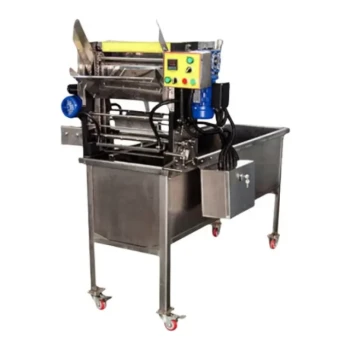
Automated honey filling and processing equipment serves as a critical hygiene firewall against biological contamination. By ensuring rapid extraction and immediate, airtight sealing, these systems drastically minimize the window of time honey is exposed to environmental pathogens, specifically targeting the unique risks associated with Small Hive Beetle (SHB) infestations.
The primary threat in SHB-prone areas is not just the beetle itself, but the specific yeasts found in its excrement that cause rapid fermentation. High-efficiency automation mitigates this by accelerating the processing timeline and creating a hermetic seal, denying these spoilage organisms the time and oxygen they need to degrade the product.
Combating Biological Contamination
The Yeast Factor
Small Hive Beetles introduce a specific biological threat: their excrement contains yeasts capable of causing honey to ferment and spoil.
Manual processing leaves honey exposed to open air and potential contact with beetle debris for extended periods.
Automated systems reduce this exposure time significantly, lowering the risk of secondary contamination from these yeast strains.
Speed as a Defense Mechanism
In areas with high pest pressure, speed is a quality control metric.
Automated extraction removes honey from the comb rapidly, moving it into a controlled environment before beetles can infest the harvested supers.
This rapid throughput ensures the product is stabilized before biological degradation can begin.
Moisture Control and Shelf Stability
Precision Sealing
Automated filling equipment provides precise control over the packaging environment.
By delivering an airtight seal immediately after filling, the machinery prevents the honey from absorbing atmospheric moisture.
Preventing Fermentation
Honey is hygroscopic, meaning it naturally attracts moisture from the air.
If moisture content rises above 20%, fermentation becomes inevitable—a process often accelerated by beetle-introduced yeasts.
Automated sensors and sealing mechanisms ensure moisture levels remain below this critical threshold, guaranteeing shelf stability.
Physical Purity and Clarification
Filtration of Debris
Processing in beetle-infested areas often results in higher levels of physical contaminants, such as larval fragments or wax debris.
Industrial-grade filtration devices and settling tanks effectively intercept these impurities.
Enhancing Market Value
Through physical clarification, automated equipment ensures the final output achieves high transparency and purity.
This directly impacts the grading evaluation, allowing the product to command a higher selling price in commercial markets despite the challenging production environment.
Understanding the Trade-offs
Maintenance and Sanitation
While automation provides a hygiene barrier, the equipment itself requires rigorous cleaning.
Complex valves and pumps can harbor residue; if not sanitized according to strict protocols, the machinery can become a vector for the very cross-contamination it is designed to prevent.
Upfront Complexity
Transitioning from manual to automated systems requires significant capital investment and technical training.
Operators must understand how to calibrate filtration settings to remove impurities without stripping essential pollen or flavor profiles unique to the harvest.
Making the Right Choice for Your Goal
To maximize the benefits of automation in SHB-prone regions, align your equipment choice with your specific operational needs:
- If your primary focus is Pest Risk Mitigation: Prioritize equipment with high-speed throughput and hermetic sealing capabilities to outpace yeast fermentation.
- If your primary focus is High-End Market Value: Invest in systems with multi-stage precision filtration to ensure superior clarity and removal of all biological debris.
Automated processing transforms the extraction phase from a vulnerability into a protective control point, securing both the safety and commercial viability of your honey.
Summary Table:
| Feature | Protection Mechanism | Quality Impact |
|---|---|---|
| High-Speed Throughput | Rapid extraction from hive to processing | Prevents SHB larval infestation and yeast growth |
| Airtight Sealing | Immediate hermetic seal after filling | Stops moisture absorption and prevents fermentation |
| Precision Filtration | Multi-stage removal of larval/wax debris | Ensures high transparency and increases market value |
| Hygienic Control | Controlled, closed-system environment | Acts as a firewall against biological cross-contamination |
Secure Your Apiary’s Success with HONESTBEE
Commercial apiaries and honey distributors face unique challenges, especially in pest-prone regions. HONESTBEE is your strategic partner in overcoming these hurdles. We provide a full spectrum of professional beekeeping machinery, including honey-filling machines, specialized hive-making equipment, and high-efficiency processing tools designed to protect your product's purity and market value.
Whether you are scaling your wholesale operations or looking for essential industry consumables, our expertise ensures your honey remains shelf-stable and premium-grade. Don't let environmental risks compromise your yield—Contact us today to optimize your processing line and explore how our comprehensive equipment portfolio can drive your commercial growth.
References
- Sourabh Maheshwari. Invasion of Small Hive Beetle (Aethina tumida Murray 1867) in India: An Emerging Threat to Bee Health and Beekeeping. DOI: 10.2139/ssrn.5375174
This article is also based on technical information from HonestBee Knowledge Base .
Related Products
- Fully Automatic Honey Filling Packaging Machine for Processing Line
- Automatic Honey Filling and Filtering Machine for Beekeeping Bottle Filling
- Precision Automated Packaging Turntable Honey Spoon Filling Sealing Packing Machine
- Precision Durable Efficient HONESTBEE Rotary Honey Filling Machine
- Manual Honey Filling Machine Bottling Machine for Honey
People Also Ask
- Why are fully automatic honey filling and packaging lines essential? Boost Your Honey's Market Value and Quality
- What is a fully-automatic honey filler? Streamline Your Production with High-Precision Automation
- How do automated honey filling and packaging machines affect profitability? Boost Margins with HONESTBEE Technology
- How do automated honey filling and packaging machines contribute to the market value of honey products? Maximize Your ROI
- How do industrial-grade automated honey filling and packaging machines mitigate the risk of physical contamination?