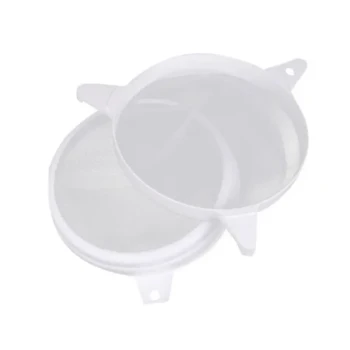
Industrial-grade honey filtration and filling systems act as a critical mechanical barrier against lead contamination. By utilizing corrosion-resistant materials and closed-loop designs, these systems physically filter out environmental lead particles while maintaining a clean environment to prevent secondary cross-contamination during the bottling process.
Core Takeaway Industrial systems provide a dual-layer defense against lead: they physically remove particulate matter introduced from the environment and utilize precise, closed-loop engineering to ensure the final product meets strict international safety standards without re-exposure.
The Mechanics of Contamination Control
Physical Filtration of Particulates
The primary function of these systems regarding lead is the physical removal of contaminants. Industrial-grade machinery employs advanced filtration units designed to trap lead-containing particles that may have settled on the raw product from the environment.
Corrosion-Resistant Construction
Standard machinery can sometimes contribute to contamination through material degradation. Industrial-grade systems utilize high-quality, corrosion-resistant materials for all contact parts, ensuring the equipment itself does not leach metals or impurities into the honey.
Preventing Secondary Exposure
Closed-Loop Design
Manual processing or open-air equipment leaves honey vulnerable to airborne contaminants and debris. Industrial systems feature fully enclosed production lines and hermetic sealing, effectively isolating the honey from the surrounding factory environment.
Precision Flow Control
Automated filling provides precise control over the movement of the honey. This eliminates the erratic handling associated with manual filling, reducing the agitation that could mix in sediment and ensuring a uniform, clean fill every time.
Automated Monitoring
By integrating automated monitoring, these systems minimize human intervention. This reduction in direct contact significantly lowers the risk of introducing foreign objects or contaminants that are common in less automated, labor-intensive setups.
Understanding the Trade-offs
Equipment Cost vs. Safety Assurance
Implementing industrial-grade filtration represents a significant capital investment compared to manual methods. However, this cost is the trade-off for verifiable compliance with international safety standards and the elimination of liability risks associated with contamination.
Filtration Density vs. Natural Properties
While aggressive filtration is necessary to remove lead particles, there is a delicate balance to maintain. Excessive filtration can potentially remove beneficial pollen or affect the honey's natural profile; operators must calibrate systems to remove heavy metal particulates without stripping the honey of its unique character.
Making the Right Choice for Your Goal
To select the appropriate system for your facility, consider your specific production objectives:
- If your primary focus is Regulatory Compliance: Prioritize systems with certified corrosion-resistant contact parts and validated filtration micron ratings to ensure removal of particulate lead.
- If your primary focus is Product Consistency: Look for fully automated, closed-loop filling lines that offer precise flow control and hermetic sealing to prevent batch-to-batch variation.
True mitigation of lead contamination relies not just on removing impurities, but on controlling the entire processing environment to protect product integrity.
Summary Table:
| Feature | Mechanism of Action | Benefit for Lead Mitigation |
|---|---|---|
| Advanced Filtration | Traps lead-containing particulates | Physically removes environmental contaminants from raw honey |
| Corrosion-Resistant Materials | Uses high-grade alloys for contact parts | Prevents metal leaching from the machinery into the product |
| Closed-Loop Design | Fully enclosed production lines | Eliminates secondary exposure to airborne lead and debris |
| Automated Monitoring | Reduces human intervention | Lowers the risk of cross-contamination during the filling process |
Secure Your Honey Quality with HONESTBEE
Protect your brand and ensure global safety compliance with HONESTBEE. As a premier partner for commercial apiaries and distributors, we provide the specialized hardware and industrial-grade machinery needed to eliminate contamination risks.
Our Value to You:
- Comprehensive Equipment: From high-precision honey-filling machines to advanced filtration systems.
- Durability & Safety: All contact parts are designed to meet international standards for food safety.
- Wholesale Expertise: We supply the full spectrum of beekeeping tools, machinery, and industry consumables to scale your operation.
Don't compromise on purity. Contact HONESTBEE today to discover how our custom wholesale solutions can enhance your production safety and efficiency.
References
- Jérémie Théolier, Samuel Benrejeb Godefroy. Lead exposure from honey: meta-analysis and risk assessment for the Arab region. DOI: 10.1080/19440049.2024.2306647
This article is also based on technical information from HonestBee Knowledge Base .
Related Products
- Automatic Honey Filling and Filtering Machine for Beekeeping Bottle Filling
- Precision Durable Efficient HONESTBEE Rotary Honey Filling Machine
- Commercial Rotary Honey Filling Machine for Production
- Fully Automatic Honey Filling Packaging Machine for Processing Line
- Professional Stainless Steel Honey Filter with Support Handle
People Also Ask
- What process advantages do professional honey filtering and filling machines provide? Optimize Your Organic Honey Output
- How do honey filling and filtering machines increase product value? Turn Raw Honey into Premium Export-Grade Goods
- How do honey filtration and filling machinery contribute to industrialization? Scale Your Commercial Honey Production
- What specific issues do industrial filtration and automated filling machinery address? Ensure Honey Quality & Compliance
- How does the use of professional honey filtration and filling machinery facilitate international honey exports?