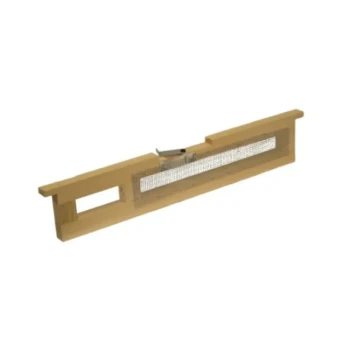
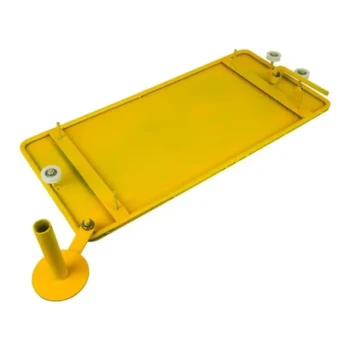
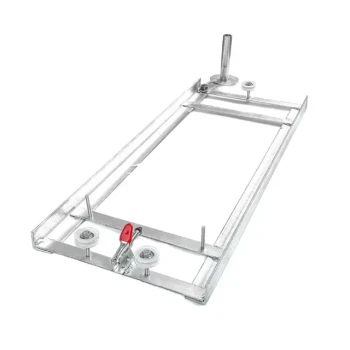
Standardized ten-frame wooden beehives act as a calibrated baseline for managing biological variables in beekeeping. Their primary role is to provide a uniform internal volume and frame capacity, which normalizes environmental parameters across different colonies. This consistency allows researchers and apiarists to accurately monitor colony development and parasite loads, ensuring that data regarding Varroa destructor infestation is comparable across different production units.
Core Takeaway Effective biological control relies on isolating variables. By utilizing standardized hardware, you convert the hive environment from an unpredictable variable into a constant. This ensures that observed changes in mite populations are the result of biological dynamics or treatment interventions, rather than inconsistencies in the physical habitat.
Establishing a Baseline for Research and Monitoring
The most critical function of the ten-frame hive in this context is creating a "control" environment. Without physical standardization, accurate assessment of biological control methods is nearly impossible.
Ensuring Data Comparability
Standardized hives, such as the Langstroth design, ensure that every colony has access to the exact same amount of space for brood rearing and resource storage.
This uniformity eliminates the "noise" in data collection. When monitoring adult bee populations or brood area dynamics, you can be certain that differences are biological, not structural.
Eliminating Experimental Bias
In research settings, standardized hives provide a modular environment where bee populations can be precisely equalized.
Researchers can balance brood counts and food stores across experimental groups at the start of a study. This prevents variations in colony size from skewing data on Varroa mite growth rates.
Isolating Genetic Factors
When analyzing how Varroa spreads or evolves genetically, physical variables can confuse the results.
Using consistent hive specifications across apiaries eliminates external interference caused by hive structure. This ensures that observed spatial genetic structures are attributed to the parasite's own dispersal dynamics, rather than the container it inhabits.
Enhancing Physical Control Mechanisms
Beyond monitoring, standardization plays a direct mechanical role in treatment protocols, particularly those involving thermal, non-chemical interventions.
Facilitating Thermal Treatments
Effective thermal treatment requires the precise manipulation of airflow and temperature.
Standardized frames allow for a compact and secure arrangement of worker and drone cells within heating equipment. This physical consistency creates predictable air gaps between honeycombs.
Ensuring Uniform Heat Distribution
Because the internal geometry is predictable, hot air circulates evenly throughout the hive structure.
This guarantees that every cell receives the specific heat exposure required to eliminate Varroa destructor without damaging the bees, a feat difficult to achieve in irregular hives.
Managing Hygiene and Equipment Lifespan
The hive itself can become a biological liability over time. Standardization streamlines the logistics of hygiene, which is a preventative form of biological control.
Reducing Reservoir Populations
Research indicates that the service life of a hive correlates with parasite prevalence.
Hives that have been in use for two years or more typically show higher infestation rates than new or mixed-age equipment. Older wooden components can harbor pathogens and mites, acting as a reservoir for re-infestation.
Streamlining Replacement Protocols
Standardization makes the physical replacement of equipment seamless.
Apiarists can introduce new, sterile boxes or frames without disrupting the colony's layout. Regular replacement with standardized new hives is a critical production step to lower initial parasite counts and prevent colony collapse.
Understanding the Trade-offs
While standardization provides control, it also introduces specific maintenance requirements that must be acknowledged.
The Challenge of Material Degradation
Wood is porous and degrades over time, making it susceptible to harboring pests despite standardization.
While the dimensions remain standard, the quality of the environment declines with age. Relying on standardized wooden hives requires a strict commitment to replacing or thoroughly disinfecting equipment every two years to negate this "reservoir effect."
Making the Right Choice for Your Goal
To maximize the efficacy of your Varroa control program, apply the standardization principle based on your specific objectives:
- If your primary focus is Research Accuracy: Prioritize the equalization of initial colony inputs (bees, brood, food) within the standardized frames to eliminate data bias.
- If your primary focus is Physical Treatment (Heat): Ensure strictly uniform frame specifications to guarantee the even airflow necessary for thermal eradication.
- If your primary focus is Preventative Hygiene: Implement a rigid rotation schedule where standardized wooden components are replaced or chemically disinfected after two years of service.
Standardization is not just about convenience; it is the structural foundation that makes advanced biological control and accurate monitoring possible.
Summary Table:
| Feature | Role in Biological Control | Impact on Varroa Management |
|---|---|---|
| Uniform Volume | Normalizes colony environmental parameters | Ensures data comparability across hives |
| Standard Frames | Facilitates predictable airflow/geometry | Enhances heat distribution for thermal treatment |
| Modular Design | Allows for precise colony equalization | Eliminates experimental bias in mite research |
| Interchangeability | Simplifies equipment rotation/replacement | Reduces mite reservoir populations in old wood |
Optimize Your Apiary Operations with HONESTBEE
Are you looking to enhance your colony health and monitoring accuracy? At HONESTBEE, we specialize in supporting commercial apiaries and distributors with high-quality, standardized beekeeping solutions. From precision-crafted ten-frame wooden beehives to advanced honey-filling machines and specialized hardware, our comprehensive wholesale portfolio is designed to streamline your production.
By choosing HONESTBEE, you gain a partner dedicated to your success, providing durable equipment and essential consumables that meet the rigorous demands of large-scale beekeeping.
Ready to scale your business with professional-grade tools?
Contact us today to explore our full wholesale range!
References
- Mustafa Güneşdoğdu, Brian Tainika. Effect of Using Drone Brood Cells as Traps Against Varroa destructor (Varroa Mite). DOI: 10.24925/turjaf.v9i6.1226-1231.4374
This article is also based on technical information from HonestBee Knowledge Base .
Related Products
- Wooden Bee Hive Frames for Beekeeping and Wholesale
- Assembled Wooden Bee Frames with Plastic Foundation for Durability and Convenience by HONESTBEE
- HONESTBEE Wired and Assembled Wooden Bee Frames Foundation for a Thriving Hive
- Wholesales Dadant Size Wooden Bee Hives for Beekeeping
- Professional Wooden Requeening Frame for Beekeeping
People Also Ask
- How do wooden and plastic hive frames compare in terms of durability? Wood vs. Plastic Longevity & Repairability
- How does balancing the number of frames impact hive productivity? Optimize Your Apiary's Biological Output
- What are the main considerations when choosing between wooden and plastic bee hive frames? Optimize Your Apiary's Efficiency
- How should beehive frames be maintained to prolong their lifespan? 5 Pro Tips for Durable Beekeeping Equipment
- Can I reuse old beehive frames? Save Money and Boost Hive Productivity