Winter feed stocks act as the critical biological fuel source that allows a bee colony to generate its own heat during freezing conditions. Unlike mammals that hibernate, honeybees remain active, consuming these energy reserves to power thoracic muscle vibrations that maintain the hive's internal temperature and prevent fatal freezing or starvation.
Winter survival is ultimately a function of energy management. Feed stocks provide the calories bees convert into heat, and the volume required is directly dictated by the colony’s metabolic rate and the thermal efficiency of the hive.
The Mechanics of Thermoregulation
Converting Calories into Heat
The primary role of winter feed is to serve as an energy consumable. Bees do not heat the entire hive; they heat the cluster of bees.
To generate this warmth, bees uncouple their flight muscles and vibrate them rapidly. This physiological process burns calories at a high rate, requiring a constant intake of carbohydrates from stored honey or syrup.
Preventing Colony Collapse
If feed stocks are insufficient, the colony loses the ability to generate heat. Once the internal temperature drops below a critical threshold, the bees enter a chill coma and eventually die.
This makes starvation the leading cause of winter mortality, often misdiagnosed as freezing. The cold is not the direct killer; the lack of fuel to combat the cold is.
Factors Influencing Feed Consumption
Breed-Specific Metabolic Needs
Not all bee colonies consume resources at the same rate. Specific breeds, such as the Carpathian bee, have distinct metabolic requirements.
These breeds may possess higher metabolic rates that demand precise management of feed stocks. A generic feeding strategy may fail if it does not account for the specific energy throughput required by the genetics of your queen.
The Impact of Thermal Insulation
While feed generates heat, the rate at which it is consumed depends on how quickly that heat is lost.
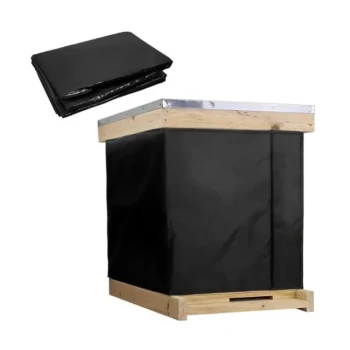
Winter wraps and hive insulation provide a thermal barrier against cold winds and low temperatures. By retaining heat within the hive, insulation reduces the need for intense muscle vibrations.
Consequently, effective insulation significantly lowers the drain on energy reserves. This conservation ensures that more food remains available for the critical early spring period when brood rearing begins.
Understanding the Trade-offs
The Balance of Supply and Demand
Providing massive amounts of feed is not always a guaranteed solution if the colony cannot access it.
In extreme cold, the cluster may become too stiff to move to new frames of honey. This creates a scenario where a colony can starve to death with food only inches away.
Vitality vs. Survival
Survival is the baseline, but spring vitality is the goal. A colony that burns through all its stores just to survive the winter will emerge weak.
Conversely, a colony that has been aided by insulation will have consumed less food. These preserved resources allow for greater vitality and accelerated population growth when the weather warms.
Making the Right Choice for Your Goal
To ensure your colonies not only survive but thrive, assess your strategy based on your specific objectives:
- If your primary focus is basic survival: Ensure your feed calculations account for the specific metabolic rate of your bee breed (e.g., Carpathian) to prevent starvation.
- If your primary focus is spring vitality: supplement your feed strategy with thermal insulation to reduce energy consumption and preserve stores for brood rearing.
Mastering wintering is not just about keeping bees alive; it is about managing their energy budget to ensure they emerge ready to work.
Summary Table:
| Factor | Role in Winter Survival | Impact on Energy Reserves |
|---|---|---|
| Feed Stocks | Primary fuel for heat generation via muscle vibration | Depleted to maintain cluster temperature |
| Bee Genetics | Determines metabolic rate (e.g., Carpathian bees) | High metabolic rates accelerate feed consumption |
| Thermal Insulation | Retains hive heat and reduces thermal loss | Lowers the burn rate of honey/syrup stores |
| Cluster Access | Ensures bees can reach fuel during extreme cold | Prevents starvation even when food is nearby |
Maximize Your Colony Survival with HONESTBEE Professional Equipment
Don't let your investment freeze or starve this winter. HONESTBEE is dedicated to supporting commercial apiaries and distributors with the high-performance tools and machinery needed to manage colony energy budgets effectively.
From high-capacity honey-filling machines to specialized hive-making equipment and essential industry consumables, we provide the full spectrum of hardware to ensure your operations are efficient and your bees are resilient. Whether you are scaling up your production or stocking the highest quality beekeeping supplies, our wholesale solutions are tailored to your success.
Ready to secure your spring vitality? Contact us today to explore our comprehensive wholesale catalog!
References
- Susanna Arestovna Pashayan, E.A. Pshenichnaya. Productive qualities of bees of the Central Russian and Carpathian breeds. DOI: 10.1051/bioconf/202413910001
This article is also based on technical information from HonestBee Knowledge Base .
Related Products
- HONESTBEE AC Powered Wire Embedder with Alligator Clips
- Solar Beeswax Melter Easy Solar Wax Melter for Beeswax
- Heavy-Duty Ergonomic Grip Galvanized Pollen Shovel
- Professional Hive Front Entrance Bee Feeder
- Honey Bee Lifecycle Model: A Detailed Honeycomb Display of Bee Development
People Also Ask
- How can combs be further strengthened? Embed Wires for Durable, High-Yield Hives
- What is an embedder in beekeeping? Essential Tool for Strengthening Wax Foundation & Hive Frames
- Why must strict sanitary and health prevention protocols be implemented for honeybee transport? Maximize Colony Survival
- What are the primary indicators of healthy honeybee colonies? Optimize Your Commercial Apiary for Peak Productivity
- Why must honeybee samples be stored in high-concentration ethanol and low temperatures? Ensure Genetic & Physical Integrity