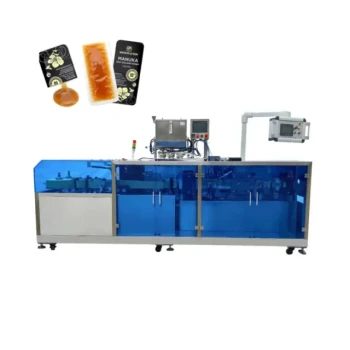
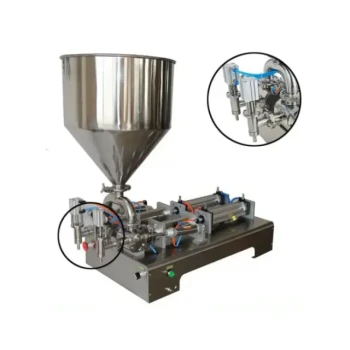
The implementation of professional filling bottles and sealed packaging acts as the definitive quality control mechanism in the commercial honey lifecycle. This approach fundamentally secures the biological stability of the product by preventing oxidation and crystallization, while simultaneously satisfying the strict hygiene standards required to transition honey from a raw agricultural good into a viable retail commodity.
Professional packaging does more than hold the product; it transforms honey into a standardized commercial asset, securing its value against environmental degradation and enabling efficient entry into formal retail markets.
Preserving Product Integrity
Combating Natural Degradation
Honey is chemically complex and sensitive to its environment. Professional sealed packaging provides a necessary barrier against oxidation and ambient moisture. This protection is critical for delaying natural crystallization and maintaining the honey's original texture and flavor profile over time.
Ensuring Absolute Hygiene
Sealed packaging serves as the primary defense against external impurities and contamination. By isolating the honey from the moment of filling, you ensure the product remains safe for consumption throughout its shelf life.
Removing Human Error
Using specialized filling machines automates the contact points in production. This significantly reduces the risks associated with manual handling, ensuring that strict hygiene standards are met consistently for every unit produced.
Facilitating Commercial Logistics
Transformation into a Retail Commodity
Standardized packaging is the technical prerequisite for moving honey from "home-use" status to the commercial shelf. It converts variable bulk volume into uniform product units. This uniformity is essential for inventory management and makes the product suitable for supermarkets and gift markets.
Optimizing Transportation
In logistics-intensive scenarios, such as mobile markets or long-distance shipping, the physical durability of the package is paramount. Food-grade plastic bottles offer superior impact resistance compared to fragile alternatives. This leak-proof performance minimizes product loss and protects your bottom line during distribution.
Reducing Operational Costs
The use of lightweight materials, particularly specific plastics, significantly lowers shipping weights. This allows for better space utilization in transport vehicles and reduces the overall cost of reaching diverse or underserved communities.
Strategic Market Segmentation
Sizing for Specific Consumers
Professional filling equipment allows you to vary packaging specifications to match consumer intent. Small containers, such as 250ml bottles, are ideal for the tourism market or trial purchases. Conversely, larger 500ml options cater to long-term household consumers, allowing you to capture multiple segments simultaneously.
Enhancing User Experience
Modern commercial packaging often prioritizes consumer convenience through functional design. Features like squeezable bodies, flip-top caps, and inverted stand designs allow consumers to dispense honey without mess or waste. This usability becomes a key differentiator in a crowded market.
Precision and Brand Value
Automated filling ensures precise volumetric measurement, which reduces raw material waste and guarantees that every customer receives the exact amount advertised. This consistency improves visual appeal and is fundamental to building a trusted brand reputation.
Understanding the Trade-offs
The Necessity of Standardization
While distinct, artisanal jars have charm, they often fail the requirements of mass logistics. Adopting professional packaging often means sacrificing unique, irregular container shapes in favor of standardized units that fit packing crates and retail shelves efficiently.
Material Selection Constraints
The push for logistical efficiency often favors plastic over glass due to weight and durability. While plastic reduces shipping costs and breakage, producers must ensure they select high-quality, food-grade materials to avoid any perception of lower value compared to traditional glass vessels.
Making the Right Choice for Your Goal
To maximize the impact of your packaging strategy, align your choice with your immediate business objective:
- If your primary focus is Logistics and Distribution: Prioritize food-grade plastic bottles with impact resistance to minimize breakage and reduce long-distance shipping costs.
- If your primary focus is Brand Presence and Retail Entry: Focus on high-precision automated filling to ensure visual consistency and precise volume, which are prerequisites for shelf placement.
- If your primary focus is Consumer Retention: Select functional packaging designs, such as squeezable flip-tops, that eliminate mess and integrate easily into daily household use.
Professional packaging is not merely a container; it is the infrastructure of your product's safety and commercial viability.
Summary Table:
| Key Aspect | Benefit of Professional Packaging | Impact on Commercial Success |
|---|---|---|
| Product Integrity | Prevents oxidation, moisture, and contamination | Extends shelf life and maintains premium flavor |
| Logistics Efficiency | Durable, lightweight, and standardized units | Reduces breakage and lowers transportation costs |
| Market Entry | Uniform measurements and retail-ready design | Meets supermarket standards for inventory management |
| Consumer Experience | Functional features (flip-tops, squeezable) | Increases brand loyalty and ease of daily use |
| Hygiene & Safety | Automated filling with minimal human contact | Ensures compliance with strict food safety regulations |
Scale Your Apiary Operations with HONESTBEE
Transitioning from raw production to professional retail distribution requires the right infrastructure. HONESTBEE specializes in empowering commercial apiaries and distributors with the tools needed to succeed in competitive markets.
We provide a comprehensive wholesale range, including:
- Advanced Machinery: High-precision honey-filling and hive-making machines.
- Professional Hardware: A full spectrum of durable beekeeping tools and equipment.
- Essential Consumables: High-quality bottles and packaging solutions designed for logistics.
- Cultural Merchandise: Honey-themed goods to diversify your brand portfolio.
Ready to enhance your product's commercial value and streamline your distribution?
Contact HONESTBEE Today to discover how our wholesale solutions can optimize your honey business.
References
- Yuta Uchiyama, Ryo Kohsaka. Apiculture knowledge transmission in a changing world: Can family-owned knowledge be opened?. DOI: 10.1016/j.jef.2017.09.002
This article is also based on technical information from HonestBee Knowledge Base .
Related Products
- Precision Durable Efficient HONESTBEE Rotary Honey Filling Machine
- Semi Automatic Small Honey Bottle Filling Machine Honey Filler
- Economy Small Honey Filling Machine Honey Bottle Filler Packaging Machine
- Fully Automatic Honey Filling Packaging Machine for Processing Line
- Commercial Rotary Honey Filling Machine for Production
People Also Ask
- What are the common types of bottling machines used for honey? Choosing the Right Solution for Your Apiary
- How do high-precision honey filling machines ensure quality? Optimize Your Commercial Production with HONESTBEE
- How do honey filling machines work? Achieve Precision & Speed for Your Apiary
- How do honey filling and processing machines aid native bee product conservation? Boost Value with HONESTBEE Technology
- What is a key feature of the new generation of the honey filling machine? The Advanced Electronic Control Unit