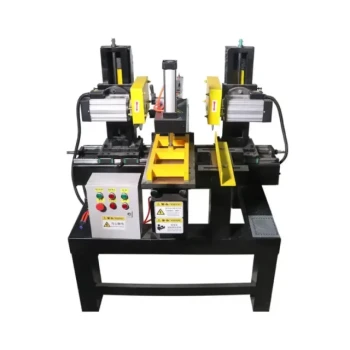
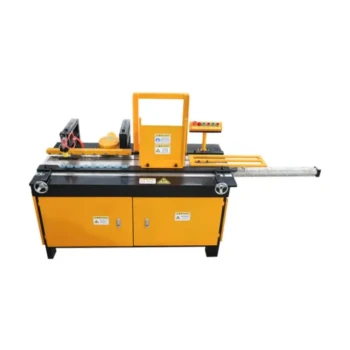
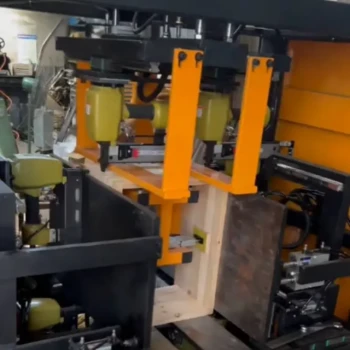
The strategic implementation of industrial hive manufacturing machinery fundamentally shifts beekeeping from subsistence activity to commercial-scale production. It allows for the mass production of high-precision modern hives using local timber, directly addressing the critical bottlenecks of equipment scarcity and high acquisition costs. By lowering these entry barriers, this technology facilitates a necessary transition from traditional methods to modern, high-output production models.
The core value of this technology is not just speed, but standardization. By shifting from artisanal to industrial manufacturing, producers guarantee the structural precision required for modern colony management, providing the physical foundation for scalable and mechanized beekeeping enterprises.
Overcoming Economic Barriers to Scale
Reducing Hardware Acquisition Costs
The primary constraint for expanding beekeeping operations is often the high cost of imported or artisanally crafted equipment. Industrial machinery leverages high-efficiency woodworking to mass-produce hive bodies and frames.
By utilizing local timber resources for this mass production, operations can significantly lower the cost per unit. This transforms advanced beekeeping hardware from a luxury good into an accessible commodity.
Enabling Rapid Expansion
Traditional hive construction is slow and labor-intensive, limiting how quickly an apiary can grow. Industrial-grade machinery removes this cap by enabling high-volume output.
This rapid production capability ensures that infrastructure keeps pace with biological colony growth. It prevents equipment shortages that otherwise stall the expansion of large-scale operations.
The Critical Role of Precision and "Bee Space"
Ensuring Biological Compliance
The most technical advantage of industrial manufacturing is the ability to maintain tight tolerances, specifically regarding "bee space." This is the precise gap required for bees to move freely without building excess wax or propolis.
Manual construction often fails to hold these specific dimensions consistently. Industrial machines ensure that every component respects bee biology, preventing the bees from gluing frames together or building wild comb that impedes management.
Facilitating Interchangeability
For a large apiary to function efficiently, every frame must fit into every hive box without modification. CNC milling and standardized mold processing guarantee this physical consistency across thousands of units.
This interchangeability is vital for quarantine efficiency and disease control. It allows apiarists to move frames between hives seamlessly to balance resources or isolate issues without physical obstruction.
Strategic Implications for Modern Management
The Foundation for Automation
Standardized equipment is a prerequisite for introducing further mechanization into the workflow. Automated honey-harvesting equipment and mechanized colony rotation systems rely on uniform frame dimensions to function without jamming or breaking.
Without the initial investment in industrial hive manufacturing, the downstream benefits of automated processing are impossible to realize.
Diversifying Production Capabilities
Modern industrial hives are structurally designed to support multi-product operations. The precision of these hives allows for the integration of consumables like pollen traps.
This enables enterprises to move beyond simple honey collection. Operations can diversify into bee pollen production and professional colony health management, stabilizing revenue streams.
Understanding the Trade-offs
The Shift from Flexibility to Uniformity
While artisanal methods allow for on-the-fly customization, industrial machinery commits an operation to a specific standard. Once a production line is set, altering dimensions to accommodate non-standard equipment becomes difficult.
Maintenance of Precision Standards
The value of this machinery lies entirely in its ability to hold tolerance. If the machinery is not maintained, and the "bee space" dimensions drift even slightly, the resulting equipment can become detrimental to colony health. Operators must prioritize machine calibration over raw output speed to avoid mass-producing defective units.
Making the Right Choice for Your Goal
To maximize the value of industrial hive manufacturing, align your implementation with your specific operational targets:
- If your primary focus is Scalability: Prioritize machinery that utilizes local timber to minimize material costs while maximizing output volume.
- If your primary focus is Operational Efficiency: Focus on the interchangeability of components to ensure seamless frame rotation and quarantine management.
- If your primary focus is Future-Proofing: Ensure your manufacturing specifications align strictly with "bee space" standards to permit the future use of automated harvesting equipment.
Industrial hive manufacturing is the bridge between traditional beekeeping and professional apiculture. It provides the standardized hardware infrastructure necessary to turn a biological resource into a manageable, scalable industry.
Summary Table:
| Strategic Pillar | Key Benefit | Impact on Beekeeping |
|---|---|---|
| Economic Scale | Reduced acquisition costs | Lowers entry barriers and enables rapid expansion. |
| Biological Precision | Consistent "Bee Space" | Reduces wild comb and improves colony management. |
| Standardization | Universal interchangeability | Facilitates seamless frame rotation and disease control. |
| Future-Proofing | Automation compatibility | Necessary foundation for automated honey harvesting. |
Scale Your Apiary with HONESTBEE Precision Equipment
Transitioning from traditional methods to commercial-scale production requires more than just bees—it requires a standardized hardware foundation. At HONESTBEE, we specialize in empowering commercial apiaries and distributors with the tools needed for industrial success.
From high-precision hive-making machinery and honey-filling machines to a full spectrum of beekeeping tools and industry consumables, we provide the comprehensive wholesale solutions your business demands. Our equipment ensures the biological precision (the critical "bee space") and physical durability needed to maximize your honey yield and operational efficiency.
Ready to modernize your production line and grow your beekeeping enterprise?
Contact HONESTBEE Today to explore our machinery and cultural merchandise offerings!
References
- Gelan Dule Dahesa, A Tilahun. Review on Beekeeping System, Constraints, and Opportunities in Ethiopia. DOI: 10.30654/mjvs.10059
This article is also based on technical information from HonestBee Knowledge Base .
Related Products
- High-Efficiency Pneumatic Bee Hive Making Machine for Rapid Box Assembly
- Beehive Machine Double End Saw for Precision Hive Component Manufacturing
- Beehive Handle and Frame Rest Cutting Machine: Your Specialized Hive Machine
- Automatic High-Speed Bee Hive Box Stapling Machine
- Mini Desktop Bee Hive Frame Forming Making Machine
People Also Ask
- How does the introduction of professional beehive-making machinery benefit sustainable beekeeping? Scale Your Apiary
- Why is specialized beehive-making machinery critical for low-defense breeding? Enhance Selection with Precision Tools
- How does the introduction of specialized beehive making machinery contribute to increasing the scale of regional beekeeping industries?
- What is the importance of specialized beehive making machinery in a circular bio-economy? Build Local Sustainability
- Why is specialized beehive-making machinery essential? Scale Your Apiary with Precision Industrial Standards