Cross comb is technically defined as a structural deviation where honey bees build honeycomb across multiple hive frames or top bars rather than adhering to the intended parallel alignment within a single component. Instead of containing the comb within the boundaries of one frame, the colony constructs wax that bridges the gap between adjacent parts.
By physically connecting multiple frames or bars with wax, cross comb eliminates the modularity of the hive. This fuses independent components into a single mass, preventing the removal of individual frames required for inspection.
The Mechanics of Cross Comb
Deviation from Parallel Alignment
In a standard managed hive, frames or top bars are arranged to encourage bees to build parallel sheets of comb.
Cross comb occurs when the bees ignore these guides. They may construct the comb perpendicular to the intended direction or at diagonal angles that traverse the open space between frames.
Structural Bridging
The critical technical feature of cross comb is the physical bridging of hive components.
Bees attach the wax from one frame directly to the structure or comb of a neighboring frame. This effectively "glues" the movable parts together with wax.
Implications for Hive Management
Loss of Component Separation
The primary reference highlights that cross comb makes hive components inseparable.
Because the comb spans across boundaries, you cannot lift a single frame out of the hive without tearing the honeycomb structure.
The "Fixed Comb" Result
When cross comb is established, the hive effectively ceases to be a "movable frame" hive.
It reverts to a fixed-comb state where the internal architecture is rigid and interlocked, complicating or rendering impossible standard management practices like disease inspection or honey harvesting.
Understanding the Trade-offs
Intended Design vs. Bee Behavior
While hive equipment is designed for linear, modular management, bees build based on their own environmental cues and instincts.
Cross comb represents a conflict between the beekeeper's need for order and the colony's construction preferences.
The Cost of Intervention
Once cross comb makes components inseparable, correcting it is often invasive.
Separating the fused frames usually requires cutting the comb, which disrupts the colony structure and can damage the brood or honey stores contained within the bridged sections.
Making the Right Choice for Your Goal
Recognizing cross comb early is essential for maintaining a manageable apiary.
- If your primary focus is identification: Look for wax constructions that run perpendicular to the top bars or bridge the gap between two adjacent frames.
- If your primary focus is maintenance: Understand that the presence of cross comb means your hive components are no longer independent, preventing standard inspections until corrected.
A clear understanding of cross comb ensures you can distinguish between healthy burr comb and structural deviations that compromise the functionality of your hive.
Summary Table:
| Feature | Description of Cross Comb |
|---|---|
| Technical Definition | Wax construction spanning across multiple frames or top bars instead of a single plane. |
| Physical Result | Structural bridging that "glues" independent hive components together. |
| Operational Impact | Eliminates modularity; prevents the removal of individual frames for inspection. |
| Management State | Reverts a movable-frame hive into a "fixed-comb" state. |
| Primary Cause | Deviation from parallel alignment guides due to bee instincts or improper spacing. |
Streamline Your Commercial Apiary with HONESTBEE
Cross comb can paralyze a professional beekeeping operation by rendering hives unmanageable. At HONESTBEE, we specialize in providing high-precision beekeeping tools and machinery designed to promote perfect comb alignment and operational efficiency.
Whether you are a commercial apiary seeking durable hive-making machinery and honey-filling solutions, or a distributor looking for a comprehensive wholesale range of industry consumables and honey-themed merchandise, we have the expertise to support your growth.
Maximize your productivity and maintain hive modularity—contact our expert team today to explore our wholesale equipment solutions.
Related Products
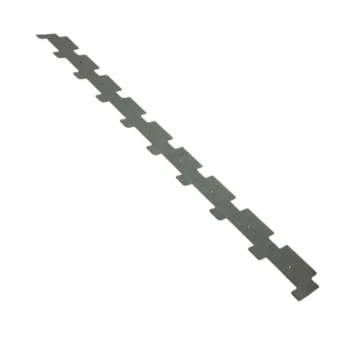
- Heavy Duty Castellated Iron Frame Spacer for Honey Supers
- Professional Frame Comb Fork and Lifter for Efficient Handling
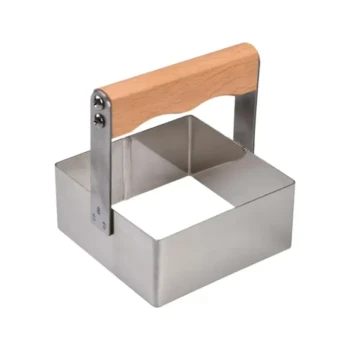
- Heavy Duty Stainless Steel Honeycomb Cutter
People Also Ask
- What are honey super frames and what foundation options are available? Choose the Best Support for Your Bees
- What are the reasons and drawbacks of using nine frames in a ten-frame honey super? Boost Extraction Speed Today
- What are honey super frames and how many are needed per box? A Beekeeper's Essential Guide
- What are honey super frames and their foundation options? Choose the Best Support for Your Hive's Honey Production
- Why might a beekeeper use fewer than the standard number of frames in a honey super? Boost Extraction Efficiency