
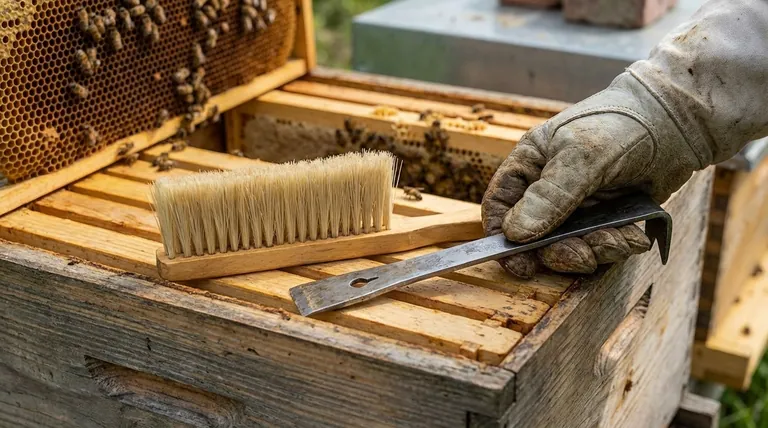
While often referred to as a "bee tool," the essential piece of equipment you are asking about is correctly called a hive tool. It is a specialized, multi-function crowbar and scraper designed for beekeepers. Its primary use is to pry open hive components and lift out frames, which honeybees seal together with a strong, resinous substance called propolis.
The core problem a hive tool solves is that bees glue their home together. The hive tool is the essential lever and scraper required to safely break this natural seal, allowing the beekeeper to inspect the colony without damaging the hive or harming the bees.
The Core Problem: Why a Special Tool is Necessary
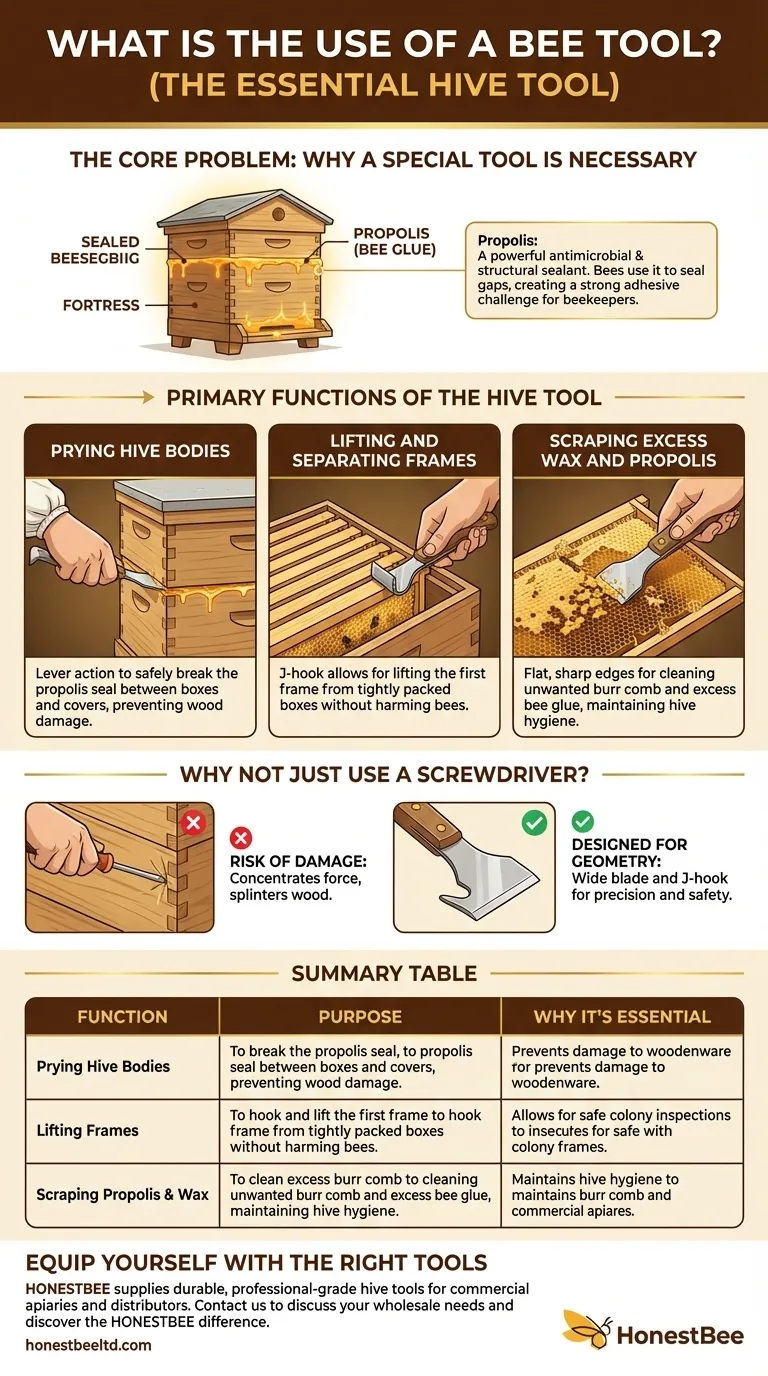
A beehive isn't like a simple set of stacking boxes. The bees themselves work constantly to seal every crack and seam, making it a fortress that requires a purpose-built tool to enter.
Understanding Propolis: The "Bee Glue"
Honeybees collect resin from trees and plants, which they mix with beeswax and enzymes to create propolis. This substance is a powerful antimicrobial and structural sealant.
Bees use this "bee glue" to seal gaps between hive boxes, glue down the inner cover, and fix frames in place. This protects the colony from weather, pests, and disease.
The Consequence of Propolis
The structural integrity that propolis provides is a challenge for the beekeeper. It acts as a powerful adhesive, making it nearly impossible to lift a cover or separate hive boxes by hand. Attempting to do so would risk splintering the wood and jarring the entire colony.
Primary Functions of the Hive Tool
The hive tool is designed to overcome the strength of propolis with precision and control. It serves several distinct functions that are critical during a hive inspection.
Prying Open Hive Bodies
The main shaft of the tool is used as a lever. By inserting the flat, chiseled end between two hive boxes (or between the top box and the inner cover), the beekeeper can apply gentle pressure to break the propolis seal cleanly.
Lifting and Separating Frames
Many hive tools feature a "J-hook" or similar curved end. This hook is designed to slip under the ear of a frame, allowing the beekeeper to lift the first frame out of a tightly packed box. Without this, removing the first frame would be extremely difficult.
Scraping Excess Wax and Propolis
The flat, sharp edges of the hive tool are perfect for scraping away unwanted burr comb (wax built in undesirable places) and excess propolis from frames and hive boxes. Keeping equipment clean is essential for hive management.
Why Not Just Use a Screwdriver?
Using a common tool like a screwdriver is a frequent mistake for beginners, but it presents significant risks and lacks the necessary functionality.
The Risk of Damage
A screwdriver concentrates all prying force onto a very small point. This can easily dent, splinter, and damage the wooden edges of your hive bodies and frames, reducing their lifespan and creating gaps for pests.
Lack of Key Features
A standard screwdriver lacks the wide, flat blade needed for effective scraping and doesn't have the J-hook required to safely lift frames. The hive tool is specifically designed for the unique geometry of a beehive.
Making the Right Choice
The hive tool is not optional; it is one of the most fundamental pieces of beekeeping equipment.
- If your primary focus is starting in beekeeping: A standard "J-hook" style hive tool is the most versatile and recommended option for all basic hive manipulations.
- If your primary focus is performing hive inspections: The hive tool is non-negotiable for safely separating components, checking frames, and ensuring the health of your colony.
Ultimately, the hive tool is an essential extension of the beekeeper's hands, enabling a respectful and effective partnership with the bees.
Summary Table:
| Function | Purpose | Why It's Essential |
|---|---|---|
| Prying Hive Bodies | To break the propolis seal between boxes and covers. | Prevents damage to woodenware that occurs with improper tools. |
| Lifting Frames | To hook and lift the first frame from a tightly packed box. | Allows for safe colony inspections without disturbing bees. |
| Scraping Propolis & Wax | To clean excess burr comb and 'bee glue' from equipment. | Maintains hive hygiene and proper spacing for bee health. |
Equip yourself with the right tools for a successful partnership with your bees.
At HONESTBEE, we understand that the right equipment is the foundation of effective hive management. We supply durable, professional-grade beekeeping supplies and equipment—including reliable hive tools—to commercial apiaries and beekeeping equipment distributors through our wholesale-focused operations.
Let us help you build a more efficient and productive operation. Contact our team today to discuss your wholesale needs and discover the HONESTBEE difference.
Visual Guide
Related Products
- Professional Multi-Function Stainless Steel Hive Tool
- Professional Stainless Steel Pry-Bar Hive Tool
- HONESTBEE Professional Long Handled Hive Tool with Precision Cutting Blade
- HONESTBEE Premium Italian Style Hive Tool with Hardwood Handle
- Ergonomic Plastic Frame Spacer Tool for Rapid Hive Management Beekeeping
People Also Ask
- Why are professional hive tools considered indispensable? Master Beekeeping Maintenance with Precision Leverage
- What is the role of professional hive tools in routine apiary maintenance? Expert Tips for Hive Health and Longevity
- What are the benefits of a multi-functional hive tool? Streamline Your Apiary Workflow with One Tool
- What advantages do multi-functional hive tools offer? Maximize Your Apiary Efficiency and Workflow
- What are the common construction features of hive tools? Key Insights for Superior Beekeeping Efficiency



















