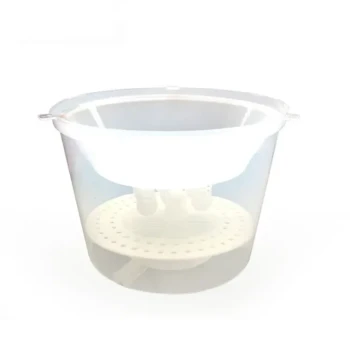
A perforated plate pollen trap functions as a precision mechanical filter designed to harvest pollen loads from returning foragers. Positioned at the hive entrance, the device forces bees to navigate through holes specifically sized between 4.0 and 4.5 mm in diameter. As the bees squeeze through these apertures, the pollen pellets attached to their hind legs are physically scraped off and fall into a secure collection tray below.
The core principle of this trap is passive mechanical interception. By restricting the entrance size to the exact margin of a worker bee's body, the device separates pollen from the bee without requiring active power or complex moving parts.
The Mechanics of Operation
Strategic Placement
The trap is installed directly at the hive entrance, the only point of ingress for returning foragers.
This placement ensures that 100% of the traffic entering the hive must interact with the perforated plate.
The Mechanical Stripping Process
As a honeybee passes through the plate, the dimensions of the hole allow the bee's body to pass but obstruct the protruding pollen loads on its hind legs.
The edges of the perforation act as a scraper, dislodging the pellets through friction.
Gravity-Fed Collection
Once dislodged, the pollen pellets fall immediately due to gravity.
They are caught in a collection tray located beneath the entrance, keeping the sample distinct from hive debris and preventing the bees from retrieving it.
Critical Specifications
The Precise Diameter
The defining specification of this research tool is the aperture size, which ranges strictly from 4.0 to 4.5 mm.
This measurement is critical because it mimics the "Goldilocks" zone of honeybee anatomy.
Why Dimensions Matter
If the holes were larger than 4.5 mm, the bee could pass through with its pollen load intact, rendering the trap useless.
If the holes were smaller than 4.0 mm, the worker bees would be unable to enter the hive, causing congestion and potential colony collapse.
Understanding the Trade-offs
Collection vs. Flow
The perforated plate creates a bottleneck at the hive entrance.
While this maximizes pollen collection, it inevitably slows down the entry of foraging bees, potentially causing minor traffic congestion during peak activity hours.
Sample Purity Limitations
While the mechanical action is efficient, it is a physical process that may vary based on the size of the pollen load.
Smaller loads may occasionally pass through the holes, meaning the trap provides a high-volume sample but rarely captures 100% of the incoming pollen.
Making the Right Choice for Your Goal
To effectively utilize a perforated plate trap, you must align the tool with your specific research objectives.
- If your primary focus is Plant Origin Analysis: Ensure the plate holes are strictly within the 4.0–4.5 mm range to maximize the diversity of pellets collected for identification.
- If your primary focus is Colony Health: Monitor the entrance regularly to ensure the restriction does not result in excessive fatigue or overheating for the returning foragers.
Correctly sized equipment transforms a standard hive into a passive data collection center for local biodiversity.
Summary Table:
| Feature | Specification/Detail | Purpose |
|---|---|---|
| Aperture Diameter | 4.0 - 4.5 mm | Specifically sized to scrape pollen while allowing bees to pass |
| Core Principle | Passive Mechanical Interception | Dislodges pollen through physical friction and scraping |
| Placement | Hive Entrance | Ensures all returning foragers interact with the stripping plate |
| Collection Method | Gravity-Fed Tray | Secures pollen pellets away from hive debris and bees |
| Material Target | Hind Leg Pollen Loads | Precision harvesting for biodiversity and plant origin analysis |
Elevate Your Apiary Operations with HONESTBEE
Are you looking to scale your research or commercial honey production? HONESTBEE provides professional-grade solutions tailored for commercial apiaries and global distributors.
Our extensive wholesale portfolio includes:
- Precision Hardware: High-efficiency hive-making and honey-filling machinery.
- Beekeeping Essentials: A full spectrum of durable tools, equipment, and industry consumables.
- Brand Expansion: Unique honey-themed cultural merchandise to diversify your retail offering.
Whether you are refining your data collection with precision pollen traps or upgrading your entire processing line, we deliver the quality and volume your business demands.
Contact HONESTBEE today to discuss your wholesale needs and see how our comprehensive equipment range can streamline your success.
References
- M.T. Mailula, Robert S. Nofemela. Botanical Origin of Pollen Collected by <i>Apis mellifera scutellata</i> Lepeletier (Hymenoptera: Apidae) in a Suburb of Pretoria, South Africa. DOI: 10.4001/003.025.0417
This article is also based on technical information from HonestBee Knowledge Base .
Related Products
- 30 cm Plastic Entrance Hole Bee Pollen Trap and Collector
- Removable Plastic Pollen Trap With Ventilated Tray for Bees Pollen Collector
- Plastic Bee Pollen Trap Strips Comb Catcher Collector
- High-Efficiency Diamond Maze Bee Escape for Clearing Supers
- Plastic Beetle Blaster Trap Beekeeping Tools and Supplies
People Also Ask
- What are the design principles and advantages of pollen traps in the collection of bee pollen? Boost Your Apiary Yield
- Why is frequent harvesting of bee pollen from traps necessary for quality control? Ensure Freshness and Prevent Mold.
- How often should bee pollen be harvested from a trap and why? Master Freshness and Prevent Spoilage
- What function do pollen traps serve in quantitative collection? Boost Your Apiary's Data & Production Efficiency
- What is the primary function of bee pollen traps? Optimize Your Pollen Harvest with Advanced Extraction Efficiency