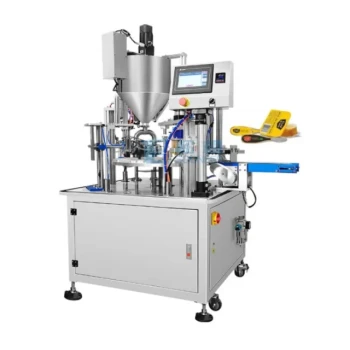
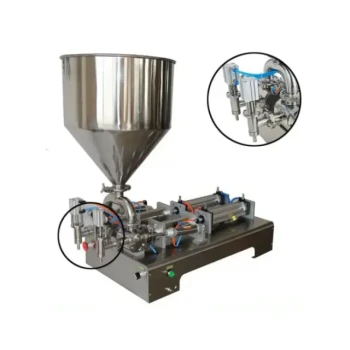
Choosing the right honey-filling machine begins with a critical assessment of the machine's physical construction and internal mechanics. To ensure operational efficiency and hygiene, you must prioritize units built with food-grade stainless steel and equipped with high-quality, high-speed motors.
Core Takeaway Selecting a honey-filling machine requires balancing robust build quality with long-term reliability. Prioritize food-grade materials and powerful motors for performance, but verify the manufacturer's warranty and support network to protect your investment against downtime.
Evaluating Build Quality and Mechanics
The Necessity of Food-Grade Materials
The construction material is the most critical baseline factor. You must ensure the machine is built from food-grade stainless steel.
This material is essential for maintaining strict hygiene standards and complying with health regulations. Furthermore, stainless steel offers corrosion resistance, ensuring the machine withstands the acidity and moisture often present in processing environments.
Motor Quality and Speed
The engine driving your production line determines your daily output. Look for machines featuring high-quality motors designed for speed and durability.
A robust motor ensures ease of operation and consistent performance, even when handling thick, viscous honey. Machines with variable speed controls offer greater flexibility, allowing you to adjust filling rates to match different batch sizes.
Assessing Overall Durability
A machine is a long-term capital investment. You can assess the expected lifespan of a unit by examining its build quality and warranty terms.
Review customer feedback and independent reviews to gauge real-world reliability. A comprehensive warranty indicates the manufacturer’s confidence in the machine’s longevity.
Operational Considerations
The Role of Customer Support
Even the best hardware requires maintenance. The availability of customer support from the manufacturer is a vital factor often overlooked during the purchase.
Reliable after-sales service and access to spare parts are necessary to minimize potential downtime. Ensure the manufacturer provides technical assistance to resolve issues quickly.
Matching Capacity to Business Needs
Your choice must align with your daily production volume. Production capacity dictates whether you need a semi-automatic or fully automatic system.
Semi-automatic models are generally ideal for small businesses or artisanal producers. Conversely, fully automatic systems are better suited for large-scale factories where high efficiency and reduced labor costs are paramount.
Versatility and Precision
Honey varies in viscosity, and packaging comes in many shapes. Look for machines that offer adjustable settings to handle different product thicknesses and container sizes.
Versatility allows you to fill jars, squeeze bottles, or sachets without purchasing separate equipment. High precision and filling accuracy are also required to ensure a professional finish and consistent product volume.
Understanding the Trade-offs
Automation vs. Complexity
While fully automatic machines reduce labor costs and increase consistency, they introduce complexity and higher maintenance requirements.
A highly automated system may require more specialized training for your staff to operate and repair. In contrast, simpler semi-automatic machines are easier to clean and operate but may bottleneck production as your business scales.
Versatility vs. Speed
Machines designed to handle a wide range of container sizes or viscosities often sacrifice raw speed for flexibility.
If you produce a single product type in high volume, a specialized machine may be faster than a "universal" filler. However, if you have a diverse product line, the trade-off in speed is worth the gain in operational agility.
Making the Right Choice for Your Goal
To select the best machine, map your specific operational constraints to the machine's capabilities.
- If your primary focus is Small-Scale or Artisanal Production: Prioritize a semi-automatic machine with simple digital controls and easy-to-clean stainless steel parts to minimize changeover time.
- If your primary focus is High-Volume Efficiency: Invest in a fully automatic system with a high-performance motor and strong manufacturer support to maximize throughput and minimize labor.
- If your primary focus is Product Variety: Choose a unit with variable speed settings and adjustable filling nozzles to handle different honey viscosities and jar sizes without needing multiple machines.
Your final decision should rest on a machine that not only meets your current volume but offers the durability and support to sustain your growth.
Summary Table:
| Factor | Key Consideration | Benefit |
|---|---|---|
| Material | Food-grade stainless steel | Ensures hygiene, corrosion resistance, and compliance. |
| Motor Quality | High-speed, robust engine | Increases output and handles high-viscosity honey. |
| Capacity | Semi-automatic vs. Fully automatic | Aligns machine throughput with your business scale. |
| Versatility | Adjustable settings & nozzles | Allows filling of various container sizes and shapes. |
| Support | Warranty and technical service | Minimizes downtime through reliable after-sales care. |
Elevate Your Honey Production with HONESTBEE
At HONESTBEE, we specialize in empowering commercial apiaries and distributors with high-performance beekeeping machinery. Whether you are scaling an artisanal brand or managing a large-scale factory, our comprehensive wholesale offering includes:
- Precision Machinery: Advanced honey-filling and hive-making machines built for durability.
- Full Spectrum Tools: A complete range of beekeeping equipment and hardware.
- Industry Consumables: Every essential needed to keep your operation running smoothly.
Ready to boost your efficiency and product consistency? Contact us today to discover how our tailored equipment solutions can grow your business.
Related Products
- Precision Durable Efficient HONESTBEE Rotary Honey Filling Machine
- Economy Small Honey Filling Machine Honey Bottle Filler Packaging Machine
- Fully Automatic Honey Filling Packaging Machine for Processing Line
- Commercial Rotary Honey Filling Machine for Production
- Semi Automatic Small Honey Bottle Filling Machine Honey Filler
People Also Ask
- How do high-precision honey filling machines ensure quality? Optimize Your Commercial Production with HONESTBEE
- How do honey filling machines work? Achieve Precision & Speed for Your Apiary
- What is a key feature of the new generation of the honey filling machine? The Advanced Electronic Control Unit
- How do honey filling and processing machines aid native bee product conservation? Boost Value with HONESTBEE Technology
- What are the common types of bottling machines used for honey? Choosing the Right Solution for Your Apiary