The primary hardware required for a standard movable-frame beehive is a modular stack of hive boxes, removable frames, covers, and supporting accessories. The essential structure includes a hive stand, bottom board, brood chamber, honey supers, inner cover, and weatherproof outer cover. Frames with foundation form the colony’s movable comb system, while queen excluders and entrance reducers provide optional control over brood placement, ventilation, and hive defense.
A complete movable-frame hive depends on standardized, interchangeable parts. The core structure supports colony growth and honey storage, while durable frames, secure fasteners, ventilation features, and protective covers determine the hive’s long-term usability.
The Core Hive Structure
Hive Stand
The hive stand elevates the hive above the ground, reducing exposure to dampness, mud, and ground-dwelling pests. It also improves access for inspections and helps maintain a clear entrance for returning foragers.
For distributors and resellers, stands may be sourced as wooden, plastic, or metal products depending on customer preference, regional climate, and shipping requirements.
Bottom Board
The bottom board forms the base of the hive and supports the lowest box. It normally includes the lower entrance through which bees enter and leave the colony.
A solid bottom board offers a simple, durable configuration, while screened or ventilated versions can support airflow and debris management where local beekeeping practices call for them.
Brood Chamber
The brood chamber is the primary lower hive box. It contains the frames where the queen lays eggs and where workers raise brood, store pollen, and maintain essential food reserves.
Deep brood chambers are common in standard Langstroth-style systems, although box dimensions and frame sizes must remain compatible across the complete product range.
Honey Supers
Honey supers are stackable boxes placed above the brood chamber. They hold removable frames where bees store surplus honey intended for harvesting.
Supers may use deep, medium, or shallow frames, but each super, frame, foundation sheet, and extraction accessory must match the selected hive standard.
The Movable Frame System
Frame Construction
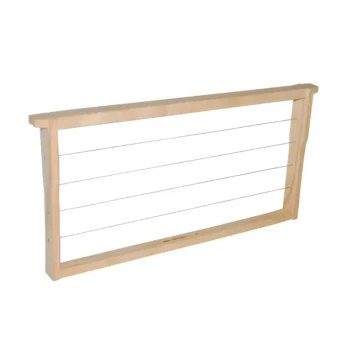
A standard frame consists of one top bar, one bottom bar, and two side bars. The top bar may be grooved or slotted, while the side bars commonly include holes or other features for foundation support.
Movable frames allow beekeepers to inspect brood development, evaluate queen performance, monitor colony health, manage swarming, and remove honey without destroying the comb structure.
Foundation Sheets
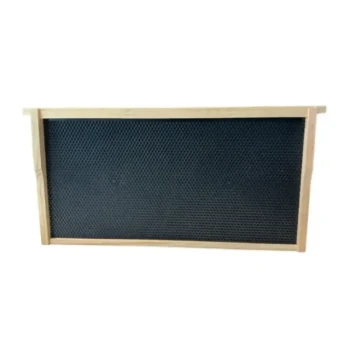
Foundation sheets provide a guided starting surface for comb construction. They may be made from beeswax or plastic and are installed inside the frame using a top-bar groove, support wires, pins, or related retaining hardware.
Correctly secured foundation helps keep comb straight and centered, which is essential for efficient inspections and mechanical honey extraction.
Frame Fasteners and Reinforcement
Frame joints are commonly secured with rust-resistant nails, brads, or frame pins. Because hive interiors are humid and frames experience repeated handling, ordinary fasteners may corrode or contribute to joint failure.
An all-weather exterior wood adhesive used with mechanical fasteners can strengthen the four frame corners. The frame should be fully cured before foundation is installed or the frame is placed in service.
Frame Alignment and Interchangeability
Standardized frame dimensions support accurate spacing and allow frames to move between compatible boxes. Consistent manufacturing is particularly important for wholesalers and distributors because customers expect replacement frames, foundation, and supers to fit existing equipment.
Poorly aligned frames can cause uneven comb, restricted bee passage, frame distortion, and difficulty during inspections or extraction.
Hive Control and Protection Components
Queen Excluder
A queen excluder is a selective grid positioned between the brood chamber and honey supers. Worker bees can pass through the openings, while the larger queen is restricted to the lower brood area.
This helps limit brood production in honey supers and keeps harvested honeycombs easier to process. Its use is management-dependent, so it is often offered as an optional accessory rather than a universal requirement.
Entrance Reducer
An entrance reducer is fitted into the lower hive entrance to reduce its opening. It can help retain warmth during colder weather and make it easier for a small or vulnerable colony to defend itself.
Wooden and plastic versions are common. The appropriate opening size depends on colony strength, season, ventilation needs, and local management practices.
Inner Cover
The inner cover sits above the uppermost super. It provides an insulating layer, supports ventilation, and helps prevent bees from attaching the outer cover directly to the top frames with propolis.
Some inner covers include an opening or rim that supports airflow and provides compatibility with feeding or ventilation accessories.
Telescoping Outer Cover
The telescoping cover is the weather-resistant outer roof of the hive. It extends over the sides of the upper hive body to protect the colony from rain, wind, sunlight, and temperature extremes.
Outer covers may use wood, plastic, or composite construction, often with a weather-resistant finish or metal protection for demanding environments.
Hardware and Sourcing Requirements
Wood and Plastic Components
Wood remains common for hive bodies, covers, stands, and frames because it is durable and familiar to beekeepers. Plastic alternatives can offer consistent dimensions, moisture resistance, and easier cleaning.
A supplier serving multiple markets should distinguish between complete hive kits and replacement components, since customers may require only frames, supers, covers, or specific fittings.
Corrosion-Resistant Fasteners
Fasteners should tolerate high humidity and repeated handling. Coated or rust-resistant nails, brads, and pins are preferable for frame assembly and hive construction.
Fasteners must also suit thin wooden components. Oversized or unsuitable panel pins can split side bars and reduce frame strength.
Adhesives and Assembly Materials
Exterior-rated wood glue can be used with nails or pins at frame joints to improve structural durability. Adhesive should be applied to the relevant joints, including the top-bar rebates, side-bar grooves, and bottom-rail connections.
Frames should remain undisturbed until the adhesive has cured fully. This reduces the risk of movement, distortion, or joint separation under heavy honey loads.
Compatible Accessories
A commercial product portfolio should include foundation sheets, frame hardware, queen excluders, entrance reducers, hive stands, bottom boards, inner covers, and outer covers alongside complete hive bodies.
Compatibility information is essential. Customers need clear confirmation that frame depth, box dimensions, cover size, and accessory spacing match the hive standard they already use.
Understanding the Trade-offs
Wood Versus Plastic
Wooden equipment is widely accepted and can be repaired or refinished, but it requires protection from moisture and may vary slightly in dimensional stability. Plastic equipment generally offers consistent sizing and easier cleaning, although some beekeepers may prefer traditional wooden components.
The best material depends on the buyer’s climate, maintenance expectations, local market preferences, and total cost requirements.
Solid Versus Ventilated Bases
Solid bottom boards provide a straightforward, robust base and familiar entrance design. Ventilated or screened bases can improve airflow and support debris monitoring, but they may require different management practices in cold or wet conditions.
Suppliers should present these as configuration choices rather than treating one design as universally superior.
Standardization Versus Product Variety
Standardized components simplify replacement, inspection, and harvesting. However, offering multiple frame depths, box sizes, and material options increases the risk of incompatible orders.
A broad portfolio is commercially valuable only when product specifications, fitment details, and inventory organization are precise.
Optional Versus Essential Components
The stand, bottom board, brood chamber, frames, supers, and covers form the basic operational structure. Queen excluders and entrance reducers are important management accessories, but their use varies by colony condition, season, and beekeeper preference.
Treating optional accessories as mandatory can create unnecessary cost or unsuitable configurations for customers.
Making the Right Choice for Your Goal
A reliable sourcing program should combine complete hive systems with compatible replacement parts and responsive technical support.
- If your primary focus is wholesale distribution: Build a coordinated portfolio covering stands, bottom boards, brood chambers, supers, frames, foundation, covers, and management accessories, with clear compatibility specifications.
- If your primary focus is B2B resale: Offer complete starter configurations alongside replacement frames, fasteners, covers, and foundation so customers can purchase both initial systems and maintenance parts.
- If your primary focus is professional beekeeping: Prioritize accurately aligned movable frames, durable fasteners, secure foundation installation, and hive components designed for repeated inspection and extraction.
- If your primary focus is rapid order fulfillment: Maintain standardized stock units and documented product dimensions so compatible parts can be identified, quoted, and dispatched quickly.
- If your primary focus is premium service: Support product selection with technical guidance on material options, frame sizes, ventilation, queen excluders, entrance reducers, and regional operating conditions.
A well-specified movable-frame beehive combines standardized structure, durable frame hardware, compatible accessories, and dependable supply support into one workable colony-management system.
Summary Table:
| Component | Function | Key Variations |
|---|---|---|
| Hive Stand | Elevates hive, reduces moisture and pests | Wood, plastic, metal |
| Bottom Board | Base with entrance; supports lowest box | Solid, screened, ventilated |
| Brood Chamber | Lower box for brood rearing | Deep, medium (varies) |
| Honey Supers | Upper boxes for honey storage | Deep, medium, shallow |
| Frames | Movable comb holders | Various depths, material |
| Foundation | Guides comb construction | Beeswax, plastic |
| Queen Excluder | Restricts queen to brood area | Plastic, metal |
| Entrance Reducer | Controls entrance size | Wood, plastic |
| Inner Cover | Insulation and ventilation | With/without opening |
| Outer Cover | Weather protection | Telescoping, migratory |
| Fasteners | Secure frame joints | Rust-resistant nails, pins |
| Adhesives | Strengthen frames | Exterior wood glue |
Key: Standardization ensures interchangeability across components.
Looking for reliable supply of movable-frame beehive components? HONESTBEE offers a comprehensive wholesale portfolio—from stands, supers, and frames to fasteners and covers—with rapid response, dedicated service, and ultra-fast fulfillment. Whether you're a distributor seeking OEM/ODM support or a beekeeper needing quality parts, contact us today to discuss your requirements: #ContactForm.
Related Products
- Professional Observation Hive: The Ultimate Portable Solution for Beekeeping Education, Exhibitions, and Colony Displays
- Professional Grade Foldable Beehive Handles
- HONESTBEE Wired and Assembled Wooden Bee Frames Foundation for a Thriving Hive
- Assembled Wooden Bee Frames with Plastic Foundation for Durability and Convenience by HONESTBEE
- Plastic Bee Frame Beekeeping Hive Frames for Wholesale
People Also Ask
- How does transitioning to modern hives boost honey yield? Increase production and product quality for your commercial apiary
- How do Langstroth and Dadant standard beehives compare regarding brood chamber management and component compatibility? Find the Perfect Fit for Your Apiary
- What are the key operational differences and structural trade-offs between Langstroth beehives and top-bar beehives for apiary management? Discover which hive system fits your operational needs.
- What are the primary differences between Langstroth, horizontal top bar, and Warré hive box designs when selecting beekeeping equipment? Choose the Right Hive for Your Apiary
- Why do commercial apiary operators transition from traditional hive structures, such as clay cylinders, to standardized Langstroth hive boxes? Discover Scalable Beekeeping Solutions