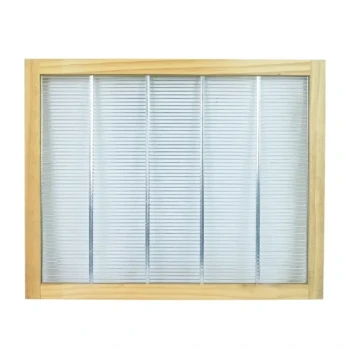
Metal wire mesh acts as a selective biological filter. By utilizing a specific aperture between 1 cm and 1.5 cm, the mesh serves a dual purpose: it grants live bees unrestricted access for foraging while simultaneously creating a robust physical barrier against external threats and environmental factors.
The core function of the mesh is to balance accessibility with security; it maintains the hive's workflow by allowing bee traffic while securing collected samples against predators and wind.
The Mechanics of Selective Permeability
The effectiveness of a bee trap relies on its ability to distinguish between the hive's inhabitants and external variables. The metal wire mesh achieves this through precise sizing.
Unrestricted Foraging Access
The primary biological requirement for any hive addition is that it must not impede work. An aperture size of 1 cm to 1.5 cm is calibrated specifically for the size of a bee.
This allows live bees to fly freely in and out of the hive. Consequently, the trap does not disrupt essential foraging activities or the daily flow of the colony.
Defense Against Predators
While the mesh allows bees to pass, it acts as a physical shield against larger threats.
The structure effectively prevents predators, such as wasps and birds, from entering the collection area. This exclusion is vital for preventing the consumption of samples or harm to the living colony.
Sample Preservation
Beyond biological threats, the trap must account for environmental factors. Dead bee samples are naturally lightweight and prone to displacement.
The mesh reduces the impact of wind within the trap. This prevents light dead bee samples from being dispersed, ensuring that mortality data remains accurate and collectible.
Understanding the Aperture Trade-offs
The specific range of 1 cm to 1.5 cm is not arbitrary; it represents a functional compromise between permeability and protection. Deviating from this standard creates immediate operational failures.
The Risk of Smaller Apertures
If the mesh opening is too small (below 1 cm), the "filter" becomes a blockage.
This creates a bottleneck that restricts live bee movement. The result is disrupted foraging, reduced resource collection, and increased stress on the colony.
The Risk of Larger Apertures
Conversely, if the mesh opening is too large (above 1.5 cm), the protective barrier is compromised.
Predators like wasps may gain entry to attack bees or scavenge samples. Additionally, the reduced wind resistance increases the likelihood that valuable data (dead bees) will be blown away and lost.
Optimizing Trap Design for Your Objectives
When selecting materials for bee trap construction, the aperture size determines the success of your device.
- If your primary focus is Colony Health: Ensure the aperture is at least 1 cm to guarantee that foraging traffic remains unimpeded and stress-free.
- If your primary focus is Data Integrity: Ensure the aperture does not exceed 1.5 cm to strictly exclude predators and prevent wind-driven sample loss.
A correctly sized mesh is the linchpin of a functional bee trap, protecting both the living colony and the integrity of the data collected.
Summary Table:
| Feature | Specification | Primary Function |
|---|---|---|
| Ideal Aperture Size | 1 cm – 1.5 cm | Balances bee permeability with predator exclusion |
| Foraging Access | > 1 cm | Permits unrestricted flight and maintains hive workflow |
| Predator Defense | < 1.5 cm | Blocks wasps and birds from harming the colony |
| Sample Integrity | Metal Wire Mesh | Prevents wind from dispersing dead bee samples |
| Risk of Small Mesh | < 1 cm | Causes hive bottlenecks and colony stress |
| Risk of Large Mesh | > 1.5 cm | Leads to sample loss and increased vulnerability |
Elevate Your Beekeeping Infrastructure with HONESTBEE
At HONESTBEE, we specialize in empowering commercial apiaries and distributors with high-performance beekeeping tools and machinery. Whether you are constructing custom traps or scaling up production, we provide the specialized hardware you need—from precision-engineered wire mesh and hive-making equipment to honey-filling machines and essential consumables.
Partner with HONESTBEE for:
- Quality Wholesale Supply: Access a full spectrum of durable beekeeping tools and hardware.
- Technical Expertise: Benefit from equipment designed for maximum efficiency and colony safety.
- Comprehensive Portfolio: From industrial machinery to honey-themed cultural merchandise, we support every facet of your business.
Ready to optimize your operations with industry-leading equipment? Contact us today to explore our wholesale solutions!
References
- Ingrid Illies, Norbert Sachser. The influence of different bee traps on undertaking behaviour of the honey bee (<i>Apis mellifera</i>) and development of a new trap. DOI: 10.1051/apido:2002014
This article is also based on technical information from HonestBee Knowledge Base .
Related Products
- Premium Wood Framed Metal Wire Queen Bee Excluder
- Stainless Steel Bee Hive Frame Wire for Beekeeping
- Reusable Aluminium Beetle Trap for Small Hive Beetles Silver Bullet
- HONESTBEE Professional Frame Wiring Board and Jig
- HonestBee Ergonomic Frame Wire Crimper with Plastic Handles and Metal Gears Choice
People Also Ask
- What types of queen excluders are available for beekeepers? Choose the Right Tool for Your Hive
- Why are standardized hive frames and queen excluders essential for maintaining honey purity and quality? Scale Your Purity
- How does a queen-bee excluder function as a defense against Small Hive Beetles? Protect Your Honey with Resource Denial
- What is the purpose of an entrance queen excluder? Prevent Absconding and Stabilize Your New Honeybee Colony
- What is the function of a queen excluder? Maximize Honey Yield and Ensure Data Integrity for Your Apiary