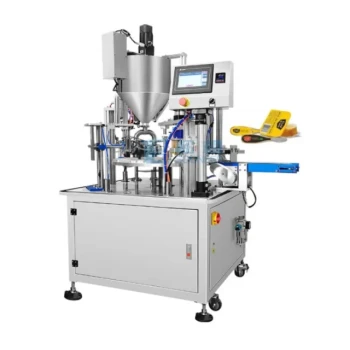
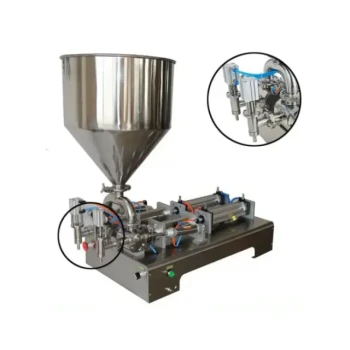
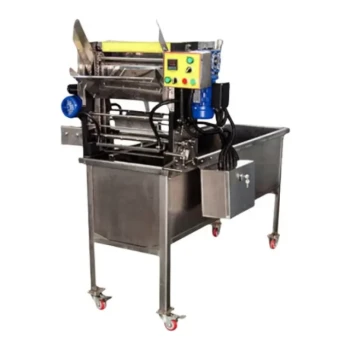
Automatic honey-filling machines serve as the critical bridge between bulk apiary production and the retail market. Their primary role is to provide precise volumetric control and ensure strict hygiene standards during the packaging process. By automating the transition from bulk containers to shelf-ready jars, these systems enhance visual consistency while significantly reducing manual labor costs to meet international market requirements.
The Core Value Beyond simple labor reduction, these machines are essential for product viability in regulated markets. They transform raw production into standardized commercial goods by guaranteeing precise weight, preventing environmental contamination, and ensuring the professional aesthetic required for high-end retail.
Operational Precision and Efficiency
Achieving Volumetric Consistency
Honey is a high-viscosity material that is difficult to handle manually. Automatic machines utilize advanced volumetric or weight-based metering systems to ensure every unit contains the exact same amount of product. This eliminates the inconsistency of manual filling and ensures compliance with strict net-weight regulations.
Minimizing Product Loss
In commercial operations, overfilling jars or spilling sticky product represents a direct loss of revenue. High-precision filling technology significantly reduces the overflow and loss associated with manual handling. This precise dosing ensures that the maximum amount of bulk inventory is successfully converted into saleable product.
Enhancing Production Speed
Automation dramatically increases the throughput of the packaging line compared to manual methods. By integrating weighing, filling, and sealing into a continuous process, apiaries can scale their operations to meet large commercial orders without a linear increase in labor costs.
Preserving Product Quality and Integrity
Preventing Secondary Contamination
The most critical role of these machines is maintaining a sterile "closed operating environment." Manual filling exposes honey to human contact and airborne particulates. Automated systems utilize hermetic sealing technologies to prevent secondary contamination, ensuring the honey remains safe for consumption.
Controlling Moisture and Oxidation
Honey is hygroscopic, meaning it readily absorbs moisture from the air, which can lead to fermentation. Automatic fillers minimize the time honey is exposed to air and provide immediate, reliable sealing. This airtight environment slows down oxidation and prevents moisture absorption, stabilizing the honey's chemical properties.
Protecting Sensory Characteristics
High-end honey is valued for its unique botanical aromas, color, and crystallinity. By reducing exposure time and handling the product gently, automated systems help preserve these bioactive components. This ensures that the product on the shelf retains the same sensory profile as the honey in the apiary.
Understanding the Trade-offs
Maintenance and Calibration Needs
While automation reduces manual labor, it introduces a requirement for technical maintenance. The high-precision sensors and metering systems capable of handling viscous fluids require regular calibration to remain accurate. Neglecting this can lead to the very inconsistencies the machine was purchased to avoid.
Cleaning Complexity
The "closed environment" that protects the honey also requires rigorous cleaning protocols. Because honey can crystallize and clog machinery, operators must adhere to strict sanitation schedules. This shifts the labor focus from repetitive filling tasks to skilled machine operation and maintenance.
Making the Right Choice for Your Goal
To maximize the value of your honey production, align your equipment choice with your specific market strategy:
- If your primary focus is International Export: Prioritize machines with certified weight-based metering systems to ensure strict compliance with global packaging and net-weight standards.
- If your primary focus is High-End Boutique Retail: Select equipment designed for "low-impact" filling to preserve delicate botanical aromas and specific crystallization textures.
- If your primary focus is Operational Scalability: Invest in systems with integrated hermetic sealing to maximize shelf life and minimize product loss during high-speed runs.
Successful commercial packaging relies on moving from "filling jars" to "standardizing a product"—automation is the tool that makes that distinction possible.
Summary Table:
| Key Role | Primary Benefit | Commercial Impact |
|---|---|---|
| Volumetric Control | Precise weight & volume consistency | Compliance with export net-weight regulations |
| Product Integrity | Closed-system filling & hermetic sealing | Prevents contamination and stabilizes moisture content |
| Operational Speed | High-throughput automation | Reduces labor costs and enables business scalability |
| Loss Mitigation | High-precision dosing sensors | Minimizes product overflow and sticky waste |
| Quality Preservation | Gentle handling of viscous fluid | Maintains botanical aromas and unique honey textures |
Scale Your Apiary with HONESTBEE Professional Solutions
Transitioning from bulk production to a global retail presence requires more than just filling jars—it requires precision, efficiency, and industrial-grade reliability. HONESTBEE specializes in empowering commercial apiaries and distributors with the high-performance tools needed to dominate the market.
How HONESTBEE Adds Value to Your Business:
- Comprehensive Wholesale Range: From precision honey-filling and hive-making machines to essential beekeeping consumables.
- Tailored for Growth: Our machinery is designed to meet strict international hygiene and weight standards, ensuring your product is export-ready.
- End-to-End Support: We provide the hardware and technical insights to help you minimize product loss and maximize throughput.
Ready to transform your production line into a high-efficiency operation? Contact HONESTBEE Today to explore our full spectrum of beekeeping machinery and cultural merchandise.
References
- Francisco J. Güemes-Ricalde, Juan Manuel Pat–Fernández. Production Costs Of Conventional And Organic Honey In The Yucatán Peninsula Of Mexico. DOI: 10.1080/00218839.2006.11101327
This article is also based on technical information from HonestBee Knowledge Base .
Related Products
- Automatic Honey Filling and Filtering Machine for Beekeeping Bottle Filling
- Fully Automatic Honey Filling Packaging Machine for Processing Line
- Precision Durable Efficient HONESTBEE Rotary Honey Filling Machine
- Automatic Single-Dose Snap & Squeeze Honey Sachets Packing Machine
- Semi Automatic Small Honey Bottle Filling Machine Honey Filler
People Also Ask
- What process advantages do professional honey filtering and filling machines provide? Optimize Your Organic Honey Output
- How do honey filling and filtering machines increase product value? Turn Raw Honey into Premium Export-Grade Goods
- How do honey filtration and filling machinery contribute to industrialization? Scale Your Commercial Honey Production
- What specific issues do industrial filtration and automated filling machinery address? Ensure Honey Quality & Compliance
- How does the use of professional honey filtration and filling machinery facilitate international honey exports?