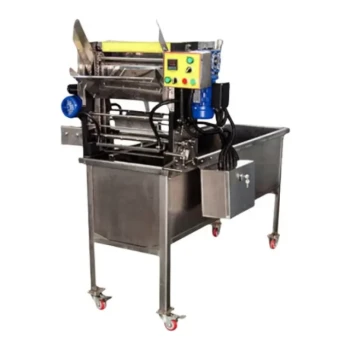
Automatic uncapping machines function as the critical preparatory stage in industrial honey processing, bridging the gap between raw hive frames and centrifugal extraction. By replacing manual labor with mechanical precision, these units shave wax cappings to a uniform depth, ensuring that honey flow channels are fully exposed for maximum yield.
The primary value of an automatic uncapper lies not just in speed, but in standardization; it converts a variable, manual art into a consistent industrial process that protects the comb structure and maximizes honey recovery.
The Mechanics of Standardization
Ensuring Consistent Depth
Manual uncapping often results in uneven cuts, digging too deep or missing sections entirely.
Automatic machines utilize mechanical precision to remove wax cappings at a consistent, pre-set depth across every frame.
Creating Optimal Flow Channels
For a centrifugal extractor to work efficiently, the honey cells must be fully open.
Automatic uncappers slice the caps to provide clear, unobstructed open flow channels, which is fundamental for extracting the maximum amount of honey during the spinning cycle.
Minimizing Honey Loss
When uncapping is done unevenly, significant amounts of honey can be sliced away along with the wax.
Automated equipment is calibrated to remove only the necessary wax layer, thereby minimizing the volume of honey lost in the cappings and increasing the overall harvest yield.
Economic and Operational Efficiency
Enabling Industrial Scale
Manual uncapping is a bottleneck that limits how fast a processing line can run.
Automatic machines significantly increase labor productivity, allowing facilities to achieve the throughput necessary for standardized, industrial-scale production.
Frame Preservation and Reuse
A critical economic factor in apiculture is the lifespan of the honeycomb frame.
By using precise mechanical cutting rather than manual force, these machines minimize damage to the honeycomb structure, allowing the drawn comb to be reused immediately after extraction, which reduces long-term production costs.
Understanding the Trade-offs
Requirement for Uniformity
Automation relies on consistency in the input materials.
Automatic uncappers perform best with standardized frames; warped or irregular frames may suffer damage or result in missed sections that require manual touch-ups.
Maintenance and Complexity
Moving from a heated knife to a mechanical system introduces moving parts.
Operators must account for regular maintenance schedules and the initial capital investment, which is significantly higher than manual tools.
Wax Handling Logistics
High-speed uncapping generates a large volume of wax cappings quickly.
You must have a system in place, such as a double uncapping tank, to efficiently collect the sliced wax and drain the honey from it, or the machine's speed will create a downstream bottleneck.
Making the Right Choice for Your Goal
To determine if an automatic uncapper fits your processing line, consider your volume and long-term objectives:
- If your primary focus is Industrial Scalability: The investment is mandatory to eliminate labor bottlenecks and ensure the standardized throughput required for global trade.
- If your primary focus is Asset Longevity: The precision of automation is essential to preserve your honeycomb frames for reuse, reducing the energy cost for bees to rebuild comb.
Automatic uncapping transforms honey processing from a manual craft into a scalable engineering operation.
Summary Table:
| Feature | Manual Uncapping | Automatic Uncapping |
|---|---|---|
| Processing Speed | Slow / Labor-intensive | High-speed / Automated |
| Cutting Depth | Variable / Uneven | Consistent / Precise |
| Honey Recovery | Moderate loss in wax | Minimized loss (high yield) |
| Frame Longevity | Higher risk of damage | Preserves comb structure |
| Scalability | Limited for commercial use | Essential for industrial scale |
Maximize Your Apiary’s Throughput with HONESTBEE
At HONESTBEE, we understand the demands of commercial beekeeping and large-scale distribution. Our precision-engineered automatic uncapping machines are designed to integrate seamlessly into your honey processing line, ensuring maximum extraction efficiency while protecting your valuable honeycomb assets.
Beyond uncapping, we provide a comprehensive wholesale portfolio, including honey-filling machines, hive-making equipment, and essential industry consumables. Partner with us to transform your operation into a scalable engineering success.
Ready to upgrade your production? Contact our expert team today to find the perfect equipment solution for your business.
References
- Arianna Pignagnoli, Aldo Dal Prà. Greenhouse Gas (GHG) Emissions from Honey Production: Two-Year Survey in Italian Beekeeping Farms. DOI: 10.3390/ani13040766
This article is also based on technical information from HonestBee Knowledge Base .
Related Products
- Automatic Honey Frame Uncapper Machine for Beekeeping
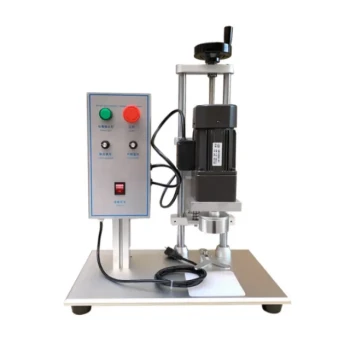
- Semi Automatic Electric Bottle Capping Machine
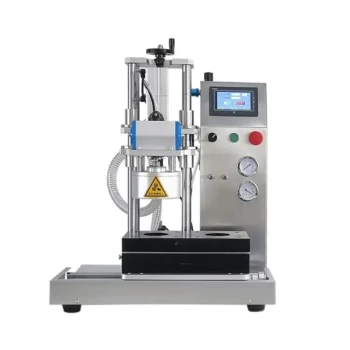
- Semi-Automatic Vacuum Capping Machine with Pneumatic Control for Glass Jars
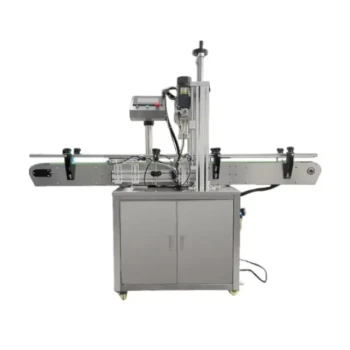
- Automatic Inline Spindle Bottle Capping Machine for Honey Production
- Professional Electric Honey Uncapping Knife with Heated Digital Temperature Control for Beekeeping
People Also Ask
- What is the primary goal when choosing an uncapping method? Maximize Honey Yield & Comb Integrity
- What is the process of uncapping frames in beekeeping? Master the Best Methods for Maximum Honey Yield
- How are honey frames prepared before extraction? Master the Hive-to-Honey-House Process
- What is the process of uncapping honey frames before extraction? Expert Guide to Efficient Honey Harvesting
- What specialized tools are used to uncap honey frames prior to extraction? Top Uncapping Tools for Efficient Harvesting