Breeder Queens function as the central genetic vectors in large-scale apiary operations. They serve as the primary source for introducing superior resistance genes—specifically from specialized stocks like those of the Primorsky region—into a wider population. This genetic transfer allows the queen's offspring to leverage innate biological mechanisms to suppress parasite populations, such as tracheal mites (Acarapis woodi), drastically reducing the reliance on chemical acaricides.
The introduction of a Breeder Queen from a resistant line is not merely a replacement of livestock; it is the installation of a self-perpetuating, biological defense system that enables the colony to actively maintain low infestation levels even under high parasite pressure.
The Biological Foundation of Resistance
Transmission of Superior Genetics
The primary role of the Breeder Queen is to act as the genetic anchor for the colony.
She carries the "blueprint" for physiological resistance. By utilizing stocks from regions with known resistance history, such as Primorsky, breeders can ensure these traits are passed down to the worker bee population.
Active Parasite Suppression
The value of these specific lines lies in their ability to suppress rather than merely tolerate pests.
Offspring from these queens can maintain infestation levels of parasites, including tracheal mites, at extremely low percentages. This suppression occurs naturally through the bees' biological responses, negating the need for constant chemical intervention.
Genetic Basis of Grooming Behavior
Beyond tracheal mites, Breeder Queens are essential for propagating behavioral defenses against Varroa mites.
High-intensity grooming behavior has a distinct genetic basis regulated by neural gene expression, specifically the Neurexin-1 gene. Breeder Queens selected for this marker produce colonies that physically remove mites more effectively.
Operationalizing Resistance at Scale
Precision in Propagation
To translate the genetics of a single Breeder Queen into a large-scale operation, precision is required.
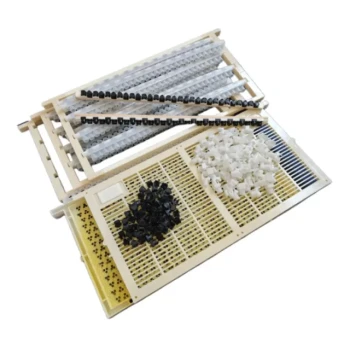
Professional rearing tools and larval grafting equipment are essential. They allow breeders to isolate and replicate the specific genetic lineages that exhibit these high-intensity defense behaviors.
Standardized Validation
Successfully breeding for resistance requires a controlled scientific platform to verify results.
Standardized beehives and frames are used to regulate colony strength and larval distribution uniformly. This consistency eliminates micro-climatic fluctuations caused by hardware, ensuring that survival is due to the Breeder Queen’s genetics, not environmental luck.
Understanding the Trade-offs
The Requirement of Specialized Stock
Resistance is not a trait that can be "trained" into standard stock; it must be imported via genetics.
You cannot achieve these results with generic queens. Success depends entirely on sourcing Breeder Queens from validated resistant lines (e.g., Primorsky) that have a proven history of low parasite load under pressure.
The Complexity of Verification
Introducing these queens requires a commitment to rigorous comparative testing.
To confirm that the resistance traits are active, breeders must run parallel experiments between resistant groups and control groups. This requires standardized equipment to avoid data skewing, adding a layer of operational complexity to the apiary.
Making the Right Choice for Your Goal
To effectively utilize Breeder Queens for mite resistance, align your strategy with your operational targets:
- If your primary focus is reducing chemical dependency: Prioritize Breeder Queens from Primorsky or similar stocks known for the biological suppression of tracheal mites (Acarapis woodi).
- If your primary focus is Varroa defense: Select lineages specifically screened for the Neurexin-1 gene to maximize high-intensity grooming behaviors in the workforce.
- If your primary focus is validating a breeding program: Invest in standardized hives and frames to create a reliable control environment for comparative genetic testing.
The ultimate goal is to shift the burden of pest management from external chemicals to the internal genetics of the hive.
Summary Table:
| Key Feature | Genetic Benefit | Operational Impact |
|---|---|---|
| Genetic Anchor | Transfers innate resistance blueprints | Establishes a self-perpetuating defense system |
| Mite Suppression | Targets tracheal and Varroa mites | Drastically reduces reliance on chemical acaricides |
| Behavioral Traits | Expresses Neurexin-1 gene (grooming) | Increases physical removal of parasites by workers |
| Scalability | High-precision larval grafting | Enables uniform resistance across thousands of colonies |
Elevate Your Apiary’s Resilience with HONESTBEE
Transitioning to a chemical-free, genetically resistant honey bee population requires more than just the right queen—it requires professional-grade infrastructure. HONESTBEE supports commercial apiaries and distributors with a comprehensive wholesale offering designed for large-scale genetic programs. From high-precision larval grafting tools and specialized hive-making machinery to standardized breeding frames that ensure scientific validation, we provide the hardware necessary to scale your resistance breeding.
Whether you are a commercial breeder or a regional distributor, our portfolio of beekeeping tools and industrial machinery is engineered to enhance your operational efficiency.
Ready to strengthen your colonies and optimize your production?
Contact HONESTBEE Today for Wholesale Solutions
References
- Lilia I. de Guzman, Victor N. Kuznetsov. Resistance to <i>Acarapis woodi</i> by honey bees from far-eastern Russia. DOI: 10.1051/apido:2002031
This article is also based on technical information from HonestBee Knowledge Base .
Related Products
- Brown Nicot Queen Cell Cups for Breeding Queen Bees Beekeeping
- Jenter Queen Rearing Kit Complete Set for Bee Breeding
- Twin Queen Styrofoam Honey Bee Nucs Mating and Breeding Box
- Premium Nicot Style Queen Rearing Kit with Hair Roller Bee Cages
- Wooden Queen Bee Excluder for Beekeeping
People Also Ask
- What role do specialized queen rearing tools play in developing mite-resistant honeybee stock? Master Genetic Selection
- What materials are used to make artificial queen cell cups for grafting? Beeswax vs. Plastic Guide
- What roles do specialized queen cell cups play in royal jelly production? Optimize Your Hive's Secretion and Yield
- How does the standardized depth of queen cell cups affect larval acceptance? Boost Success with 6mm Precision
- Why is a diluted royal jelly solution applied to queen cell cups? Boost Acceptance in Artificial Grafting