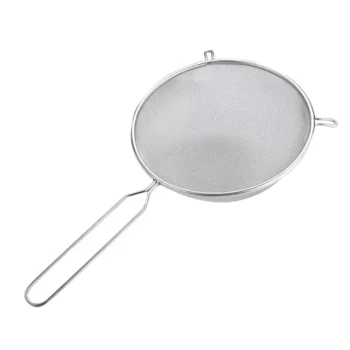
Fine mesh filter bags act as the critical mechanism for initial solid-liquid separation during the extraction of American Foulbrood (AFB) spores. By physically isolating the crushed bee samples, these bags allow for the retrieval of spores while preventing bulk debris from contaminating the downstream processing stages.
The filter bag’s primary function is to retain coarse impurities like exoskeletons while permitting sterile water to wash spores off the bees. This directly reduces the precipitation load during centrifugation, resulting in a significantly cleaner final extract.
The Mechanics of Separation
Facilitating Spore Recovery
The extraction process relies on the use of sterile water to dislodge spores from the bees' body surfaces.
The fine mesh structure allows this water to fully saturate the sample inside the bag. This ensures that the spores are effectively washed off the bees and carried out into the surrounding liquid.
Retention of Gross Impurities
While the mesh allows liquid and microscopic spores to pass, it acts as a physical barrier for larger solids.
Gross impurities, specifically bee limbs and exoskeletons generated during the crushing process, are trapped inside the bag. This prevents the bulk biological material from entering the liquid extract.
Downstream Process Optimization
Reducing Centrifugation Load
One of the most significant benefits of using filter bags is the reduction of solid mass in the liquid sample.
By removing the larger debris upfront, the subsequent centrifugation step deals with a much lower precipitation load. This prevents the centrifuge tubes from becoming overwhelmed with non-target sediment.
Improving Extract Purity
The quality of the final spore extract is directly dependent on this pre-treatment step.
By ensuring that only the spore-laden liquid moves forward, the process yields a higher purity extract, free from the heavy organic contamination that would otherwise result from crushed bee tissue.
The Necessity of Proper Filtration
The Consequence of Skipping Filtration
Understanding the role of the filter bag highlights the risks of omitting this step.
Without the mesh barrier, the "precipitation load" mentioned in the reference would become unmanageable. The resulting centrifuge pellet would be a mix of spores and heavy debris, making isolation difficult and compromising the purity of the sample.
Making the Right Choice for Your Goal
If your primary focus is Sample Purity:
- Ensure the filter bag is utilized to fully trap exoskeletons, as this significantly improves the quality of the spore extract liquid.
If your primary focus is Process Efficiency:
- Rely on the filter bag to reduce the precipitation load, which streamlines the centrifugation steps by minimizing the volume of sediment you must manage.
The filter bag is not just a container; it is an essential purification tool that dictates the quality of your final data.
Summary Table:
| Function | Role in AFB Spore Extraction | Key Benefit |
|---|---|---|
| Solid-Liquid Separation | Isolates crushed bee samples from the wash liquid | Prevents bulk debris contamination |
| Physical Filtration | Traps bee limbs and exoskeletons while allowing water through | Ensures only spores enter the liquid phase |
| Centrifugation Prep | Minimizes the volume of non-target sediment | Reduces precipitation load and processing time |
| Quality Control | Purifies the extract during the initial wash | Improves final data accuracy and sample purity |
Maximize Your Lab Efficiency with HONESTBEE
At HONESTBEE, we understand that precision in disease detection is vital for the success of commercial apiaries and distributors. As a leading supplier of comprehensive beekeeping tools, machinery, and essential consumables, we provide high-quality filtration solutions and specialized hardware designed for professional use.
Whether you are scaling up honey-filling operations or need reliable lab-grade equipment for colony health management, our wholesale portfolio is built to support your growth. Empower your beekeeping operations with industry-leading technology—Contact us today to explore our full range of professional solutions!
References
- Anders Lindström, Ingemar Fries. Sampling of adult bees for detection of American foulbrood (<i>Paenibacillus larvae</i>subsp.<i>larvae</i>) spores in honey bee (<i>Apis mellifera</i>) colonies. DOI: 10.1080/00218839.2005.11101154
This article is also based on technical information from HonestBee Knowledge Base .
Related Products
- Conical Nylon Honey Strainer Filter Bag for Beekeeping and Honey Filtration
- Professional Stainless Steel Honey Filter with Support Handle
- Nylon Honey Strainer Square Filter Cloth for Honey Filters
- Stainless Steel Triangle Support Honey Strainer and Filters
People Also Ask
- What is the primary function of specialized filtering bags in honey purification? Enhance Quality & Equipment Life
- What are the primary functions of using muslin cloth or stainless steel filters? Ensure Pure and Marketable Honey
- What are the benefits of using a honey strainer for beekeepers? Achieve Clean, High-Quality Honey Efficiently
- What is the primary function of a honey strainer in beekeeping? Achieve Commercial Purity & Visual Clarity
- What can I use to strain honey? A Beekeeper's Guide to Choosing the Right Filter