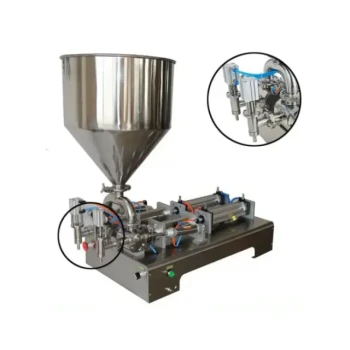
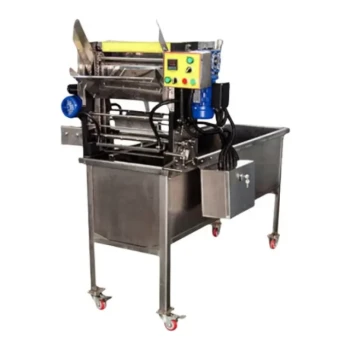
Industrial-grade honey-filling machines serve as critical financial stabilizers for apiaries operating under severe environmental pressure. By automating the late-stage processing phase, these machines significantly reduce labor costs and material waste, directly optimizing net profit. This increased financial efficiency provides the essential capital required to offset colony losses and invest in long-term environmental resilience.
Core Takeaway While typically viewed as simple packaging tools, industrial filling machines function as economic engines that convert raw production into the financial security needed to purchase replenishment colonies and upgrade disease prevention facilities.
Transforming Efficiency into Biological Capital
The primary role of this machinery is to bridge the gap between raw harvest and financial recovery. For apiaries facing environmental decline, every ounce of product represents vital revenue.
Maximizing Net Profit
Environmental challenges often lead to lower honey yields, making waste reduction critical. Industrial-grade machines utilize high-efficiency automated processes that minimize the material loss often seen in manual handling.
By strictly controlling the filling process, these systems ensure that the maximum amount of harvested honey reaches the market.
Funding Colony Replenishment
The direct output of this efficiency is capital. The primary reference indicates that the optimization of net profit allows apiaries to invest more capital into purchasing replenishment colonies.
This creates a cycle of recovery: efficient processing generates the cash flow needed to physically replace bee populations lost to environmental stressors.
Upgrading Quarantine and Prevention
Beyond replacing bees, the financial surplus generated by automation funds infrastructure upgrades. Apiaries can direct resources toward improving disease prevention and quarantine facilities.
This is a proactive defense, allowing the operation to better withstand future environmental or biological pressures.
Mitigating Quality Risks from Environmental Stressors
Environmental challenges often manifest as increased pest pressure and contamination risks. Modern filling machinery acts as a gatekeeper for product quality.
Filtration as a Defense Mechanism
Stressed environments often see a rise in pests like Wax Moths and Hive Beetles. Automated filling machines equipped with multi-stage filtration systems can efficiently remove physical impurities, including larval remains or pest excrement.
This capability ensures that even if the raw environment is challenged, the final product remains marketable and safe.
Preventing Secondary Contamination
Manual processing exposes honey to air and human handling, increasing the risk of mold and bacterial growth—a risk that is higher when colonies are already stressed.
Automated systems utilize sterile filling technology and closed environments. This reduces contact time between honey and air, preventing secondary contamination and ensuring the product meets strict food safety standards.
Market Expansion and Diversification
To recover economically, an apiary must not only save money but also expand its revenue channels.
Meeting Export and Safety Standards
Global markets require rigorous adherence to safety and weight standards. High-precision quantitative control systems ensure consistent weight in every container, eliminating errors associated with manual packaging.
This precision allows apiaries to meet international food safety standards, opening doors to high-value export markets that demand consistency.
Enabling Product Diversification
Reliance on a single product type can be risky during economic downturns. Automated machines support multi-specification and multi-category packaging.
This adaptability allows apiaries to respond flexibly to distribution needs, creating diverse product lines that can stabilize cash flow even when honey production growth is slow.
Understanding the Trade-offs
While industrial automation offers a path to recovery, it introduces new complexities that must be managed.
High Initial Capital Expenditure
Implementing industrial-grade machinery requires a significant upfront investment. For a struggling apiary, this capital outlay can be a heavy burden before the long-term ROI is realized.
Technical Maintenance Requirements
Transitioning from manual to automated processing shifts the skill requirement. Apiaries must ensure they have the technical capability or support to maintain complex metering and filtration systems, or they risk downtime that could negate efficiency gains.
Making the Right Choice for Your Goal
When selecting equipment to aid in economic recovery, focus on the specific bottleneck your apiary is facing.
- If your primary focus is funding colony replacement: Prioritize machines with high-speed throughput and minimal waste metrics to maximize the immediate net profit from your current harvest.
- If your primary focus is product purity and safety: Prioritize machines with advanced multi-stage filtration and closed-loop filling systems to eliminate contaminants caused by environmental pests.
Summary: The industrial honey-filling machine is not just a packaging tool; it is a strategic asset that converts processing efficiency into the biological and structural resilience required to survive environmental challenges.
Summary Table:
| Feature | Economic/Practical Impact | Key Benefit for Recovery |
|---|---|---|
| High-Efficiency Automation | Minimizes product waste and reduces labor costs. | Maximizes net profit to fund colony replenishment. |
| Multi-Stage Filtration | Removes pests and impurities (e.g., Wax Moth remains). | Ensures marketability and premium product quality. |
| Sterile Closed Systems | Prevents secondary contamination and mold growth. | Meets strict food safety and export standards. |
| Precision Dosage Control | Eliminates manual weighing errors and inconsistencies. | Facilitates market expansion and brand trust. |
| Versatile Packaging | Supports diverse container types and sizes. | Diversifies revenue streams to stabilize cash flow. |
Scale Your Apiary Resilience with HONESTBEE Solutions
Environmental challenges require smarter investments. At HONESTBEE, we empower commercial apiaries and distributors with the industrial-grade machinery and precision tools needed to turn processing efficiency into long-term growth. From automated honey-filling machines and hive-making hardware to a full spectrum of beekeeping consumables, our comprehensive wholesale offering is designed to reduce your overhead and maximize your output.
Ready to modernize your operations and protect your profit margins?
Contact Our Specialists Today to discover how our equipment can transform your honey production and support your apiary's economic recovery.
References
- Amy Brooks, Véronique Poulsen. <i>The challenge</i>: Pollinator risk assessment—Past, present, and future. DOI: 10.1002/etc.2986
This article is also based on technical information from HonestBee Knowledge Base .
Related Products
- Fully Automatic Honey Filling Packaging Machine for Processing Line
- Automatic Honey Filling and Filtering Machine for Beekeeping Bottle Filling
- Precision Durable Efficient HONESTBEE Rotary Honey Filling Machine
- Semi Automatic Small Honey Bottle Filling Machine Honey Filler
- Precision Automated Packaging Turntable Honey Spoon Filling Sealing Packing Machine
People Also Ask
- Why are fully automatic honey filling and packaging lines essential? Boost Your Honey's Market Value and Quality
- What is a fully-automatic honey filler? Streamline Your Production with High-Precision Automation
- How do automated honey filling and packaging machines affect profitability? Boost Margins with HONESTBEE Technology
- How do automated honey filling and packaging machines contribute to the market value of honey products? Maximize Your ROI
- How do industrial-grade automated honey filling and packaging machines mitigate the risk of physical contamination?