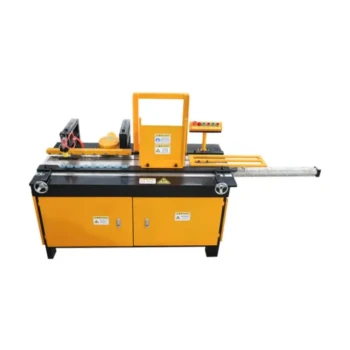
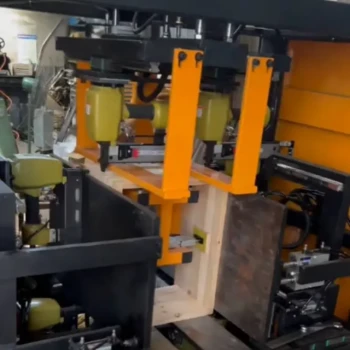
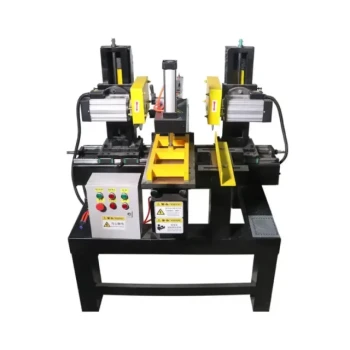
Professional hive-making machinery acts as the foundational catalyst for scaling commercial beekeeping from artisanal practices to industrial operations. By replacing inefficient manual carpentry with automated mass production, these machines allow apiaries to rapidly manufacture and deploy thousands of standardized hives, directly removing the hardware bottlenecks that restrict growth. This shift not only increases total colony capacity but establishes the precise infrastructure required to transition into high-volume, export-oriented markets.
Manual hive construction is often the primary constraint on apiary growth. Professional machinery eliminates this bottleneck by turning hive production into a scalable, industrial process that ensures uniformity and durability.
Accelerating Production and Scale
Eliminating Growth Bottlenecks
Traditional manual hive production is labor-intensive and slow, often preventing beekeepers from expanding their colony count. Automated hive-making machines utilize mechanized cutting and assembly to drastically increase production speed.
Enabling Rapid Deployment
Commercial apiaries can leverage this technology to deploy thousands of high-quality hives in a short timeframe. This capability provides the necessary physical infrastructure to accommodate rapidly expanding bee populations and increased breeding density.
Reducing Per-Unit Costs
By automating the manufacturing process, operations can reduce the hardware investment costs associated with scaling. This efficiency allows capital to be redirected toward colony management and logistics rather than basic carpentry.
The Strategic Value of Standardization
Interchangeability of Components
Industrial-grade machines produce modern frame hives with perfectly uniform internal dimensions. This precision allows frames to be swapped seamlessly between hives, simplifying complex tasks such as colony splitting, merging, and routine maintenance.
Facilitating Mechanized Operations
Standardized hives act as a uniform foundation for automated honey harvesting systems. Because every box is identical, machinery can extract honey more efficiently, reducing operational errors and increasing overall yields.
Optimizing "Bee Space"
Machinery ensures strict adherence to accurate bee space design, which is difficult to achieve consistently by hand. Precise dimensions reduce the build-up of burr comb and propolis, facilitating easier inspections and more effective pest monitoring.
Enhancing Colony Health and Asset Durability
Superior Insulation and Protection
High-precision construction results in better sealing and structural integrity compared to hand-built hives. This improved insulation protects colonies from extreme weather and microclimates, significantly boosting overwintering success rates.
Disease Resistance and Hygiene
Well-constructed, standardized hives contribute to better colony hygiene and disease resistance. The structural consistency aids in maintaining a healthy internal environment, which is critical when managing high-density apiaries.
Asset Longevity and Transport
Machine-made components offer superior durability and longer service lives. This ruggedness is essential for operations that involve the trans-regional transfer of colonies, ensuring hives withstand the physical stress of transport.
Understanding the Trade-offs
Initial Capital Expenditure
While these machines reduce the cost per hive over time, the upfront investment for industrial-grade woodworking equipment is significant. Smaller operations must carefully calculate the return on investment (ROI) based on their projected expansion rate.
Maintenance and Technical Skill
Transitioning to automated production requires a shift in skill sets. Operators must maintain complex machinery to ensure continued precision, introducing a new layer of technical maintenance that does not exist in manual woodworking.
Flexibility Limitations
High-volume machinery excels at producing standard Langstroth or Dadant designs but offers less flexibility for custom or experimental hive configurations. Once a production line is set, retooling for a different hive style can be costly and time-consuming.
Making the Right Choice for Your Goal
To determine if professional hive-making machinery aligns with your operational objectives, consider your current growth phase.
- If your primary focus is Rapid Expansion: Invest in machinery to remove physical infrastructure bottlenecks, allowing you to double or triple colony counts without labor constraints.
- If your primary focus is Operational Efficiency: Prioritize precision machinery to ensure component interchangeability, which is the prerequisite for introducing automated honey extraction lines.
By integrating professional manufacturing capabilities, you transform beekeeping from a labor-heavy craft into a scalable, efficient industrial enterprise.
Summary Table:
| Feature | Impact on Commercial Expansion | Key Benefit |
|---|---|---|
| Automated Production | Eliminates manual labor bottlenecks | Rapid deployment of thousands of hives |
| Precision Standardization | Ensures uniform internal dimensions | Seamless component interchangeability |
| Bee Space Optimization | Reduces burr comb and propolis | Faster inspections and better pest control |
| Structural Integrity | Enhances insulation and durability | Improved overwintering and transport safety |
| Cost Efficiency | Lowers per-unit hardware investment | Higher ROI for large-scale operations |
Scale Your Apiary with HONESTBEE Precision Equipment
Transition from artisanal beekeeping to a high-volume industrial enterprise with HONESTBEE. We provide commercial apiaries and distributors with the professional woodworking and hive-making machinery needed to eliminate growth bottlenecks and ensure perfect standardization across your operations.
Our comprehensive wholesale portfolio includes:
- Industrial Machinery: Hive-making, frame-cutting, and honey-filling machines.
- Beekeeping Hardware: A full spectrum of durable tools and equipment.
- Industry Consumables: Essential supplies to keep your colonies thriving.
Whether you are looking to double your colony count or optimize your honey extraction lines, our expert team is ready to supply the specialized hardware your business demands.
Contact HONESTBEE today to discuss your wholesale needs
References
- Janet Lowore. Understanding the Livelihood Implications of Reliable Honey Trade in the Miombo Woodlands in Zambia. DOI: 10.3389/ffgc.2020.00028
This article is also based on technical information from HonestBee Knowledge Base .
Related Products
- High-Efficiency Pneumatic Bee Hive Making Machine for Rapid Box Assembly
- Mini Desktop Bee Hive Frame Forming Making Machine
- Beehive Handle and Frame Rest Cutting Machine: Your Specialized Hive Machine
- Automatic High-Speed Bee Hive Box Stapling Machine
- Beehive Machine Double End Saw for Precision Hive Component Manufacturing
People Also Ask
- How does the introduction of professional beehive-making machinery benefit sustainable beekeeping? Scale Your Apiary
- Why is specialized beehive-making machinery critical for low-defense breeding? Enhance Selection with Precision Tools
- How does the introduction of specialized beehive making machinery contribute to increasing the scale of regional beekeeping industries?
- What is the importance of specialized beehive making machinery in a circular bio-economy? Build Local Sustainability
- Why is specialized beehive-making machinery essential? Scale Your Apiary with Precision Industrial Standards