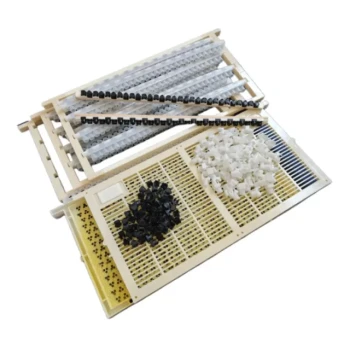
Specialized queen rearing tools serve as the technological bridge between opportunistic harvesting and systematic, sustainable agriculture. By enabling the artificial control of Trigona queen cultivation, these tools allow beekeepers to select for specific, superior genetic traits rather than relying on chance. This capability addresses the inherent inefficiencies of natural colony splitting, ensuring a steady supply of high-quality queens necessary for commercial expansion.
The core role of these tools is to replace the reliance on wild swarm capture with controlled genetic selection. By maximizing reproductive efficiency and targeting traits like disease resistance, they establish the biological foundation required for a scalable and resilient industry.
The Transition to Systematic Breeding
Moving Beyond Wild Capture
Historically, Trigona beekeeping relied heavily on capturing wild swarms, a method that is unpredictable and unsustainable at scale. Specialized tools transition the industry toward systematic population breeding. This shift allows apiaries to grow proactively without depleting wild populations or depending on seasonal luck.
Overcoming Natural Limitations
Natural colony splitting is a slow process with low efficiency, often creating a bottleneck for growth. Precision queen-rearing equipment resolves this by enabling artificial colony division. This technology ensures that reproduction rates can meet the demands of commercial operations, providing a steady stream of new colonies.
Optimizing Genetic Resilience
Targeting Disease Resistance
Sustainability relies on herd health. Through the use of specialized tools, beekeepers can isolate and propagate queens from colonies that demonstrate high disease resistance. This selective breeding reduces colony loss over time and minimizes the need for chemical interventions.
Enhancing Production Characteristics
Beyond health, these tools allow for the inheritance of superior honey production traits. By controlling the lineage of the queens, producers can standardize the performance of their apiaries, ensuring that resources are consumed by colonies genetically predisposed to high output.
Operational Scalability
Proactive Apiary Expansion
To be sustainable, an industry must be able to scale predictably. Artificial queen rearing allows beekeepers to plan their expansion rather than reacting to natural swarming cycles. This predictability is essential for securing financing, planning labor, and managing supply chains.
Efficient Resource Utilization
Controlled breeding results in stronger colonies that better utilize local nectar resources. By populating the apiary with genetically superior bees, the conversion of local flora into honey and propolis becomes more efficient, maximizing the ecological and economic yield of the land.
Understanding the Trade-offs
Technical Proficiency Requirements
While beneficial, these tools introduce a layer of technical complexity. Moving from traditional management to artificial queen rearing requires training and a deeper understanding of bee biology, which may present a learning curve for traditional beekeepers.
Increased Operational Costs
Implementing specialized tools shifts the cost structure from labor-intensive hunting to capital-intensive farming. While this reduces long-term labor intensity, it requires an upfront investment in equipment that may be significant for smaller, subsistence-level operations.
Making the Right Choice for Your Goal
To leverage queen rearing tools effectively, align their use with your specific operational targets:
- If your primary focus is rapid expansion: Prioritize tools that facilitate high-volume artificial splitting to maximize colony numbers quickly.
- If your primary focus is long-term stability: Focus on tools that aid in precise genetic selection to cultivate a lineage of disease-resistant, low-maintenance queens.
Mastering specialized queen rearing technology is the definitive step that transforms Trigona beekeeping from a passive activity into a predictable, sustainable industry.
Summary Table:
| Key Role | Impact on Sustainability | Benefits for Commercial Apiaries |
|---|---|---|
| Genetic Selection | Replaces wild capture with controlled traits | Improved disease resistance & higher honey yields |
| Artificial Splitting | Overcomes slow natural colony division | Enables predictable and rapid apiary expansion |
| Resource Efficiency | Maximizes local nectar conversion | Stronger colonies with standardized performance |
| Population Control | Reduces reliance on unpredictable seasonal luck | Stable supply chains and long-term operational planning |
Scale Your Trigona Operations with HONESTBEE Precision Tools
Transitioning from traditional beekeeping to a systematic, high-yield commercial model requires more than just passion—it requires the right technology. HONESTBEE specializes in supporting commercial apiaries and distributors by providing the industry's most comprehensive range of beekeeping tools and machinery.
From precision queen-rearing equipment that ensures genetic resilience to industrial-grade honey-filling and hive-making machines, our portfolio is designed to maximize your efficiency and output. Whether you are expanding your own colony numbers or supplying the next generation of professional beekeepers, we offer the wholesale solutions and consumables you need to succeed.
Ready to elevate your production and secure your industry's future?
Contact HONESTBEE Today for a Wholesale Consultation
References
- Ilmas Abdurofi, Mohd Mansor Ismail. The Impact of Government Incentives onTrigonars Project Assessment in Peninsular Malaysia. DOI: 10.2991/icosat-17.2018.1
This article is also based on technical information from HonestBee Knowledge Base .
Related Products
- Retractable Chinese Queen Rearing Grafting Tools Equipment
- Plastic Chinese Queen Grafting Tool for Bee Queen Rearing
- Stainless Steel Beekeeping Queen Grafting Tool for Honey Bee Rearing
- Stainless Steel Queen Grafting Tool for Beekeeping and Bee Queen Grafting
- Black 2 Pack Beekeeper Queen Grafting Tool for Bee Queen Larva Transferring Needle
People Also Ask
- Which specialized tools are necessary for implementing standardized queen rearing? Scale Your High-Yield Apiary
- Why are specialized queen rearing tools necessary to mitigate winter hive losses? Boost Apiary Survival and Recovery
- How do queen-rearing tools facilitate the sustainability and expansion of a commercial apiary? Drive Scalable Growth
- In what ways do modern queen rearing equipment and grafting tools improve competitiveness? Boost Breeding Success Rate
- What role do specialized queen rearing tools and consumables play in modern large-scale apiculture? Drive Production & Scale