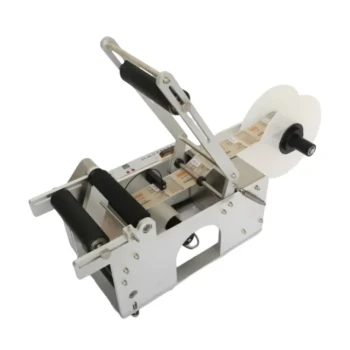
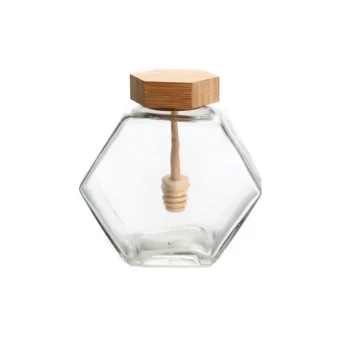
Standardized glass jars and professional labeling serve as the critical infrastructure that transforms raw honey from a simple agricultural output into a high-value, tradable retail commodity. This packaging system fulfills two simultaneous functions: it physically preserves the product's chemical stability through airtight sealing, and it commercially validates the product through regulatory compliance and brand identity.
Core Takeaway Raw honey possesses intrinsic value, but packaging and labeling unlock its economic potential. By transitioning from bulk storage to standardized glass units, producers overcome barriers to entry in retail markets, ensuring the product is shelf-stable, legally compliant, and positioned to command a significant price premium over unbranded sales.
The Functional Role: Preservation and Quality Control
The primary technical role of the glass jar is to maintain the physicochemical properties of the honey from the hive to the consumer's table.
Airtight Environmental Barriers
Honey is hygroscopic, meaning it naturally absorbs moisture from the air. High-quality glass containers provide a hermetic seal that acts as a total barrier against environmental humidity.
Preventing moisture absorption is critical because excess water content can lead to fermentation, effectively spoiling the crop.
Preventing Chemical Degradation
Beyond moisture, glass packaging protects honey from environmental pollutants and prevents interactions with air that can degrade flavor.
This protection ensures that the nutritional activity and unique flavor profile of the honey remain intact, preventing abnormal crystallization or spoilage during long periods of storage or retail display.
The Economic Role: Market Penetration and Value
Standardization is not merely an aesthetic choice; it is a strategic requirement for scaling operations and increasing revenue.
Overcoming Retail Barriers
Retailers, such as supermarkets and department stores, require products that fit specific logistical parameters.
By utilizing standardized sizes (e.g., 250g, 500g, or 1kg), small-scale producers can meet the stocking requirements of high-value retail channels, allowing them to move beyond local, informal markets.
Securing Price Premiums
Bulk or unbranded honey is often sold as a commodity at lower margins.
Transforming this bulk product into a branded item allows producers to capture added value. The perception of quality associated with standardized glass packaging enables producers to set higher price points that reflect the product's premium status.
The Informational Role: Trust and Compliance
Professional labeling acts as the "legal carrier" for the product, bridging the gap between producer and consumer.
Regulatory Compliance and Traceability
Labels are essential for meeting food trade regulations. They provide the physical space for mandatory information, including origin, nutritional data, and production codes.
This data is crucial for product authentication and quality traceability, which are often prerequisites for entering regulated domestic and export markets.
Brand Differentiation and Loyalty
In a crowded market, the label serves as the primary tool for differentiation.
Through aesthetic design and clear communication of quality, labels build consumer trust. This trust is the foundation of repeat purchases, turning a one-time buyer into a loyal customer base.
Understanding the Trade-offs
While standardized glass packaging offers the highest value for retail, it introduces specific challenges compared to bulk handling.
Logistics and Durability Risks
Glass is significantly heavier and more fragile than the industrial plastic or stainless steel drums used for bulk transport.
This increases the risk of loss during long-distance transportation and raises logistical costs. Producers must balance the high retail value of glass against the increased complexity of shipping and handling fragile inventory.
Cost vs. Volume
Standardized retail packaging requires a higher upfront investment in materials and machinery compared to bulk sales.
For producers focused strictly on volume rather than margin, the added cost of individual units and labeling systems may impact immediate cash flow, even if it promises higher long-term returns.
Making the Right Choice for Your Goal
Deciding how to package your honey depends entirely on your target market and operational capacity.
- If your primary focus is High-Value Retail: Invest in standardized glass jars (250g–500g) and premium labeling to maximize shelf life, brand recognition, and profit margins per unit.
- If your primary focus is Cost Control and Logistics: Utilize standardized industrial bulk containers to minimize transportation breakage risks and reduce packaging overhead, sacrificing brand premiums for volume efficiency.
Ultimately, standardized glass packaging is the definitive tool for producers aiming to evolve from raw material suppliers into recognized market brands.
Summary Table:
| Feature | Function | Impact on Value Chain |
|---|---|---|
| Airtight Glass Seal | Prevents moisture & fermentation | Ensures shelf stability and premium quality |
| Standardized Sizing | Meets retail & logistical specs | Enables entry into supermarkets & high-end retail |
| Professional Labeling | Provides traceability & branding | Builds consumer trust and secures price premiums |
| Regulatory Data | Ensures legal compliance | Facilitates access to domestic and export markets |
Elevate Your Honey Brand with HONESTBEE
Ready to transition from bulk production to a premium retail brand? HONESTBEE provides the end-to-end infrastructure required by commercial apiaries and distributors to capture higher margins.
We offer a comprehensive wholesale portfolio, including:
- Advanced Machinery: Precise honey-filling and hive-making machines.
- Professional Hardware: A full spectrum of beekeeping tools and equipment.
- Industry Consumables: Everything needed to maintain a productive and compliant apiary.
From industrial-scale equipment to honey-themed cultural merchandise, we empower you to scale your operations and differentiate your brand in a competitive market.
Contact us today to optimize your honey production value chain!
References
- Etienne Nel, Mark P. Robertson. Rural Self‐Reliance in Bondolfi, Zimbabwe: the role of beekeeping. DOI: 10.1111/j.1475-4959.2000.tb00004.x
This article is also based on technical information from HonestBee Knowledge Base .
Related Products
- Semi Automatic Round Bottle Labeling Machine
- Hexagonal Glass Honey Jars with Metal Lug Caps Elegant Versatile Packaging
- Modern Square Glass Honey Jar with Twist Off Lid
- Classic Glass Honey Jar with Metal Lug Cap for Beehive Storage
- Classic Round Glass Honey Jar with Lid
People Also Ask
- What type of machine is recommended for smaller businesses? The Smart Choice for Growing Operations
- What are the key components of an automatic labeling machine? Unlock High-Speed, Precision Labeling
- How does an automatic labeling machine reduce labor costs? Slash Overhead & Boost Productivity
- What are the efficiency benefits of an automatic labeling machine? Boost Speed, Accuracy & Consistency
- How does an automatic labeling machine operate? Achieve High-Speed, Precise Product Labeling