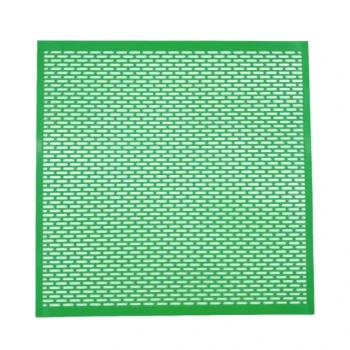
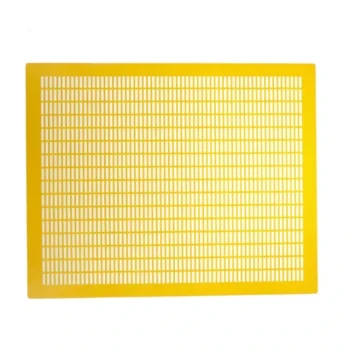
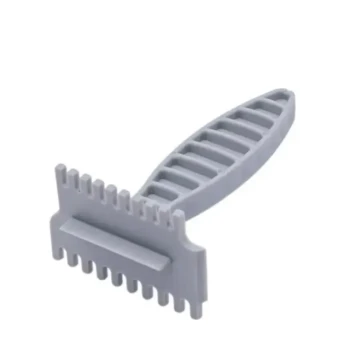
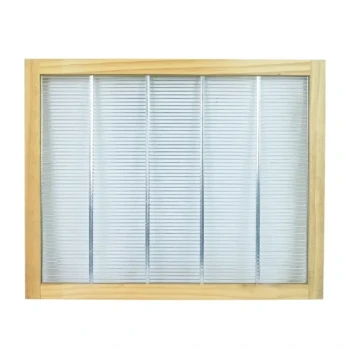
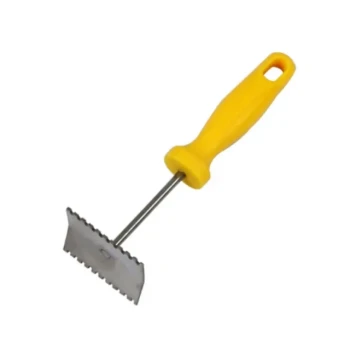
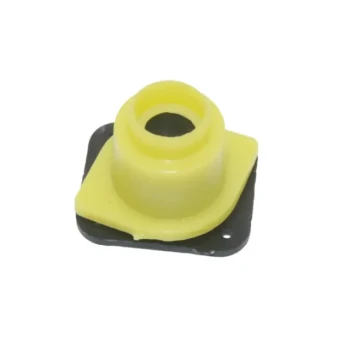
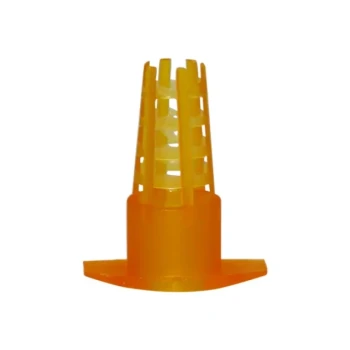
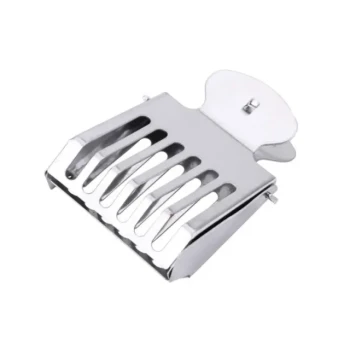
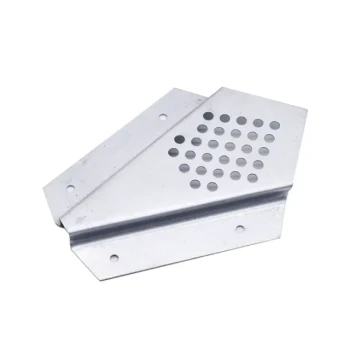
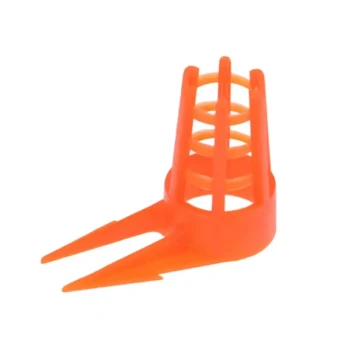
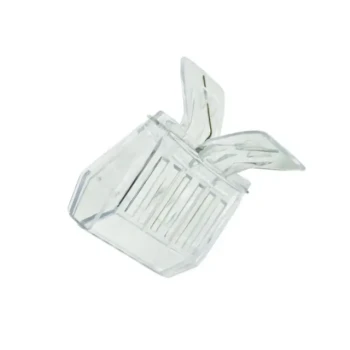
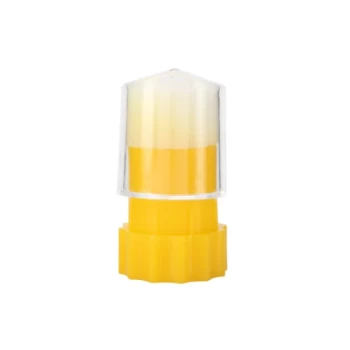
A queen excluder serves as the primary mechanism for hive zoning and product purity. It acts as a physical barrier placed directly between the brood chamber and the honey super, utilizing specific grid spacing to block the larger queen bee while allowing smaller worker bees to pass through freely. This separation ensures that the upper frames of the hive remain dedicated exclusively to honey storage, preventing the queen from laying eggs in the harvestable crop.
The excluder functions as a definitive quality control checkpoint; by restricting the queen to the lower hive, it guarantees that harvested honey remains pure and free of larvae, while simultaneously streamlining the commercial extraction process.
The Mechanics of Hive Segregation
How the Barrier Functions
The excluder relies on precise gap widths to filter hive traffic. The grid openings are engineered to be large enough for worker bees—who gather the nectar—to pass through effortlessly, but too small for the larger abdomen of the queen (and drones).
Defining Hive Zones
By installing this device, you create two distinct operational areas within the colony. The lower section becomes the dedicated brood chamber for raising new bees, while the upper section (the super) becomes a pantry strictly for honey and pollen storage.
Preventing Cross-Contamination
Without an excluder, a queen may move upward in search of space and lay eggs in the honey supers. The excluder prevents this biological mixing, ensuring that the frames you pull for harvest contain only food stores, not developing bees.
Impact on Production Efficiency
Streamlining the Harvest
For commercial and serious hobbyist beekeepers, efficiency is paramount. The excluder eliminates the need to inspect individual frames for brood before harvesting.
Simplifying Extraction
Because the supers are guaranteed to be free of larvae, the extraction process is cleaner and faster. There is no risk of brood fluid contaminating the honey or clogging extraction equipment, which preserves the integrity of the final product.
Understanding the Trade-offs
The "Honey Excluder" Debate
While excellent for quality control, this tool is optional and controversial among some beekeepers. Some argue that the barrier can be difficult for worker bees to navigate, potentially slowing down nectar storage and reducing the overall honey yield.
Potential for Swarming
Restricting the queen's movement can sometimes have unintended consequences regarding colony congestion. If the brood chamber becomes too full and the queen cannot move up to lay, it may trigger the colony's instinct to swarm, causing half the bees to leave the hive.
Making the Right Choice for Your Goal
Deciding whether to use a queen excluder depends on balancing your need for purity against the colony's natural behaviors.
- If your primary focus is Commercial Efficiency: Use an excluder to guarantee larval-free honey and to speed up the harvesting process significantly.
- If your primary focus is Maximum Colony Population: Consider managing the hive without an excluder to give the queen unrestricted laying space, though this requires careful manual sorting during harvest.
Ultimately, the queen excluder is a tool for control, allowing you to dictate exactly where resources are placed within the hive architecture.
Summary Table:
| Feature | Role of Queen Excluder | Impact on Honey Quality |
|---|---|---|
| Hive Zoning | Separates brood chamber from honey super | Prevents egg-laying in harvestable honey |
| Purity Control | Physical barrier for the queen and drones | Guarantees honey is free of larvae and brood fluid |
| Extraction | Streamlines the collection process | Eliminates frame sorting and protects equipment |
| Worker Access | Allows foragers to pass through | Concentrates nectar storage in dedicated pantry zones |
Elevate Your Beekeeping Operation with HONESTBEE
At HONESTBEE, we specialize in empowering commercial apiaries and distributors with the precision tools needed for high-quality honey production. Whether you require high-grade queen excluders, hive-making machinery, or advanced honey-filling equipment, our comprehensive wholesale portfolio is designed to maximize your efficiency and product purity.
Why partner with us?
- Full-Spectrum Supply: From specialized hardware to essential industry consumables.
- Commercial Expertise: Tailored solutions for large-scale operations and global distributors.
- Quality Assurance: Tools engineered to preserve the integrity of your harvest.
Ready to scale your production? Contact us today to explore our wholesale offerings and discover how we can streamline your beekeeping business.
References
- G. Christopher Cutler, Larry W. Brewer. A large-scale field study examining effects of exposure to clothianidin seed-treated canola on honey bee colony health, development, and overwintering success. DOI: 10.7717/peerj.652
This article is also based on technical information from HonestBee Knowledge Base .
Related Products
- High Performance Plastic Queen Excluder for Beekeeping and Apiary Management
- Professional Plastic Queen Excluder for Modern Beekeeping
- Lightweight Durable Plastic Queen Excluder Scraper for Beekeeping
- Metal Queen Bee Excluder for Beekeeping
- Premium Wood Framed Metal Wire Queen Bee Excluder
People Also Ask
- What are the characteristics of a plastic queen excluder? Key Benefits for Cost-Effective Beekeeping
- What are the operational and cost advantages of using plastic queen excluders over metal or wire excluders in commercial hive management? Discover how they reduce labor, prevent wing damage, and lower total costs.
- What types of queen excluders are available for beekeepers? Choose the Right Tool for Your Hive
- Why are standardized hive frames and queen excluders essential for maintaining honey purity and quality? Scale Your Purity
- Do plastic queen excluders work? A Cost-Effective Solution for Modern Apiaries