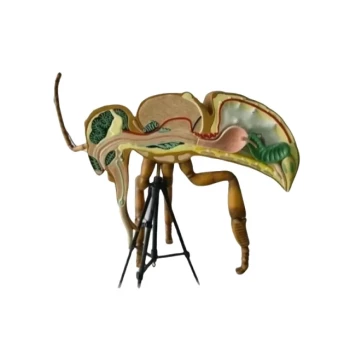
A standard Bee Colony functions as a high-density biological pollination mechanism. When placed inside an enclosed isolation cage, it introduces a concentrated population of a single pollinator species. This ensures that flower inflorescences are subjected to continuous foraging throughout their limited blooming period, guaranteeing sufficient pollination coverage.
Core Insight By confining a standard bee colony with a target crop, researchers simulate an environment of maximum pollinator saturation. This setup is primarily used to empirically confirm that increasing pollinator numbers and extending foraging duration significantly improves crop fertility and the overall harvest index.
The Mechanics of Enclosed Pollination
High-Density Pollinator Saturation
The primary role of a standard colony in this context is to provide volume.
Unlike open-field conditions where bees might disperse, the isolation cage forces a high ratio of pollinators to flowers. This turns the colony into a dedicated biological tool focused entirely on the enclosed flora.
Continuous Foraging Cycles
Standard colonies facilitate uninterrupted pollination.
Because the colony is established within the cage, bees are present the moment flowers open. This continuous foraging behavior is vital for capturing the full potential of plants with short or sensitive blooming windows.
Validating Research Outcomes
Confirming Fertility Correlation
Researchers utilize this setup to measure the direct impact of pollinator intensity.
The standard colony helps confirm that increasing the number of pollinators leads to measurable gains in crop fertility indicators. It acts as a benchmark for maximum pollination potential.
Improving the Harvest Index
The presence of a full colony extends the effective foraging time on the crop.
Data derived from these setups demonstrates that this extended exposure directly contributes to a higher harvest index, validating the biological necessity of adequate pollinator populations.
Operational Considerations and Trade-offs
Risk of Resource Depletion
While standard colonies offer maximum pollination power, they may be oversized for smaller enclosures.
Full-scale colonies have high metabolic demands. In a restricted space, they risk rapidly depleting floral resources, which can stress the colony or require supplemental feeding compared to smaller alternatives like baby nucleus colonies.
Management and Logistics
Using a standard colony introduces logistical challenges.
Full-sized hives are heavy and difficult to transport into isolation cages. Furthermore, maintaining the health of a large population in a confined space is significantly more difficult than managing smaller, specialized research units.
Making the Right Choice for Your Goal
To select the appropriate pollination method for your study, consider your specific data requirements:
- If your primary focus is establishing maximum yield potential: Use a Standard Bee Colony to ensure the highest possible pollinator density and prove the correlation between foraging time and harvest index.
- If your primary focus is logistical ease in small cages: Consider Baby Nucleus Colonies, which offer sufficient density for enclosed studies without the transport difficulties or rapid resource depletion associated with full-scale hives.
The choice depends on balancing the need for absolute pollinator saturation against the practical constraints of your containment facility.
Summary Table:
| Feature | Role/Impact in Isolation Cage | Research Benefit |
|---|---|---|
| Pollinator Density | Provides high-volume, concentrated saturation | Establishes maximum fertility benchmarks |
| Foraging Duration | Continuous cycles throughout the bloom period | Validates correlation between time & yield |
| Spatial Focus | Prevents dispersal, focusing activity on target flora | Ensures 100% pollination coverage |
| Population Size | Standard colony scale (High metabolic demand) | Proves potential of large-scale pollination |
Elevate Your Apiary and Research Efficiency with HONESTBEE
At HONESTBEE, we specialize in supporting commercial apiaries, distributors, and agricultural researchers with professional-grade beekeeping solutions. Whether you are conducting controlled pollination studies or managing large-scale honey production, our comprehensive wholesale portfolio has you covered.
Our value to your business:
- Precision Machinery: Optimize your operations with our advanced honey-filling and hive-making machines.
- Full-Spectrum Equipment: From specialized hardware to essential industry consumables, we provide the tools needed for peak productivity.
- Market Expansion: Enhance your brand with our unique honey-themed cultural merchandise.
Ready to scale your beekeeping operations or secure high-quality equipment for your next project? Contact us today to explore our wholesale offerings and let HONESTBEE be your trusted partner in apiculture excellence.
References
- Madhusudan Man Singh. Foraging Behaviour of the Himalayan Honeybee (<i>Apis cerana</i> F.) on Flowers of <i>Fagopyrum esculentum</i> M. and its Impact on Grain Quality and Yield. DOI: 10.3126/eco.v15i0.1940
This article is also based on technical information from HonestBee Knowledge Base .
Related Products
- Modern Flat-Mount Hive Number Set for Beekeeping
- HONESTBEE Collapsible Tiered Bee Swarm Catcher for Beekeeping
- HONESTBEE Entrance Bee Feeder Professional Hive Nutrition Solution for Beekeeping
- Langstroth Honey Bee Box Hive Boxes for Different Depths
- Assembled Wooden Bee Frames with Beeswax Foundation Ready to Use by HONESTBEE
People Also Ask
- What are the primary advantages of modern beekeeping hives? Scale Your Apiary with Industrial Efficiency
- What is the impact of regular technical extension contact on the management of modern beekeeping hives? Enhance Hive Efficiency
- What are the structural and management advantages of modern beekeeping hives? Scale Your Honey Yields Today
- Why should the promotion of modern beekeeping hives be integrated with professional beekeeping tool kits and technical support?
- Why do forest beekeepers consider transitioning from traditional bark hives? Modernizing for Sustainable Yields