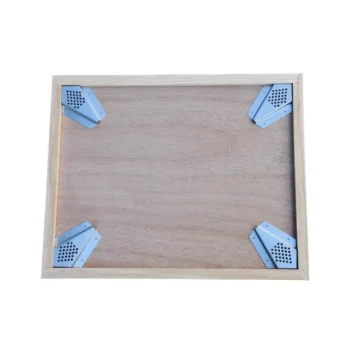
The exit cone in a professional-grade pollen trap serves as a dedicated, unrestricted "one-way door" for bees leaving the hive. While the trap’s entrance forces returning bees through a mesh to harvest pollen, the exit cone allows departing bees to bypass this restriction entirely. This mechanism is critical for separating incoming foragers from outgoing traffic to maintain efficient hive flow.
Core Takeaway By establishing a separate path for departure, the exit cone prevents hive congestion and accommodates larger bees—specifically drones and queens—that physically cannot fit through the pollen-harvesting grid. It ensures the colony continues to function normally without becoming imprisoned by the collection hardware.
The Mechanics of Hive Traffic Control
Separating Entry and Exit Paths
A pollen trap functions by placing a physical barrier over the hive entrance. Incoming bees must squeeze through small apertures to strip pollen pellets from their legs.
However, forcing departing bees to push back through these same small holes would be disastrous. The exit cone diverts outgoing traffic away from the harvesting mesh. This creates a distinct loop: bees enter through the grid and leave through the cone.
Minimizing Congestion
Active hives have thousands of bees coming and going. Without a dedicated exit strategy, the entrance would become a bottleneck.
The exit cone clears the "lobby" of the hive. It ensures that returning foragers—who are carrying the pollen you want to harvest—are not blocked by bees trying to leave for their next flight.
Protecting Colony Demographics
Accommodating Drones and Queens
The specific apertures used in pollen traps are sized for worker bees. Drones and queens are physically larger than workers and cannot fit through standard pollen-removing screens.
Without an exit cone, these essential colony members would be trapped inside the hive.
Ensuring Reproductive Freedom
A professional-grade trap recognizes that a hive is more than just a honey or pollen factory. Drones need to leave daily to seek mating opportunities.
Furthermore, if a queen needs to exit—for a mating flight or swarming—a trap without an exit cone would prevent her departure. The cone provides the necessary clearance for these larger insects to exit freely.
Understanding the Trade-offs
The Risk of Re-entry
The exit cone is designed to be one-way. A potential downside of a poorly designed or damaged cone is that "smart" bees may learn to use it as an entrance.
If foragers figure out how to enter through the exit cone, they bypass the harvesting grid entirely. This significantly reduces your pollen yield.
Maintenance Requirements
Because the cone is a bottleneck for exiting traffic, it must be kept clear.
If the cone becomes blocked by debris or dead bees, the colony effectively loses its door. This can lead to overheating and panic within the hive, as the bees have no way to ventilate or evacuate.
Making the Right Choice for Your Goal
When selecting a pollen trap, verify the quality of the exit mechanism to ensure it balances harvest efficiency with bee safety.
- If your primary focus is Maximum Yield: Ensure the exit cone is positioned high and away from the landing board to discourage foragers from using it as a "cheat" entrance.
- If your primary focus is Colony Health: Verify the diameter of the exit cone tip is sufficient to allow drones to pass through easily without struggle.
A professional trap does not just harvest pollen; it respects the anatomy and traffic patterns of the colony to ensure sustainable operation.
Summary Table:
| Feature | Function in Pollen Trap | Benefit to Colony/Beeper |
|---|---|---|
| One-Way Path | Separates outgoing bees from incoming foragers. | Prevents traffic jams and hive congestion. |
| Larger Aperture | Allows drones and queens to exit the hive. | Prevents entrapment of essential colony members. |
| Traffic Diversion | Bypasses the pollen-harvesting mesh for exit. | Reduces stress on bees and maintains hive flow. |
| Strategic Position | Discourages bees from using the exit as an entry. | Maximizes pollen yield by ensuring grid passage. |
Elevate Your Apiary Operations with HONESTBEE
As a professional beekeeper or distributor, you know that the right equipment is the difference between a struggling hive and a high-yield harvest. HONESTBEE provides commercial-grade pollen traps, hive-making machinery, and specialized honey-filling equipment designed for large-scale efficiency.
Our comprehensive wholesale portfolio caters specifically to commercial apiaries and industry suppliers, offering everything from heavy-duty hardware to essential consumables. Whether you are looking to optimize your pollen collection or scale your production line, our team is ready to deliver the tools you need to succeed.
Ready to upgrade your equipment? Contact us today to discuss our wholesale offerings and discover how HONESTBEE can streamline your beekeeping business.
Related Products
- 30 cm Plastic Entrance Hole Bee Pollen Trap and Collector
- High-Efficiency Diamond Maze Bee Escape for Clearing Supers
- Removable Plastic Pollen Trap With Ventilated Tray for Bees Pollen Collector
- Plastic Bee Pollen Trap Strips Comb Catcher Collector
- HONESTBEE Wooden Bee Escape Board with Triangle Mesh Design for Beekeeping
People Also Ask
- What are the design principles and advantages of pollen traps in the collection of bee pollen? Boost Your Apiary Yield
- Why is frequent harvesting of bee pollen from traps necessary for quality control? Ensure Freshness and Prevent Mold.
- How often should bee pollen be harvested from a trap and why? Master Freshness and Prevent Spoilage
- What function do pollen traps serve in quantitative collection? Boost Your Apiary's Data & Production Efficiency
- What is the primary function of bee pollen traps? Optimize Your Pollen Harvest with Advanced Extraction Efficiency